Calculate SSP entitlement instantly using 2025/2026 rates. Enter weekly earnings, sick days, and qualifying days — get the daily rate and total payment in seconds.
Tap a card to read the detail.
14-day free trial · No credit card needed
This calculator gives you the numbers. TimeTally tracks sick leave, approvals, and absence records automatically — so you never need to calculate it manually again. From £3/employee/month.
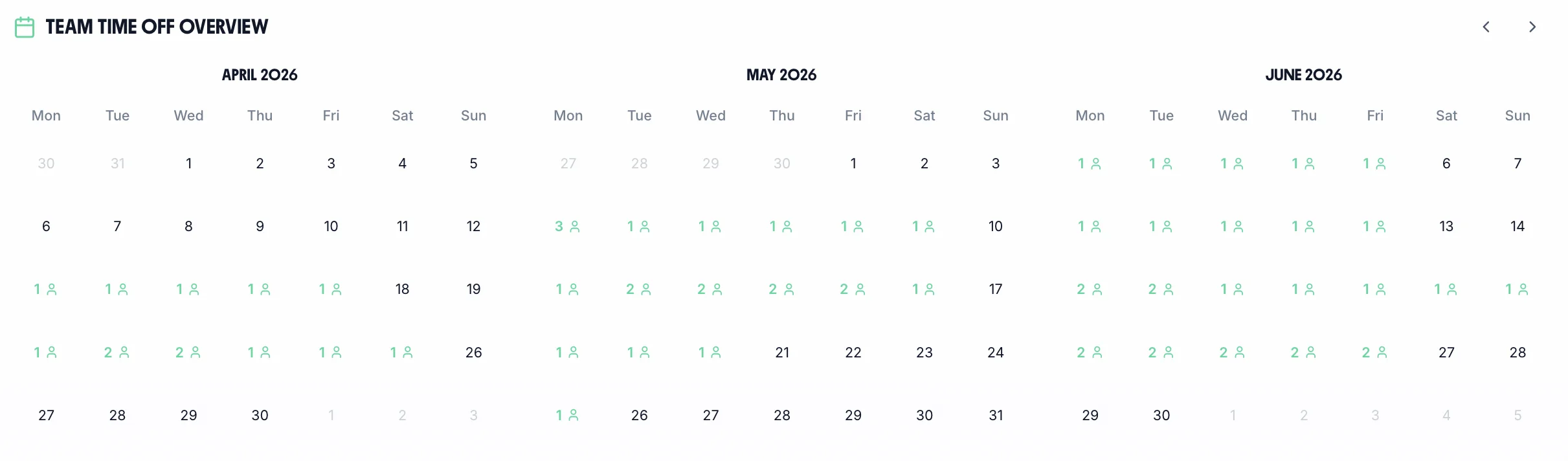
Every approved leave request, sick day, and bank holiday sits on one calendar. Spot absence patterns before they become a problem — no more cross-referencing spreadsheets.
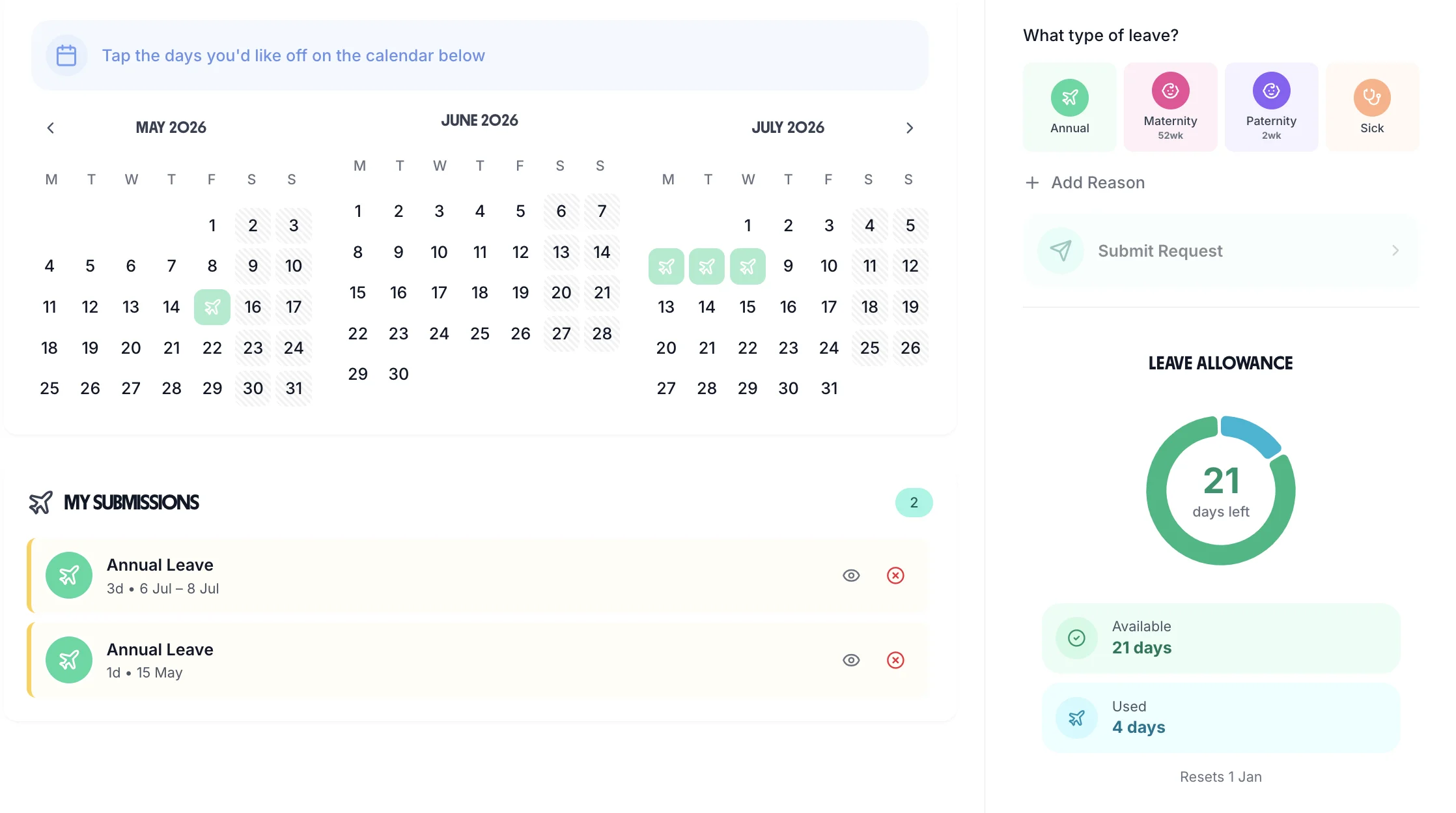
All leave requests land in your dashboard. Approve or decline with a single tap. Every decision is timestamped — no more disputes about who was notified and when.
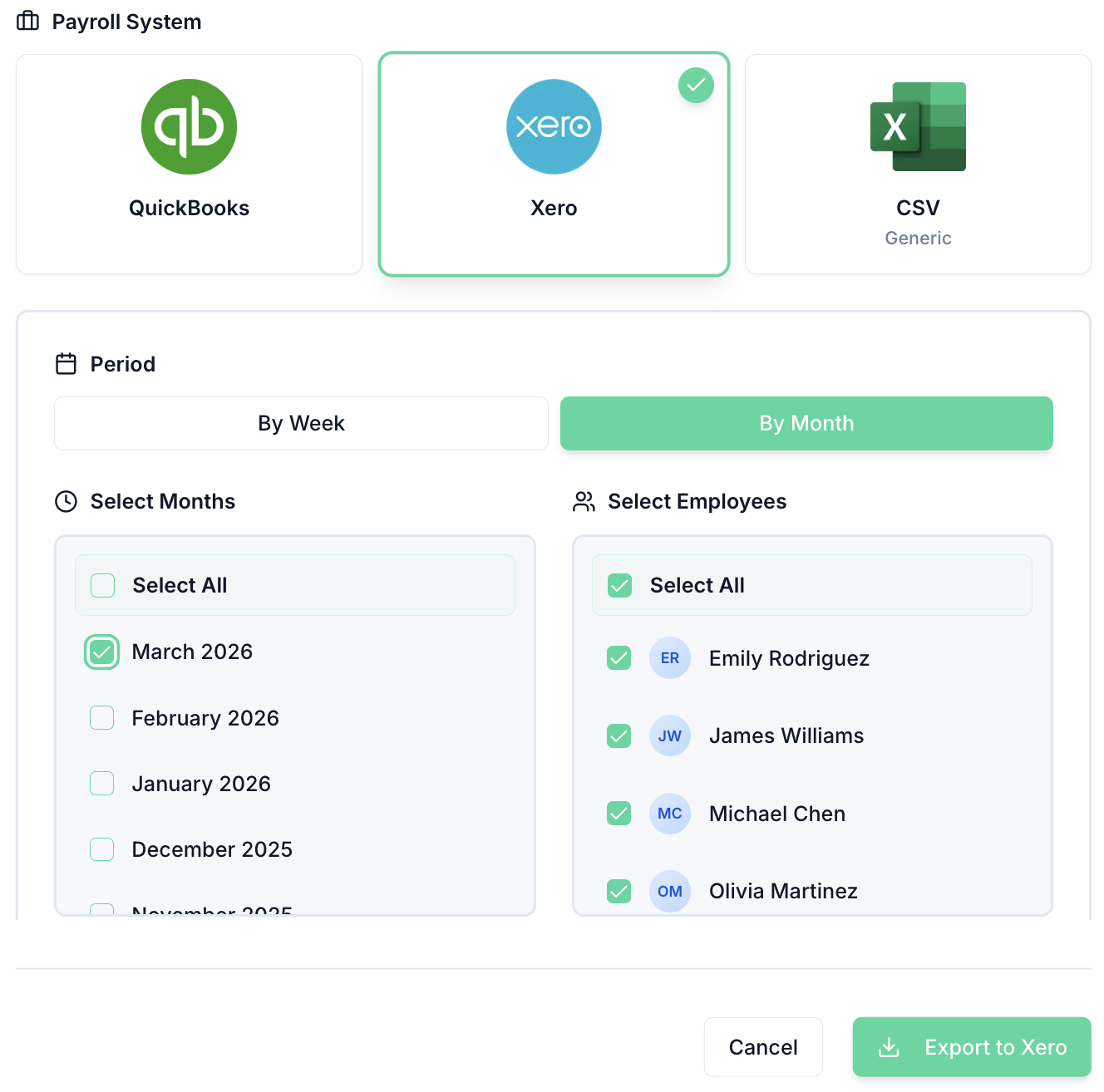
Approved leave is included in your payroll export automatically. Direct integration with Xero and QuickBooks — no manual adjustments, no missed deductions.
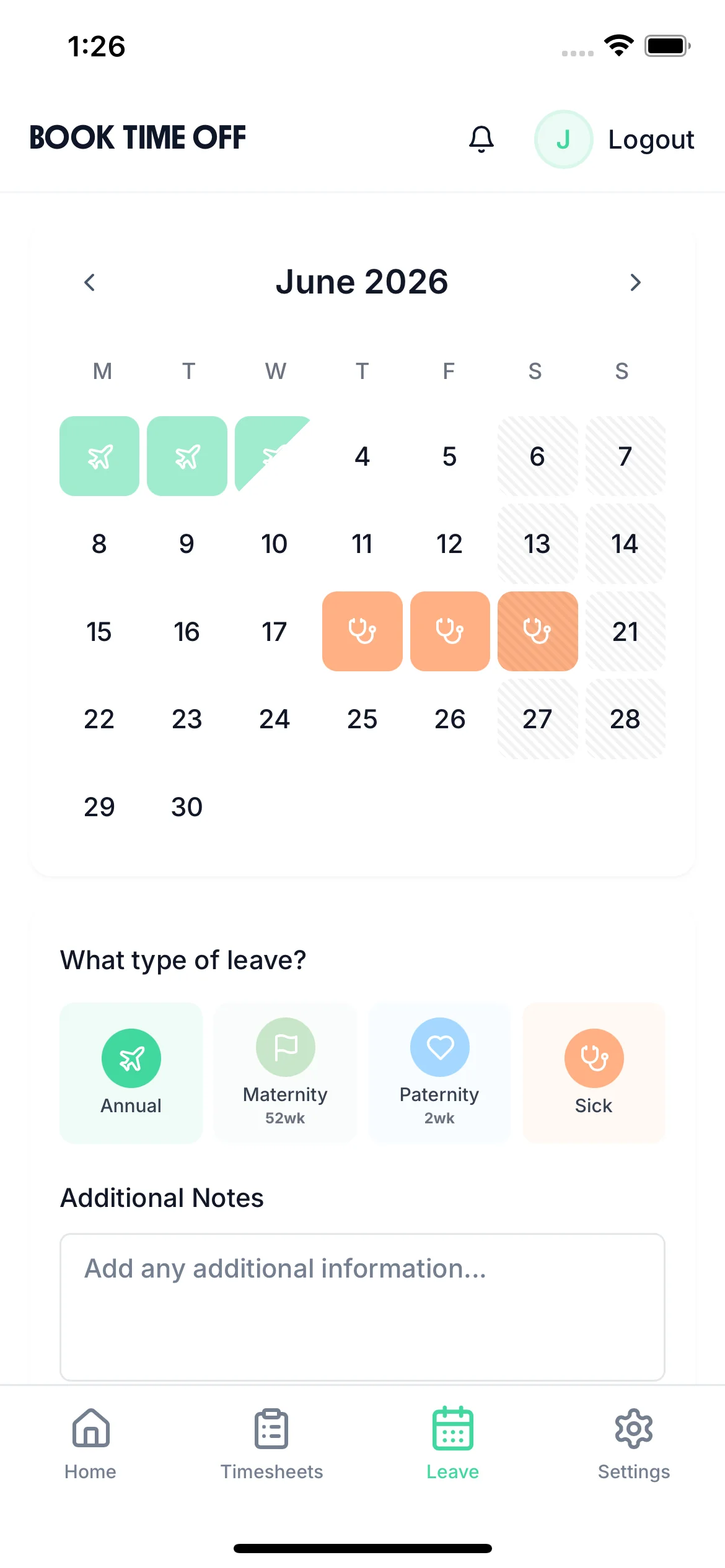
TimeTally automatically tracks, approves, and records sick leave for your entire team. Explore all features or see how it works.
Automatic calculations
SSP entitlement and qualifying days calculated automatically from leave records. Absence history tracked per employee — no spreadsheets needed.
One-tap approvals
Managers approve or reject leave requests from any device, with a full audit trail of every decision timestamped and stored automatically.
Statutory calculations included
Statutory sick pay, bank holiday management, and leave balances handled for you — so you spend less time on admin and more time on your team.
SSP rules trip up even experienced payroll teams. Here are the key facts every UK employer needs to get right.
Statutory Sick Pay is paid at a flat weekly rate (£116.75 in 2024/25). To qualify, employees must be classed as an 'employee' (not a worker or self-employed), must have average weekly earnings at or above the Lower Earnings Limit (£123/week in 2024/25), and must be sick for at least 4 consecutive days including non-working days. The earnings test uses average weekly earnings over the last 8 weeks before the sick period. Employees who fail the earnings test cannot receive SSP — but may be entitled to New Style ESA from DWP instead.
The first three 'qualifying days' of any period of incapacity for work are 'waiting days' — SSP is not payable for them. A 'qualifying day' is a day the employee would normally be expected to work. If an employee is sick Monday to Friday, Monday to Wednesday are waiting days and SSP begins on Thursday. However, if the employee has had a previous period of sickness within the last 8 weeks (a 'linked period'), the waiting days may already be served — and SSP begins from the first qualifying day of the new period.
Employers can set their own notification requirements for sickness absence — typically requiring notification on the first day of absence by a specific time and method. For absences of up to 7 calendar days, employees can self-certify (using an SC2 form or the employer's equivalent). Beyond 7 calendar days, a fit note issued by a GP or other registered healthcare professional is required. Employers cannot insist on a fit note for shorter absences. Failure to notify in the required way does not remove the right to SSP, but it may affect when SSP liability begins.
Sickness absence that is related to pregnancy during the last 4 weeks before the expected week of childbirth (the 'disqualifying period') automatically triggers the start of maternity leave — and SSP is replaced by Statutory Maternity Pay from that point. For pregnancy-related sickness before the disqualifying period, SSP is payable in the usual way. Pregnancy-related absence should never trigger disciplinary proceedings or count in absence triggers — doing so is sex discrimination under the Equality Act 2010.
SSP is payable for a maximum of 28 weeks in any period of incapacity. Once exhausted, the employer's SSP liability ends. The employer must issue an SSP1 form within 7 days of SSP ending, to allow the employee to claim New Style ESA from the DWP. Linked periods of sickness (within 8 weeks of each other) are treated as one continuous period for SSP purposes — so repeated short absences can exhaust the 28 weeks more quickly than a single long absence if they occur in a pattern.
Employers can offer contractual sick pay that is more generous than SSP — for example, full pay for the first 4 weeks, then half pay for 8 weeks, then SSP only. Contractual sick pay absorbs the SSP entitlement: an employee cannot receive both in excess of their contractual entitlement. Where contractual sick pay is exhausted before 28 weeks are up, the employer must still pay SSP for the remainder of the 28-week period. Contracts should specify exactly how the two interact to avoid misunderstandings.
Agency workers who meet the earnings threshold are entitled to SSP, paid by the agency (as their employer) rather than the end-client business. Zero-hours workers are also entitled to SSP if they meet the earnings test — the variable nature of their hours means average earnings must be calculated over the 8-week reference period. If average earnings fall below the LEL, SSP is not payable. Employers who structure contracts to keep earnings just below the LEL may face tribunal claims if the pattern of work clearly exceeds the threshold in practice.
Employers must keep records of SSP paid for at least 3 years, to support HMRC PAYE audits. Records should include: dates of sickness and qualifying days; amount of SSP paid each week; any SSP1 forms issued; and notification and fit note records. Since April 2014, employers can no longer reclaim SSP from HMRC (the Percentage Threshold Scheme was abolished). However, small employers with an NICs bill under £45,000/year can still reclaim up to 103% of statutory parental leave pay — SSP reclaim is a separate, discontinued scheme.
Swipe to see more →
“TimeTally has been excellent for our business. The app is simple to use, reliable, and makes managing holidays, absences, and staff records straightforward. The system has saved us a significant amount of administration time and gives both managers and employees clear visibility of leave balances and requests. Highly recommended for any business looking for an easy-to-use workforce management solution.”
 Jordan Ingoe, CLI Manchester
Everything you need to know about SSP in the UK. For related topics, try our Bradford Factor calculator or holiday entitlement calculator.
Still have a question? See all FAQs →
Measure the impact of short-term absences
Calculate annual leave for all working patterns
Track and calculate weekly working hours
Track and manage sick leave automatically
Manage team holiday requests and approvals
Track, report, and reduce employee absence
SSP is easier to get right when the absence data behind it is already accurate.
Log every absence spell as it happens so SSP calculations start from real data.
Learn moreSickness, holiday and every other leave type tracked in one system.
Learn moreRecord unpaid absence separately so it never distorts pay or entitlement.
Learn moreHandle bereavement and emergency leave with a clear, consistent record.
Learn moreSick days are logged in the same place as holiday, waiting days and linked periods are tracked, and the absence record is ready for payroll.