Work out your bank holiday entitlement and pay in seconds. Covers full-time and part-time workers, pro-rata calculations, and the UK legal rules on enhanced pay.
Tap a card to read the detail.
14-day free trial · No credit card needed
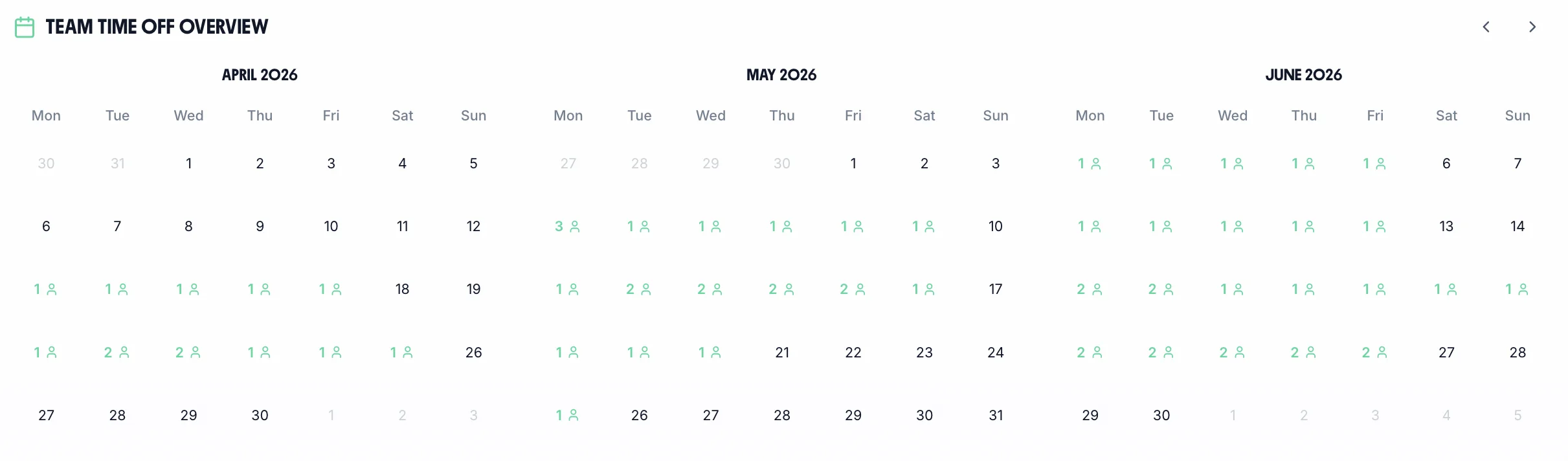
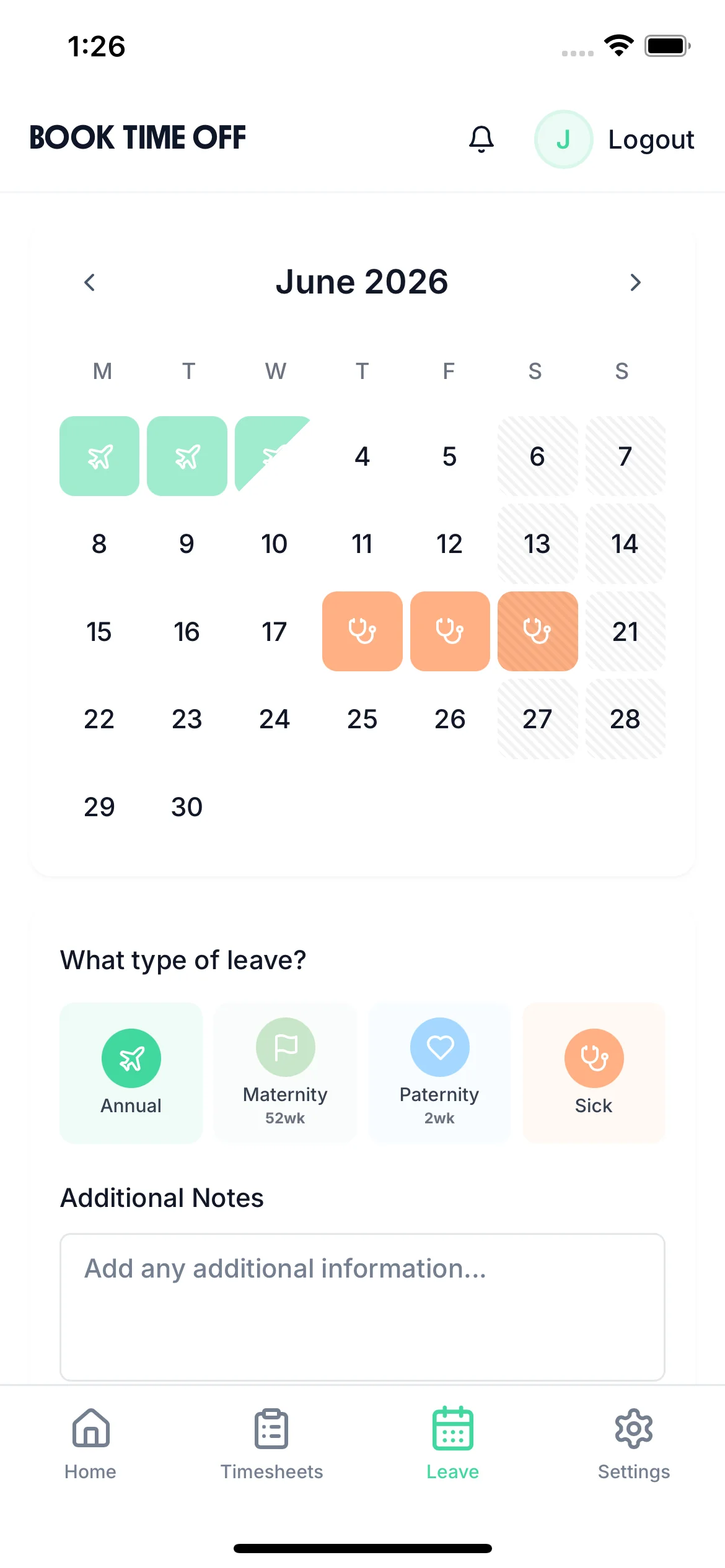
This calculator gives you the numbers. TimeTally automatically configures bank holidays for your region, calculates pro-rata entitlements for part-time staff, and keeps every leave balance up to date — so you never have to do it by hand. From £3/employee/month.
TimeTally knows the bank holidays for every UK region. They are applied automatically to your team's calendar — no manual entry, no missed dates, no errors when the dates change.

Pro-rata entitlements can be fiddly to get right. TimeTally calculates each employee's correct bank holiday allowance based on their working pattern — automatically.
“TimeTally has been excellent for our business. The app is simple to use, reliable, and makes managing holidays, absences, and staff records straightforward. The system has saved us a significant amount of administration time and gives both managers and employees clear visibility of leave balances and requests. Highly recommended for any business looking for an easy-to-use workforce management solution.”
 Jordan Ingoe, CLI Manchester
Bank holiday pay is more nuanced than a flat rate — here's what employers need to get right.
For salaried employees who do not work on a bank holiday, the pay for that day is simply 1/5 of their normal weekly salary (for a 5-day-week worker). For hourly-paid workers, it is the number of hours they would normally have worked on that day multiplied by their hourly rate. The key principle is that bank holiday pay must reflect what the worker would have earned on that day — including any contractual allowances that form part of normal remuneration.
For workers with variable hours or pay — such as those who work shifts of different lengths or earn regular overtime — bank holiday pay must be calculated using a 52-week average. The average is taken from the 52 weeks before the bank holiday in which the worker received pay. This prevents employers from paying a flat basic rate for bank holidays when the worker's actual earnings are consistently higher. Variable-hours workers should not receive less for a bank holiday than they would for a comparable working day.
The Employment Rights (Employment Particulars and Paid Annual Leave) (Amendment) Regulations 2018 replaced the old 12-week pay reference period with a 52-week average, effective from April 2020. Weeks in which no pay was earned — for example, during unpaid leave or a period of no work for zero-hours staff — are excluded from the calculation and replaced with earlier paid weeks, so the reference period may extend back beyond 52 calendar weeks. This change produces smoother averages for seasonal and variable-hours workers.
Following the Court of Justice of the European Union ruling in Lock v British Gas Trading Ltd [2014], regular commission that forms part of an employee's normal remuneration must be included in holiday pay — including bank holiday pay. A worker who earns commission on sales cannot simply be paid their base salary on a bank holiday if commission represents a consistent and material part of their income. The 52-week average ensures that commission earned in working weeks is factored into the bank holiday pay calculation.
Annual leave — including bank holiday entitlement — continues to accrue throughout statutory maternity leave. However, the pay for bank holidays that fall within a maternity leave period is not paid at the normal daily rate during the leave itself; the employee simply accrues the entitlement to take those days later. When enhanced maternity pay is contractual, some employers extend enhanced pay to accrued bank holidays on return — but there is no statutory obligation to do so above the Statutory Maternity Pay rate.
An employee on sick leave continues to accrue annual leave entitlement, including any bank holiday entitlement under their contract. Where a bank holiday falls during a period of sick leave and the employee is entitled to that bank holiday as a day off, they should not have it absorbed into their sick leave. The bank holiday should be reclaimed as a separate day's leave on return. When it comes to pay, accrued bank holiday entitlement paid out in due course is at the normal holiday pay rate — not at SSP.
On termination of employment, any accrued but untaken annual leave — including the bank holiday element of that entitlement — must be paid out as part of the final pay settlement. For employees who leave mid-leave-year, the bank holiday entitlement is pro-rated to their leaving date. The payment must be calculated at the correct holiday pay rate using the 52-week average, not at basic rate. Failure to include accrued bank holiday pay in a final settlement is an unlawful deduction from wages under the Employment Rights Act 1996.
Some employment contracts provide for enhanced pay when working on a bank holiday — commonly time-and-a-half or double time — in addition to a lieu day. This is entirely a contractual benefit with no statutory minimum above the NMW floor. Enhanced pay rates must be applied consistently across comparable employees; differential treatment without objective justification may give rise to an equality of terms claim. Employers who offer enhanced bank holiday pay should ensure it is clearly defined in the contract to avoid disputes about what 'enhanced' means in practice.
Swipe to see more →
Everything you need to know about bank holiday entitlement and pay under UK law. For related topics, try our holiday entitlement calculator or pro-rata holiday calculator.
Calculate annual leave entitlement for full-time and part-time UK employees
Calculate pro-rata holiday entitlement for part-year or part-time workers
Calculate time and a half and double time pay for UK employees
Check statutory leave entitlements including sick leave, maternity and paternity
Set each person's working pattern once and TimeTally pro-rates bank holidays into their allowance, so this sum never needs doing again.