
Track every type of absence
One system for all leave types. No more juggling separate trackers or spreadsheets for different categories.
Annual Leave Sick Leave Maternity Compassionate TOIL Unpaid Leave
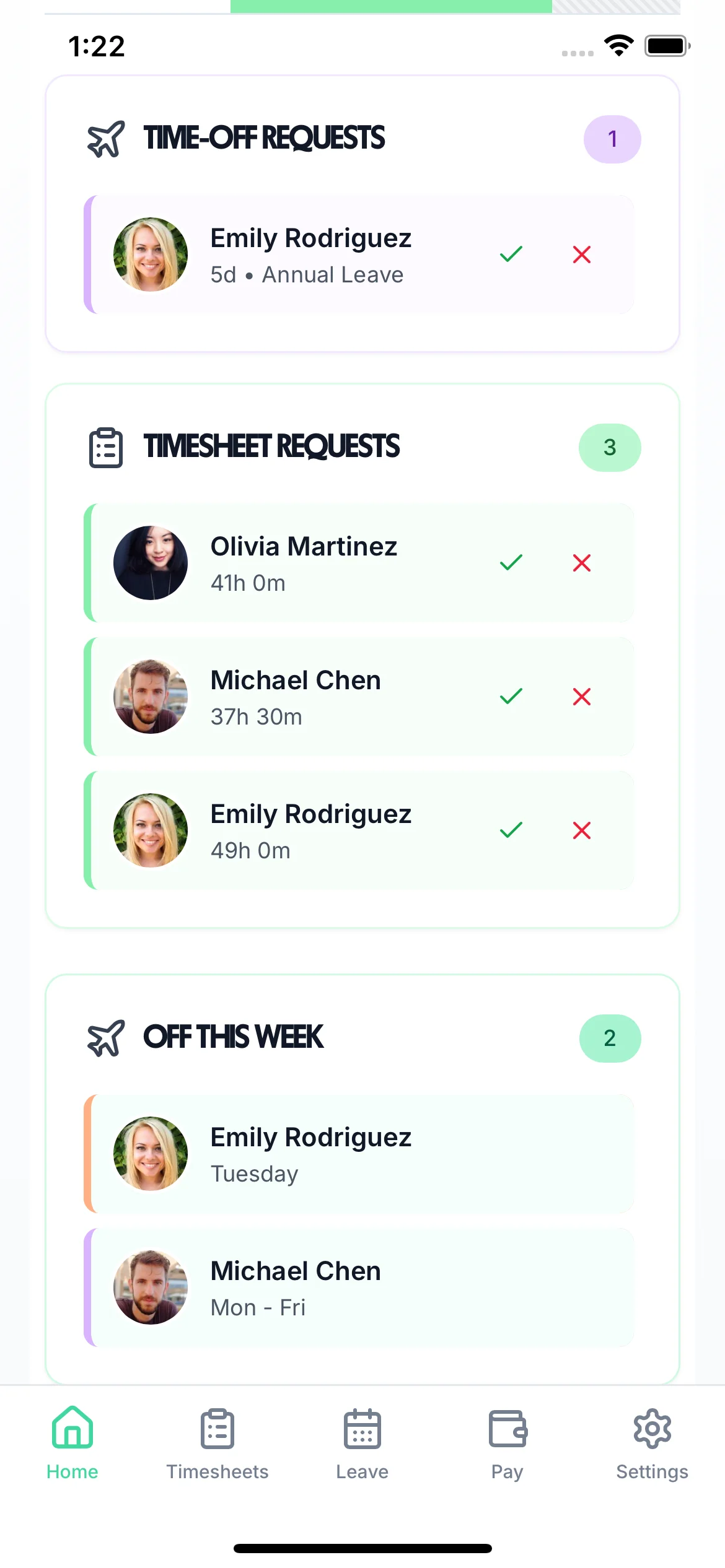
Track planned and unplanned employee absence in one centralised system. From annual leave and sick days to compassionate leave and TOIL — keep accurate records, manage approvals, and stay compliant with UK employment law.
“The app is simple to use, reliable, and makes managing holidays, absences, and staff records straightforward. The system has saved us a significant amount of administration time.”
 Jordan Ingoe, CLI Manchester
Tap a card to read the detail.
14-day free trial · No credit card needed
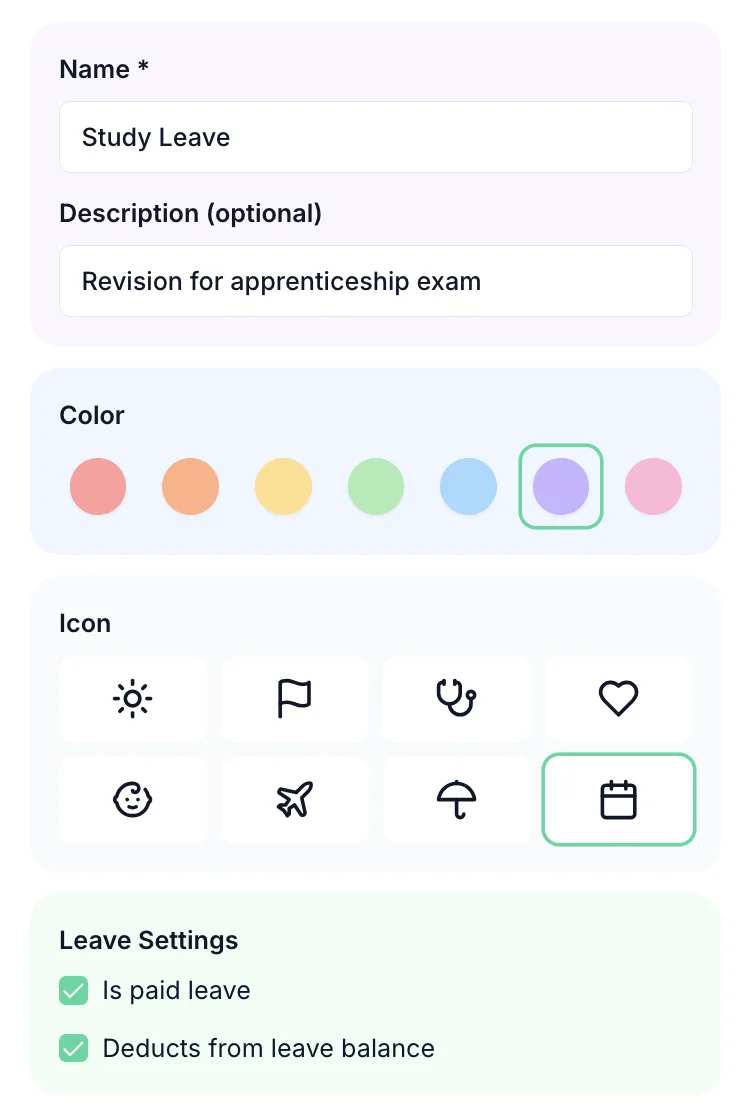
One system for all leave types. No more juggling separate trackers or spreadsheets for different categories.
Create unlimited absence types to match how your business works. Each category gets its own colour, icon, and individual allowance per employee — so everything is tracked in one place.
Unplanned absence costs UK businesses an average of £554 per employee per year. The key to reducing it is having a clear, centralised record of every absence — so you can have informed conversations and make better decisions.
The Bradford Factor is a formula used by HR teams across the UK to measure the impact of employee absence. It highlights frequent short absences — which are typically more disruptive than longer planned absences.
B = S² × D
S = number of separate absence spells • D = total days absent
For example, 10 single-day absences scores 1,000 (10² × 10), while one 10-day absence scores just 10(1² × 10).
Every absence request, approval, and rejection recorded in one centralised system
Accurate records make it easy to calculate Bradford Factor scores with our free calculator
Have return-to-work discussions backed by accurate data, not guesswork
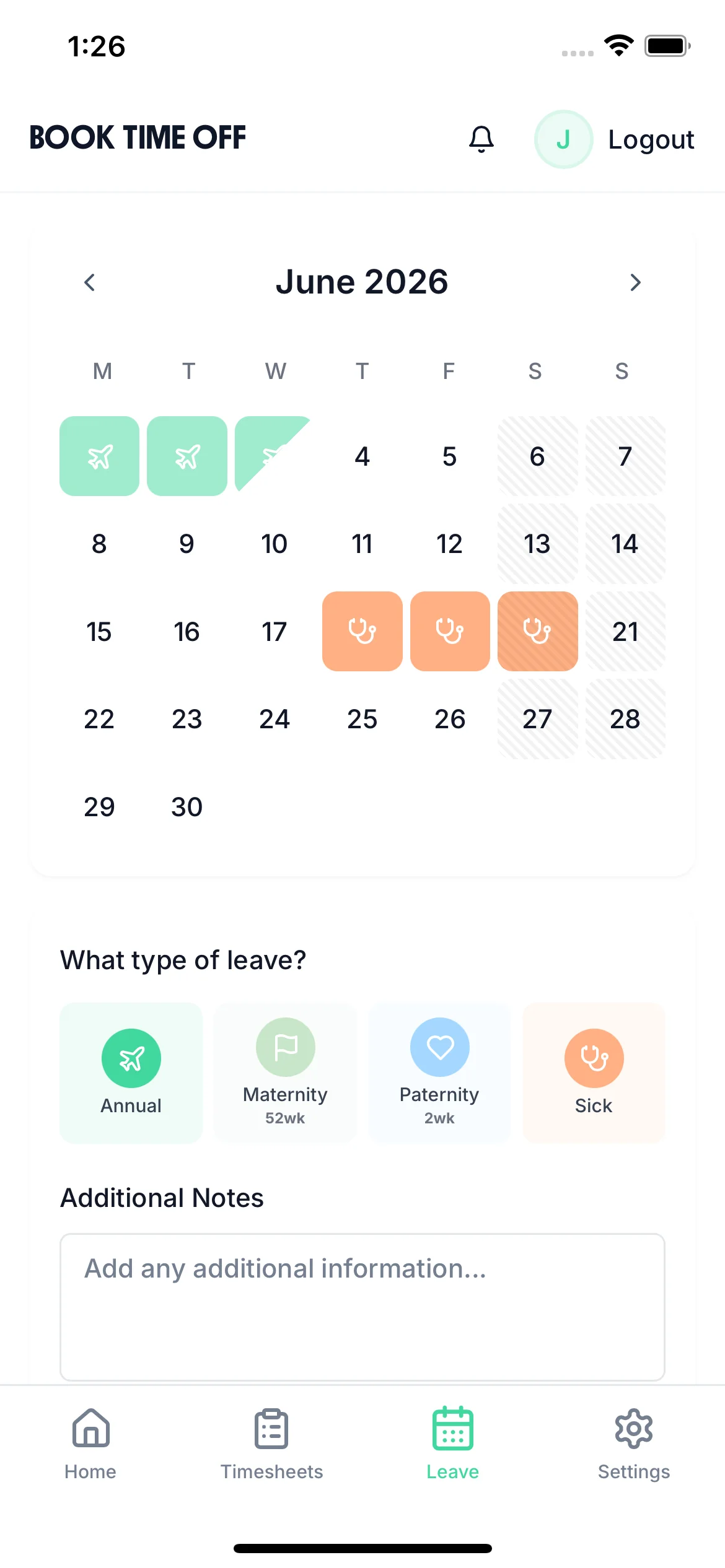
Visual team calendar shows approved leave, pending requests, sick days, and bank holidays in one view. Prevent staffing gaps and ensure adequate coverage at all times. Part of our complete holiday management software — works seamlessly with our employee scheduling tools.
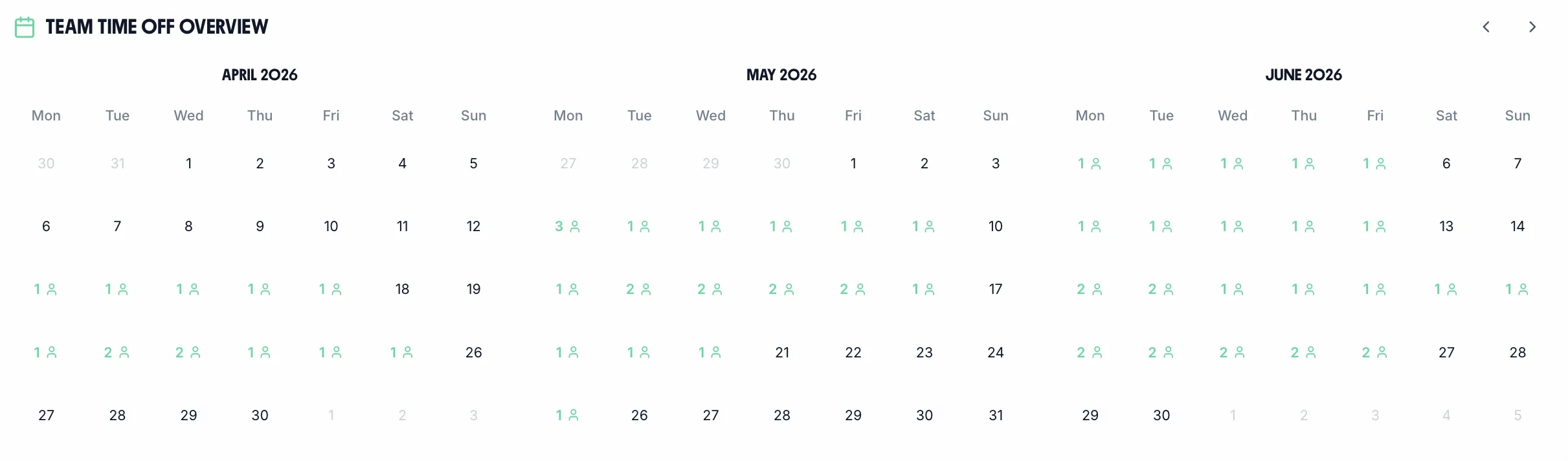
See who's off, who's sick, and who's on leave across your entire organisation
Instantly distinguish between annual leave, sick days, and other absence categories
Get alerted when too many people are absent on the same dates
All UK bank holidays automatically shown for England, Wales, Scotland, and Northern Ireland
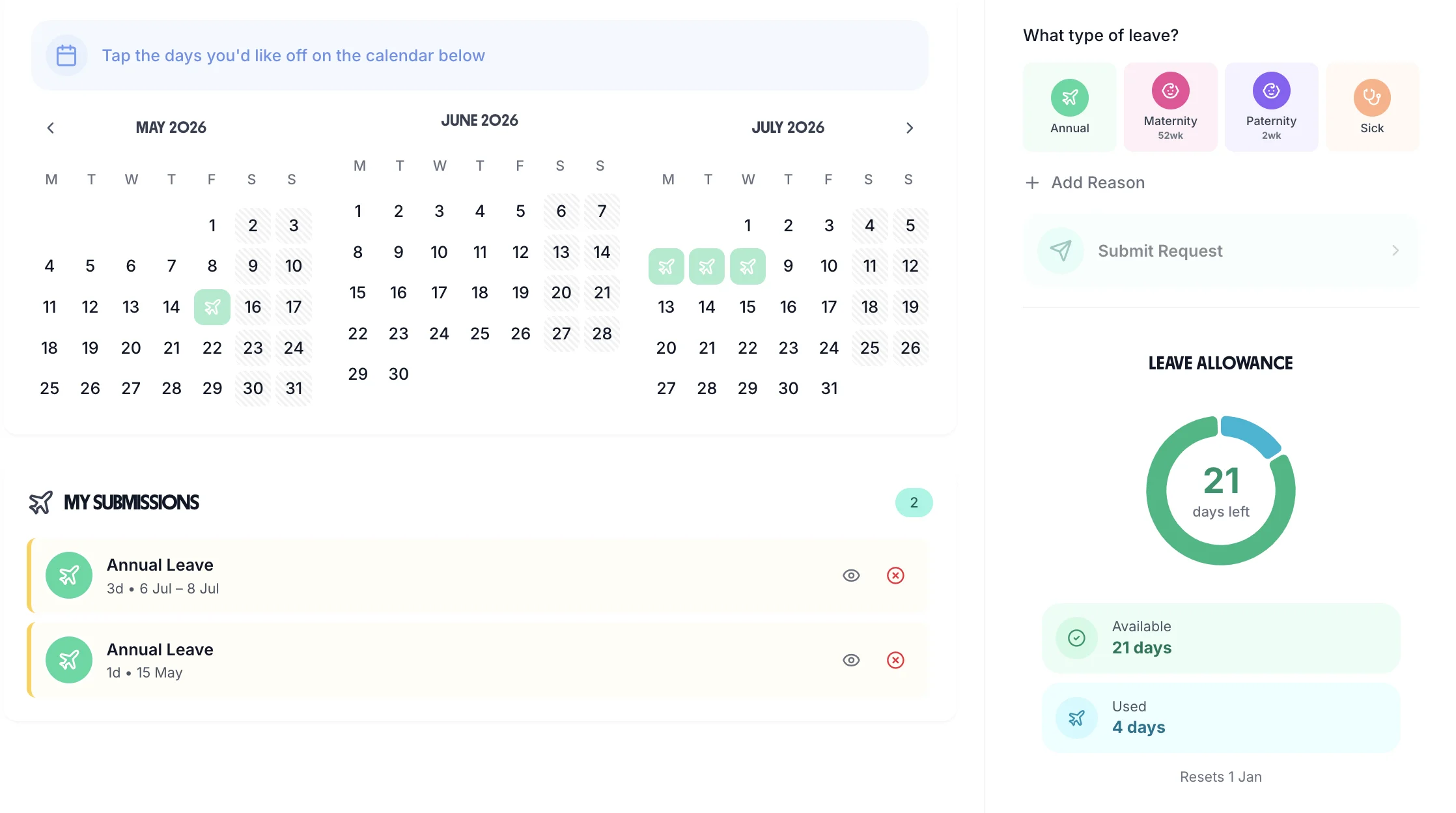
Employees submit absence requests online via our leave request software. Managers get notified instantly and approve or reject with one tap — no more emails or paper forms going missing. Every request is logged with a full audit trail via our approval workflow.
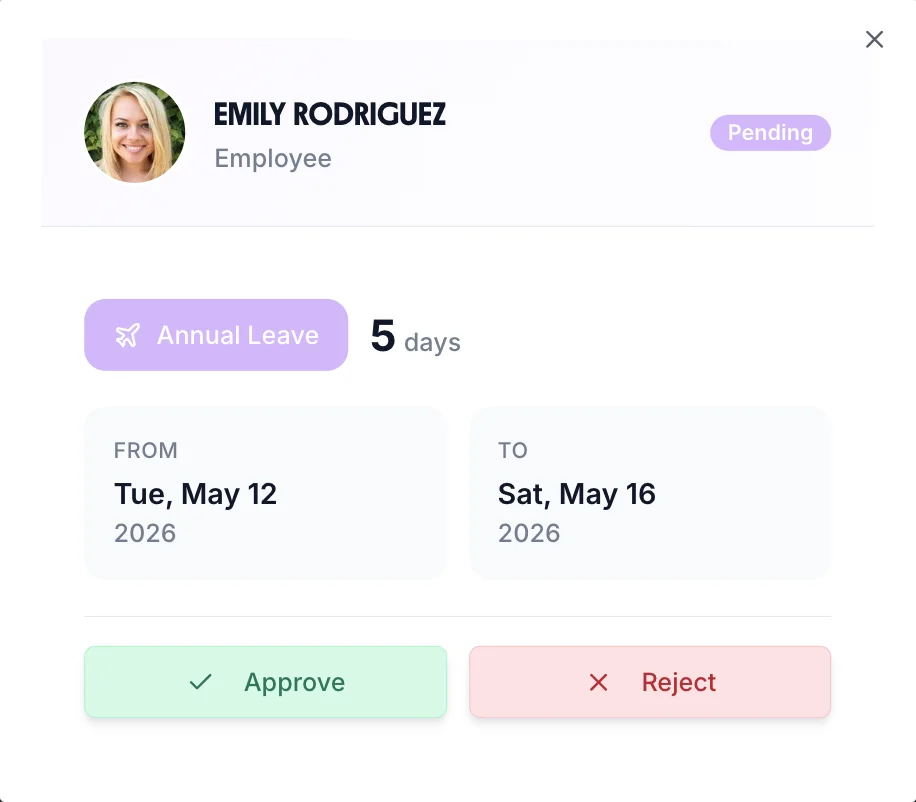
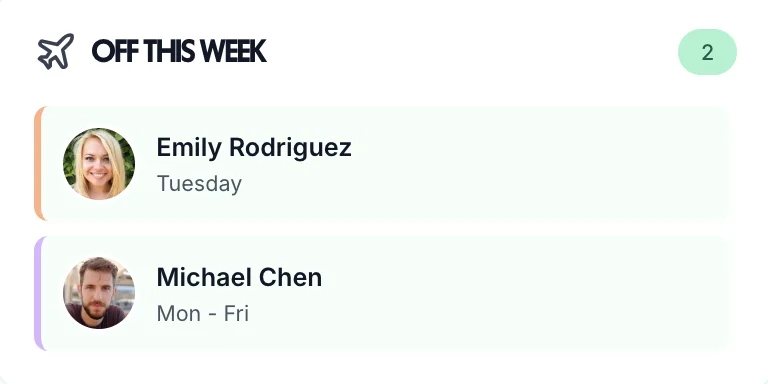
The “Who's Off” widget gives managers instant visibility into upcoming absences. No more surprises — know exactly who's available before planning meetings, approving requests, or scheduling shifts. This is especially valuable for industries like logistics, security, and facilities management where site coverage is critical.
Managing absence correctly isn't just good practice — it's a legal requirement. Getting it wrong can lead to employment tribunal claims and HMRC penalties.
Under the Working Time Regulations 1998, all UK workers are entitled to 5.6 weeks of paid holiday per year. For someone working 5 days a week, that's 28 days (which can include bank holidays).
TimeTally automatically calculates statutory entitlement including pro-rata for part-time workers and mid-year starters. No spreadsheet formulas to maintain.
Try our free holiday entitlement calculator or leave entitlement calculator to work out what your employees are owed.
Need to calculate absence scores? Use our free Bradford Factor calculator to assess absence patterns across your team.
Try itThese are the absence management headaches our customers had before switching to TimeTally.
"Nobody told me half the team was off on Friday"
Team calendar shows all absences before you approve
"We don't have any record of their sick days"
Every absence type tracked with a full audit trail
"How many days do I have left?"
Employees check their own balance anytime from the app
"The spreadsheet formula is wrong again"
Pro-rata and part-time entitlement calculated automatically
"We can't prove we followed a fair process"
Complete absence records for tribunal or audit purposes
"Leave is in one spreadsheet, sick days in another"
One system for every absence type, plus time tracking included
Dedicated absence management tools handle time off but can't track hours worked. That means two systems, two logins, and two bills. TimeTally gives you absence management AND time tracking for just £3 per employee per month. See how we compare in our comparison matrix.
Track statutory and contractual holiday entitlement, carry-over, and pro-rata calculations.
Record self-certified and doctor-certified sick leave. Track Bradford Factor scores automatically.
Accrue, request, and track time off in lieu from overtime and on-call callouts.
Create custom leave types for compassionate, bereavement, and other special circumstances.
Track maternity, paternity, and shared parental leave alongside regular annual leave.
Any custom leave type you need — configured with its own rules, entitlement, and approval flow.
One price. Every feature. No surprises.
Billed monthly. Cancel anytime.
Managing employee absence means navigating complex UK regulations around sick pay, dismissal procedures, and disability discrimination. Poor absence management is a leading cause of employment tribunal claims.
Employees are entitled to SSP if they earn at least £123 per week, have been off sick for four or more consecutive days (including non-working days), and have notified their employer within the required timeframe. SSP is currently £116.75 per week for up to 28 weeks. Employers who fail to pay SSP face HMRC enforcement, including penalties and backdated payments. Absence management systems must track SSP eligibility, waiting days, and the 28-week limit automatically.
Employees can self-certify sickness absence for up to seven calendar days. Beyond seven days, they must provide a fit note (formerly sick note) from a GP or other healthcare professional. The fit note may state the employee is 'not fit for work' or 'may be fit for work with adjustments'. Employers who accept self-certification beyond seven days or dismiss employees without obtaining fit notes risk unfair dismissal claims. Digital absence management creates a clear audit trail of when fit notes were requested and received.
Dismissing an employee due to long-term sickness can be fair if handled correctly, but the procedure matters more than the length of absence. Employers must: obtain up-to-date medical evidence, consult with the employee about their prognosis, consider whether the role can be kept open longer, explore alternative roles or adjustments, and give reasonable notice. Tribunals scrutinise absence records during these cases — absence management systems must provide the documented evidence of consultation and consideration that tribunals expect.
When employees return from extended sick leave, a phased return (reduced hours or duties) may be appropriate. This is not a legal requirement but is considered good practice and may be a reasonable adjustment under disability discrimination law. Phased returns typically last 2-6 weeks. During this period, employees are usually paid for actual hours worked unless the contract states otherwise. Absence management systems should track phased return periods separately from normal attendance to avoid misleading absence statistics.
Long-term health conditions often meet the Equality Act 2010 definition of disability. Employers must make reasonable adjustments to help disabled employees remain in work, including adjustments to absence management policies. For example, disability-related absence should be discounted when applying absence triggers or initiating formal procedures. Failing to make reasonable adjustments is one of the most common tribunal claims. Absence management systems must allow disability-related absence to be flagged and excluded from Bradford Factor calculations.
Employees with less than two years' service cannot ordinarily claim unfair dismissal, making probation periods lower-risk for absence-related dismissals. However, automatically protected rights still apply: pregnancy-related absence, discrimination claims, and dismissal for asserting statutory rights. High absence during probation can justify dismissal without extensive warnings, but employers must still follow a fair procedure and avoid discrimination. Clear absence tracking during probation helps demonstrate objective decision-making if challenged.
UK absence law and best practice is more detailed than most managers realise. Here's what the rules actually say.
Short-term absence involves frequent episodes of 1 to 3 days and is often managed through trigger points and return-to-work interviews. Long-term absence is typically 4 or more continuous weeks and requires a different approach involving medical advice and the capability procedure.
Employees must know who to contact, when, and by what method when they cannot attend work. First-day contact is the standard expectation. Some employers require daily contact during the first week of absence to maintain communication.
Return-to-work interviews are the single most effective absence reduction tool available to employers. Evidence indicates they can reduce absence by up to 20%. They must be conducted in a supportive, non-punitive manner to be effective.
A trigger point is a defined level of absence that prompts a formal management review — for example, 3 separate episodes within 3 months or 10 days lost in a rolling 12 months. Trigger points must be applied consistently across all employees.
Disability-related absence must be treated separately from general sickness absence. Including it in trigger point calculations without making reasonable adjustments risks a claim under the Equality Act 2010. Take specialist HR or legal advice when disability is a factor.
Long-term sickness absence is managed through the capability procedure, not a misconduct process. Dismissal must be a genuine last resort, reached only after exploring reasonable adjustments, obtaining medical advice, and allowing adequate time for recovery.
Employee Assistance Programmes, occupational health access, flexible working arrangements, and trained mental health first aiders all demonstrably reduce absence rates. Preventative investment in wellbeing typically costs less than managing the absence itself.
Track total days lost, frequency of episodes, estimated cost, and hotspots by department or team. Regular absence reporting helps identify emerging trends and enables targeted interventions before absence becomes a systemic or cultural problem.
Swipe to see more →
Whether you're a 10-person team or a 200-person operation, TimeTally gives you the visibility and control you need over employee absence.
Small business owners often wear the HR hat alongside everything else. TimeTally replaces spreadsheet absence tracking with a proper system — employees report absence in the app, you get notified instantly, and all records are in one place for when HMRC or employment tribunals ask.
As your team grows, informal absence tracking breaks down. TimeTally gives growing businesses trigger-point alerts, Bradford Factor scoring, and a return-to-work interview log — the three tools that employment lawyers and HR consultants recommend most for reducing absence.
Absence in healthcare directly affects patient safety and safe staffing ratios. TimeTally's healthcare absence management flags when cover falls below minimum requirements, integrates with shift rotas to show the real-time impact of absences, and maintains records that satisfy CQC inspection requirements.
High-turnover sectors like retail and hospitality suffer disproportionately from unplanned absence. TimeTally's reporting dashboard identifies which departments, shifts, or individuals have the highest absence rates — so managers can address patterns before they become a staffing crisis.
In short
Absence management software records every kind of time away from work — planned holiday, sick days, compassionate leave, TOIL and unpaid leave — in one place, with the approvals, balances and history that a spreadsheet loses. TimeTally keeps sickness on its own balance so it never eats into holiday, calculates Bradford Factor scores automatically from the absences recorded, shows the whole team's absence on one calendar, and exports the figures payroll needs to Xero, QuickBooks or CSV. £3 per employee a month.
Absence management software is a digital tool that helps businesses track and manage all types of employee absence — including planned leave (annual leave, TOIL) and unplanned absence (sick days, emergency leave). It replaces spreadsheets with automated workflows for requesting, approving, and recording time off, giving you a clear record of all absences in one place.
The Bradford Factor is a formula (S² × D) used by UK HR teams to measure the impact of employee absence, where S is the number of separate absence spells and D is total days absent. It highlights frequent short-term absences, which are typically more disruptive than occasional longer absences. Use our free Bradford Factor calculator to work out scores for your team, and use TimeTally to keep accurate absence records that make the calculation straightforward.
Yes. TimeTally is built specifically for UK businesses and supports Working Time Regulations 1998, statutory sick pay (SSP) tracking, ACAS-recommended absence management procedures, and correct holiday entitlement calculations including pro-rata for part-time workers. All absence records are stored securely for tribunal or audit purposes.
Absolutely. TimeTally lets you create unlimited custom leave types, each with its own colour, icon, and allowance rules. You can set up categories for sick leave, annual leave, compassionate leave, TOIL, maternity/paternity leave, unpaid leave, and any other type you need — all tracked independently in one system.
By recording every absence in a centralised system, you build a clear picture of time off across your team. Having accurate records makes it easy to calculate Bradford Factor scores using our free calculator, spot who has frequent short absences, and have informed return-to-work conversations. Businesses that actively manage and record absence data are better placed to offer early support and reduce unplanned absences.
Yes. Employees can request time off from the mobile app or web dashboard. Managers receive instant notifications and can approve or reject with optional notes. All absence records are stored centrally, giving you a complete history for each employee.
TimeTally costs just £3 per employee per month with no setup fees or hidden costs. This includes leave and absence tracking, timesheet management, team calendars, and unlimited custom leave types. Most standalone absence tools charge similar or higher prices without including timesheet functionality.
Still have a question? See all FAQs
Complete leave management for UK businesses with automated entitlements.
Track sick leave, SSP eligibility, and absence patterns.
Complete guide to managing staff leave in the UK.
Structured leave management for UK teams
Try TimeTally free for 14 days. Track every absence type, keep accurate records, and stay compliant with UK law.
No credit card required • Free 14-day trial • Cancel anytime
From the blog
How to Manage Staff Absence in the UK
Practical steps for tracking, recording, and reducing employee absence
How to Reduce Staff Absence
Evidence-based strategies to lower absence rates and Bradford Factor scores
The Bradford Factor Explained
How to calculate and use Bradford Factor scores to manage persistent absence
Sick Leave Policy Template UK
Free template covering SSP, fit notes, return-to-work interviews and more
Return to Work Form Template UK
Free return-to-work interview template and guidance for UK employers
UK Timesheet Management Guide
How to set up compliant timesheet processes for your UK team
A real person replies within 24 hours. No ticket queues, no bots.
A UK company, ICO regulated. Your data encrypted and never sold.