A free holiday entitlement calculator for full-time staff, part-time workers and mid-year starters. Work out annual leave in days or hours, pro rata where it applies, with UK statutory minimums built in — no spreadsheets needed.
Tap a card to read the detail.
14-day free trial · No credit card needed
This calculator gives you the numbers. TimeTally tracks holiday entitlement, leave requests, and approvals automatically — so you never need to calculate it manually again. From £3/employee/month.
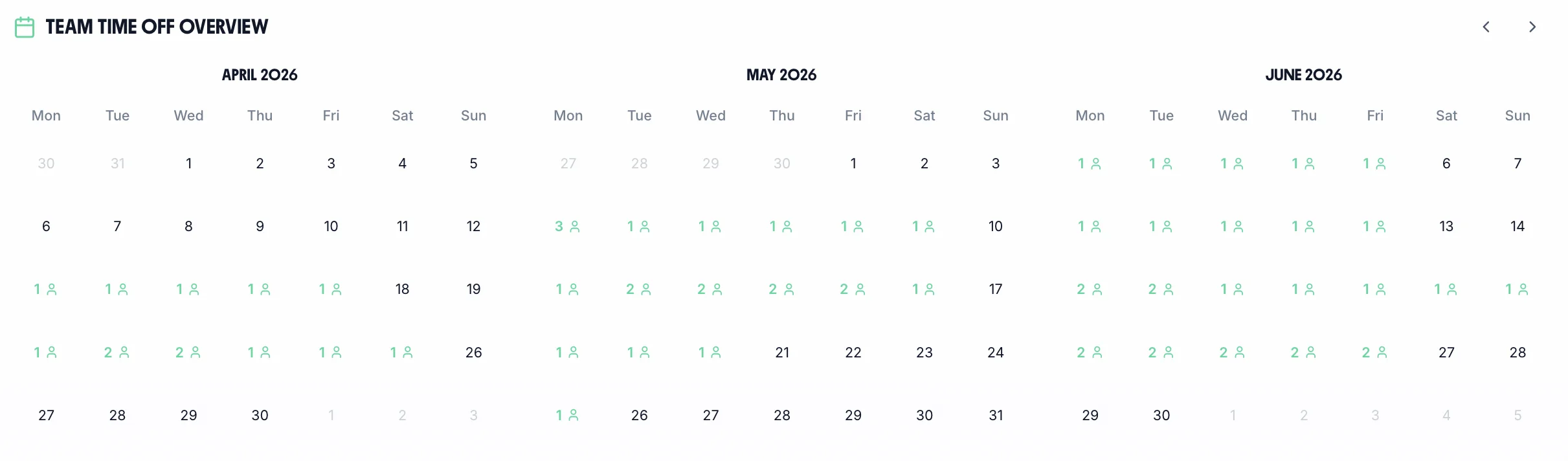
Every approved holiday, bank holiday, and leave request sits on one calendar. Spot clashes before they become a problem — no more cross-referencing spreadsheets.
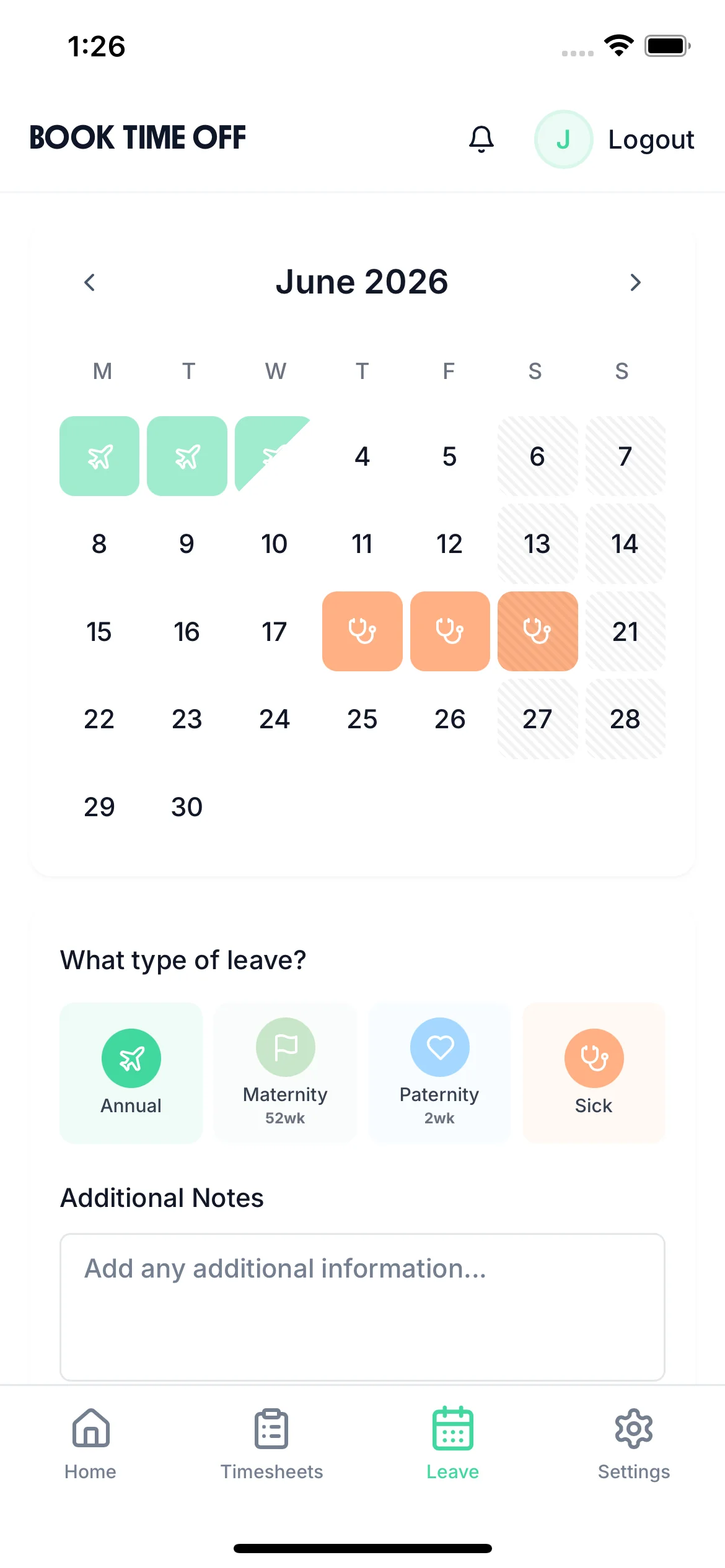
Staff submit leave requests via the iOS app. Entitlement balances update automatically. No emails, no forms, no back-and-forth.
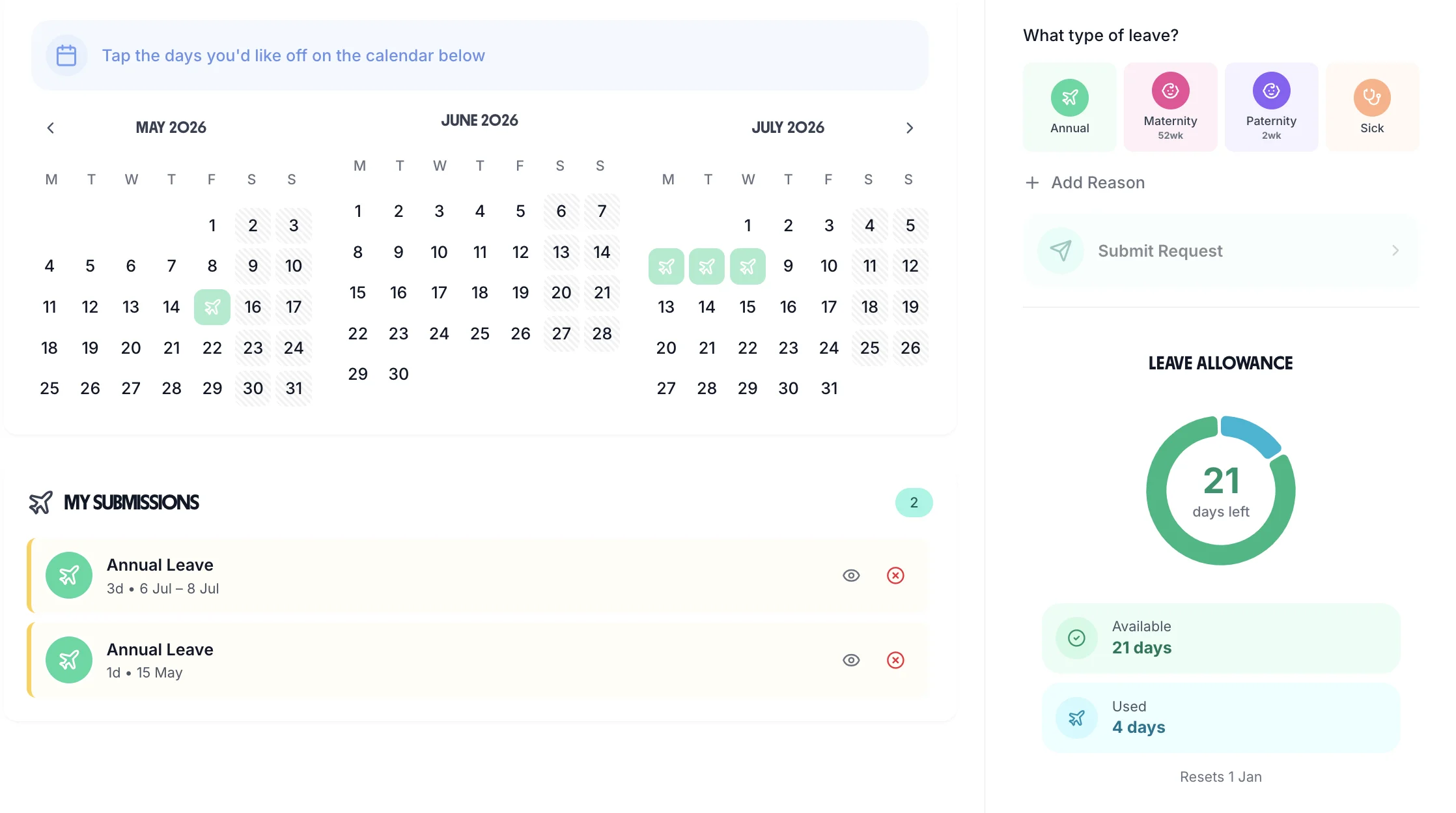
All leave requests land in your dashboard. Approve or query with a single tap. Every decision is timestamped — no more "I never got that request" disputes.
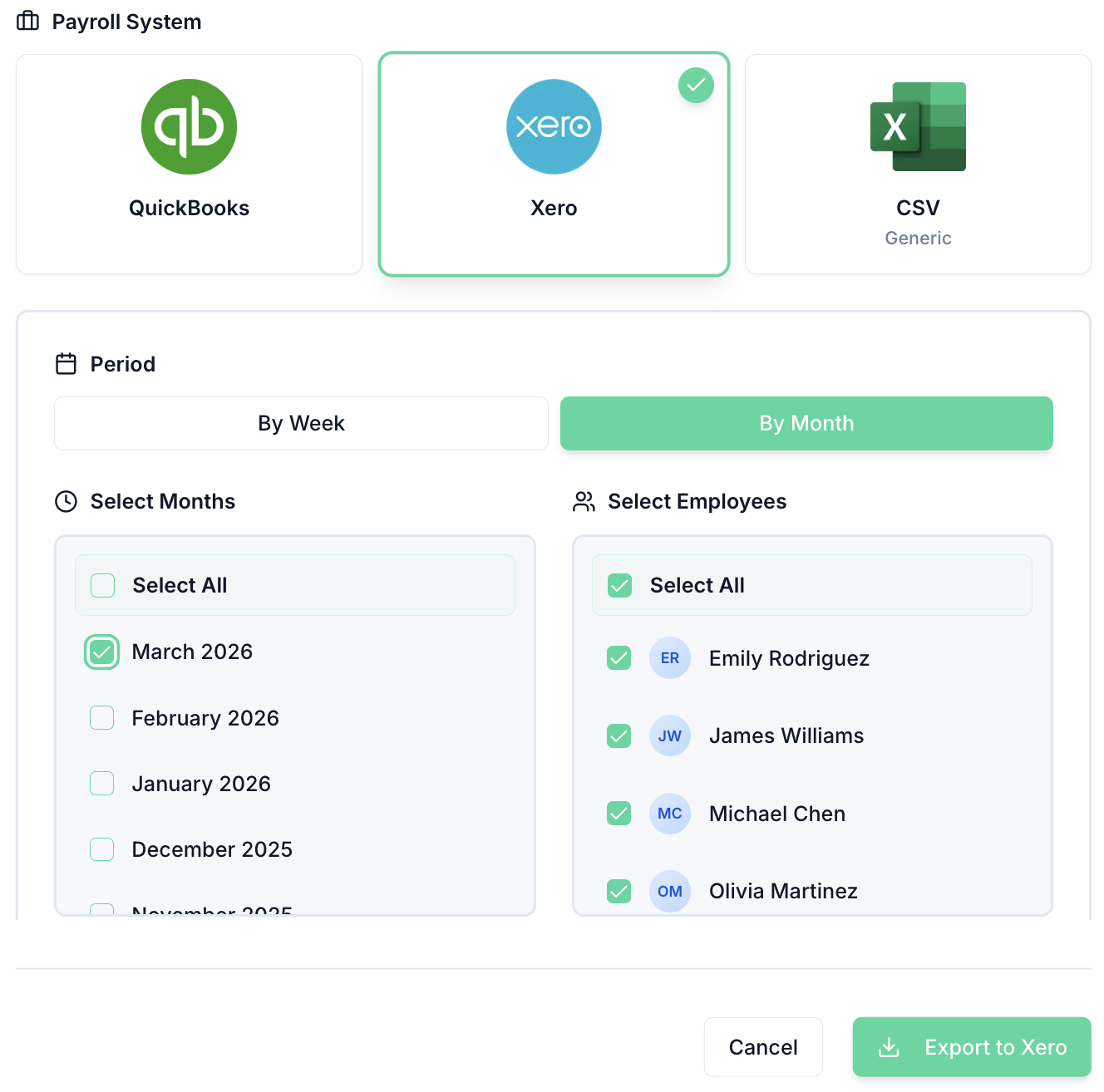
Approved leave is included in your payroll export automatically. Direct integration with Xero and QuickBooks — no manual adjustments, no missed deductions.
TimeTally automatically calculates pro-rata holiday entitlement for part-time staff and mid-year starters — no spreadsheets required. Explore all features or see how it works.
Automatic calculations
Pro-rata entitlement calculated automatically based on each employee's working pattern and start date, with statutory minimums built in.
One-tap approvals
Managers approve or reject holiday requests from any device, with a team calendar showing who's off and when.
Statutory calculations included
UK statutory entitlement, bank holiday handling, and pro-rata adjustments for part-timers and mid-year starters — all handled automatically.
Pro-rata calculations apply to part-time workers, mid-year starters, and leavers. Here's how the law requires you to handle each scenario.
Part-time employees are entitled to the same proportion of holiday as a full-time equivalent. The formula is: (Days worked per week ÷ Full-time days per week) × Full-time entitlement. A worker doing 3 days a week at a company where full-time is 5 days receives 3 ÷ 5 × 28 = 16.8 days. The result must always be rounded up, never down — rounding down breaches the Working Time Regulations 1998. The 28-day statutory minimum includes bank holidays, so if bank holidays are given as separate days off, the calculation should adjust accordingly.
Employees who start mid-way through a leave year are entitled to a pro-rated share of the annual entitlement for the remainder of that leave year. The calculation is: (Remaining days in leave year ÷ Total days in leave year) × Full annual entitlement. Employers can lawfully restrict when leave is taken in the first year but cannot reduce the accrual rate. An employee who starts on 1 October in a January–December leave year is entitled to approximately 7 days (3 months out of 12 × 28 days) for that partial year.
Where employees work irregular hours or variable shift patterns, expressing holiday entitlement in hours rather than days is more accurate and legally sound. The hours-based approach: annual hours entitlement = days entitlement × average working day length. A worker entitled to 28 days who works a 7.5-hour day is entitled to 28 × 7.5 = 210 hours. This approach removes ambiguity for workers whose 'days' vary in length, and is the recommended method where any member of the team works shifts of different durations.
Part-time workers must not be treated less favourably than full-time comparators in relation to bank holidays. If a bank holiday falls on a day the part-time worker does not normally work, they are still entitled to a proportionate allowance of bank holiday time — either as additional days off or incorporated within their overall entitlement. A part-time worker who never works Mondays should not lose all 8 UK bank holidays simply because they fall on Mondays. Failing to make an adjustment can constitute indirect discrimination.
When a pro-rata calculation produces a fraction of a day or hour, the fraction must be rounded up to the nearest half-day or full day, depending on your policy. Rounding down is not permitted under the Working Time Regulations — it creates an under-entitlement, which is a breach of statutory rights. For example, 16.8 days must become either 17 days or (if the employer rounds to half-days) 17 days. This applies to statutory entitlement only — employers can round down contractual entitlement above the statutory floor, but rarely do.
On termination, employees are entitled to payment in lieu of any accrued but untaken holiday entitlement. The payment must be based on actual pay received, not contracted pay — relevant particularly where overtime, commission, or irregular payments have been received. The 2019 Bear Scotland ruling and subsequent case law confirmed that 'normal remuneration' for holiday pay purposes includes regular overtime, standard commission, and standby allowances. Underpaying holiday on termination by using basic salary only is a common and costly error.
Employers who offer more than the statutory 28 days (e.g. 30 or 33 days inclusive of bank holidays) must pro-rate the contractual entitlement in the same way as the statutory minimum. A part-time worker on 3 days per week at a company offering 33 days' total entitlement should receive 3 ÷ 5 × 33 = 19.8 days (rounded up to 20). Applying pro-rata only to the statutory minimum while giving all full-time workers the additional days in full would treat the part-time worker less favourably and breach the Part-Time Workers Regulations 2000.
Employers operating a fixed leave year (e.g. April to March) must pro-rate entitlement for any employee who joins, leaves, or changes hours during the year. Those on anniversary-year schemes (where each employee's entitlement resets on their start date anniversary) automatically receive a full year's entitlement from day one anniversary — but must still be pro-rated for partial years before the first anniversary. Both systems are lawful; the fixed leave year is simpler to administer for payroll and planning.
Swipe to see more
“TimeTally has been excellent for our business. The app is simple to use, reliable, and makes managing holidays, absences, and staff records straightforward. The system has saved us a significant amount of administration time and gives both managers and employees clear visibility of leave balances and requests. Highly recommended for any business looking for an easy-to-use workforce management solution.”
 Jordan Ingoe, CLI Manchester
Everything you need to know about pro-rata holiday calculations for part-time workers and mid-year starters.
Related tools & resources
Enter a start date and working pattern once. TimeTally calculates entitlement, tracks what is used, and shows staff their own balance.