Tap a card to read the detail.
14-day free trial · No credit card needed
This calculator gives you the numbers. TimeTally handles the requests, approvals, and payroll notifications automatically — so every paternity leave is tracked and paid correctly. From £3/employee/month.
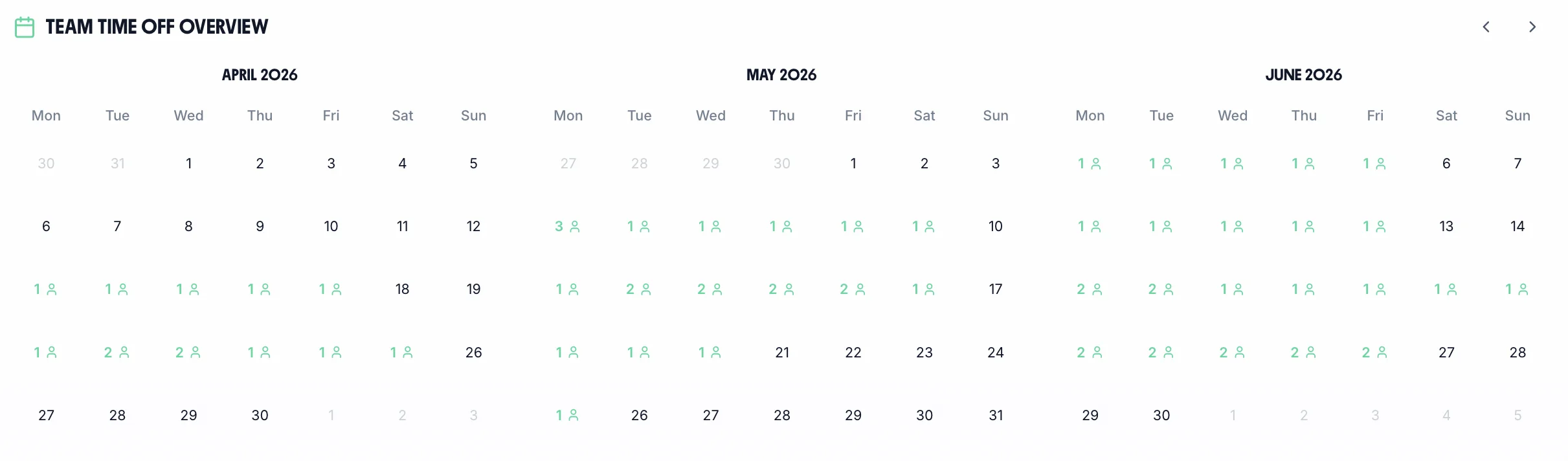
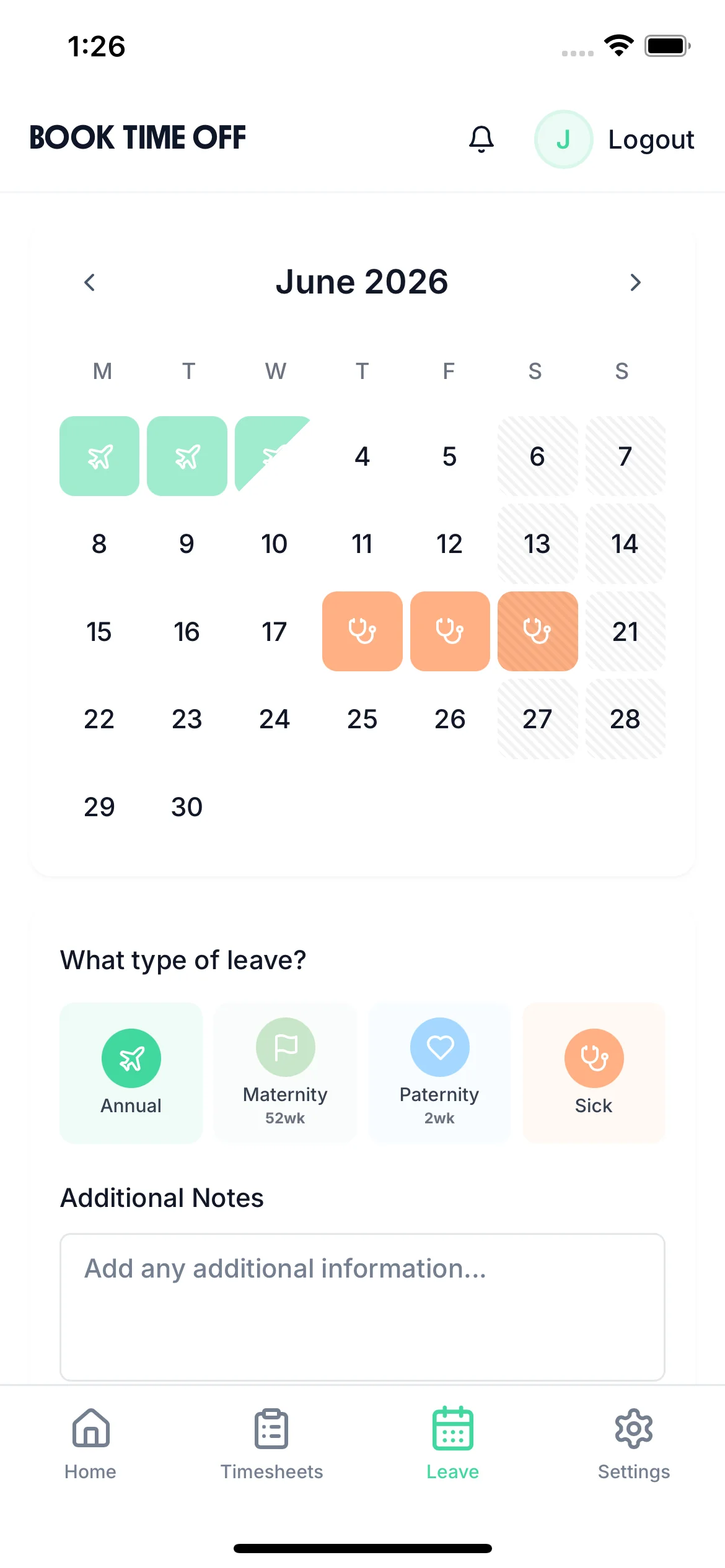
Employees submit paternity leave requests directly from the iOS app or web dashboard. Managers see every request instantly and can approve with a single tap — no email chains, no paper forms.
“TimeTally has been excellent for our business. The app is simple to use, reliable, and makes managing holidays, absences, and staff records straightforward. The system has saved us a significant amount of administration time and gives both managers and employees clear visibility of leave balances and requests. Highly recommended for any business looking for an easy-to-use workforce management solution.”
 Jordan Ingoe, CLI Manchester
Paternity rights changed significantly in 2024 and 2025 — here's what employers need to know.
Statutory Paternity Pay (SPP) is paid at the lower of 90% of the employee's average weekly earnings or the weekly SPP flat rate (£187.18 for 2025/26). It is payable for up to two weeks of statutory paternity leave. SPP is administered through the employer's payroll and recovered from HMRC: small employers with a total NIC liability under £45,000 in the previous tax year can reclaim 103%; larger employers reclaim 92%. Only the statutory element of any SPP payment is recoverable — any enhanced top-up is entirely at the employer's cost.
Eligible employees are entitled to one or two weeks of statutory paternity leave. The two weeks cannot be taken as individual days — leave must be taken as either one complete week or two complete weeks. From April 2024, the two weeks no longer need to be consecutive and can be taken at any point within the first 52 weeks of the child's birth or adoption placement (previously this window was only 56 days). Employers should update policies and self-service systems to reflect the extended and flexible window.
To qualify for Statutory Paternity Pay, an employee must have at least 26 weeks' continuous service with the employer by the 15th week before the expected week of childbirth; be earning at or above the lower earnings limit (£123 per week in 2025/26) averaged over the eight weeks before the qualifying week; and still be employed by the employer at the date of the child's birth. They must also satisfy the relationship condition — being the biological father, the mother's civil partner or partner, or an adoptive parent.
Following changes that took effect from April 2024 under the Paternity Leave (Amendment) Regulations 2024, fathers and partners can now take their two weeks of statutory paternity leave as two separate non-consecutive weeks, at any point up to 52 weeks after the birth or adoption placement. Previously, leave had to be taken within 56 days and in a single block. The minimum notice for each period of leave is 28 days. This change brings UK paternity leave significantly closer to the flexibility offered by Shared Parental Leave.
There is no legal obligation on employers to pay more than the statutory SPP rate, but many offer enhanced paternity pay as part of a competitive benefits package. Enhanced pay is entirely contractual and typically covers the two weeks of paternity leave at the employee's full or partial salary. The enhanced element is subject to PAYE and National Insurance in full and cannot be reclaimed from HMRC. Where enhanced paternity pay is offered, it must be made available consistently to all eligible employees — restricting it to certain groups without justification may create discrimination risk.
Shared Parental Leave (SPL) enables eligible couples to share up to 50 weeks of leave and up to 37 weeks of Shared Parental Pay (ShPP) in the first year following birth or adoption. To take SPL, the primary carer must curtail their maternity or adoption leave. ShPP is paid at the same weekly rate as SPP. A parent who has taken SPL cannot also take statutory paternity leave — the two are mutually exclusive. Employers with enhanced maternity pay policies should consider whether an equivalent enhanced ShPP rate is also required under sex discrimination law.
Annual leave — including contractual leave above the statutory minimum — continues to accrue in full during statutory paternity leave. Where paternity leave spans a leave year boundary, any leave accrued in the old year that the employee was unable to take because of paternity leave should be allowed to carry over into the new leave year, even if the policy normally operates a strict use-it-or-lose-it rule. Employers should adjust leave balance records on return to reflect the full accrual.
The right to statutory paternity leave and SPP applies equally to adoptive parents — one adoptive parent may take adoption leave while the other takes paternity leave. For surrogacy arrangements, the intended parent who is not taking adoption leave may take statutory paternity leave, provided the qualifying conditions are met. Foster parents do not have an automatic statutory entitlement to paternity or adoption leave, although some local authorities offer contractual arrangements for approved foster carers. Employers should consider their contractual terms to ensure consistent treatment across all family-forming routes.
Swipe to see more →
Everything you need to know about paternity pay under UK law. For related topics, try our maternity leave calculator or holiday entitlement calculator.
Calculate Statutory Maternity Pay and maternity leave entitlement
Calculate SSP entitlement for employees off sick
Work out statutory annual leave for full-time and part-time staff
Check National Minimum Wage and National Living Wage rates
One calendar for every kind of leave, with balances and cover visible before you approve.