A ready-to-use Excel timesheet you can fill in today. No software, no signup, no cost — just download and start tracking hours.
 TimeTally Software
Employees log hours on mobile. You approve in one tap. Hours flow straight to payroll. No spreadsheets, no chasing.
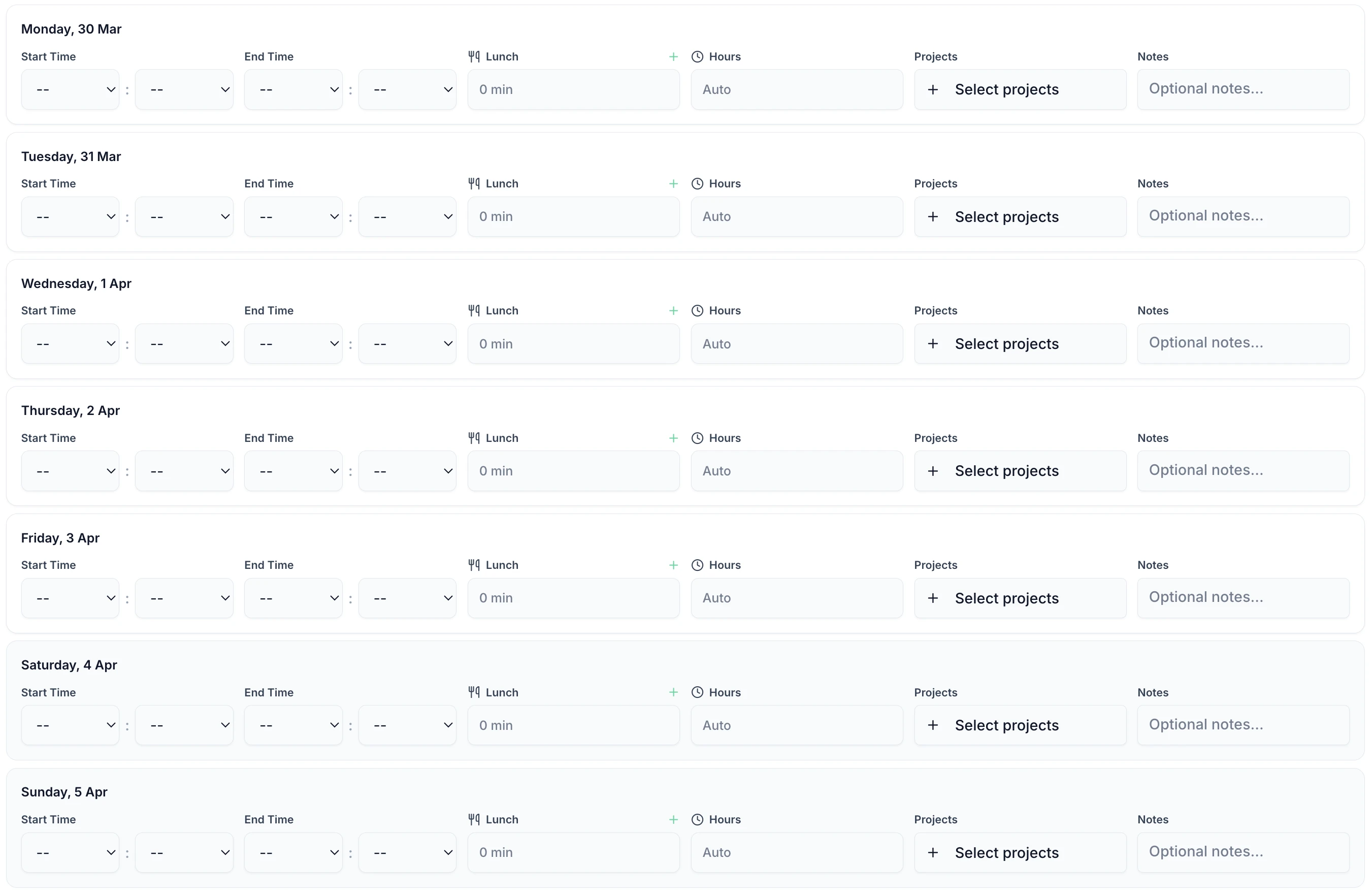
Tap any card for the detail.
14-day free trial · No credit card needed
Every field a UK employer needs to stay compliant with HMRC and the Working Time Regulations 1998.
Identifies who worked the hours — required for NMW enforcement records
Exact times worked each day, with break durations recorded separately
Daily and weekly hour totals, with overtime calculated at your configured rate
Space for manager signature or approval — creates the paper trail you need
Links each timesheet to the correct payslip for audit purposes
Simple Excel and Google Sheets format — add or remove columns to suit your business
Up and running in five steps — no software needed.
Click the download button to get the Excel file instantly — no email required.
List all staff members who submit timesheets in the employee column.
Fill in start times, end times, and break durations for each day worked.
Verify daily and weekly totals are within the 48-hour Working Time limit.
Manager signs or approves, then store securely for at least 3 years (6 recommended).
Under the Working Time Regulations 1998 and HMRC's National Minimum Wage enforcement rules, UK employers must keep adequate records of hours worked. Getting this wrong can lead to NMW penalties, back pay orders, or employment tribunal claims.
HMRC requires timesheet and wage records to be kept for at least 3 years for National Minimum Wage purposes. For employment tribunal claims — covering unfair dismissal, discrimination, or unpaid wages — records can be requested going back 6 years. Most employment solicitors recommend keeping all timesheet records for 6 years as standard practice. Paper records can be lost, damaged, or misfiled — digital records stored in the cloud are far safer.
Employees cannot be required to work more than an average of 48 hours per week, calculated over a 17-week reference period. Workers can opt out in writing, but you cannot make this a condition of employment. Your timesheet must show weekly totals clearly so you can monitor compliance — particularly for employees who work variable hours or take on overtime regularly.
Any shift longer than 6 hours entitles the worker to a minimum 20-minute uninterrupted rest break. Young workers (under 18) are entitled to 30 minutes after 4.5 hours. Unpaid breaks must be deducted from total hours worked — this directly affects both pay calculations and NMW compliance. Your timesheet must record break duration separately from working time.
While not legally mandated, manager approval of timesheets is essential protection against disputes. If an employee later claims they worked hours you didn't pay, an approved timesheet is your primary evidence. With paper templates, this means a physical signature. With digital timesheet software, approval is timestamped and tamper-evident.
Read our full HMRC timesheet requirements guide for the complete legal picture.
Spreadsheets are free to start but expensive to maintain. Here's what you're actually paying in time every pay period.
Chasing submissions every week
No automatic reminders — you email, text, and chase staff before you can even start payroll.
Calculation errors
One broken formula or typo means someone gets overpaid or underpaid. You often don't catch it until payday.
No approval audit trail
If HMRC asks who approved a timesheet, spreadsheets have no built-in workflow or timestamp.
Manual payroll entry
Copy-pasting hours into your payroll software every month is slow, tedious, and error-prone.
Version control chaos
Which file is right — Timesheet_v3_FINAL_updated.xlsx or the one from last week's email?
No holiday integration
Timesheets and leave live in separate spreadsheets with nothing connecting them — leading to payroll mistakes.
The template gets you started. TimeTally replaces it entirely — with mobile timesheet entry, manager approvals, automatic pay calculations, and direct payroll export. All in one place, from £3/employee/month.
Staff submit their hours via the iOS app or mobile browser — start time, end time, breaks. No paper forms, no spreadsheets, no chasing. Hours are calculated automatically and sent to you for approval.
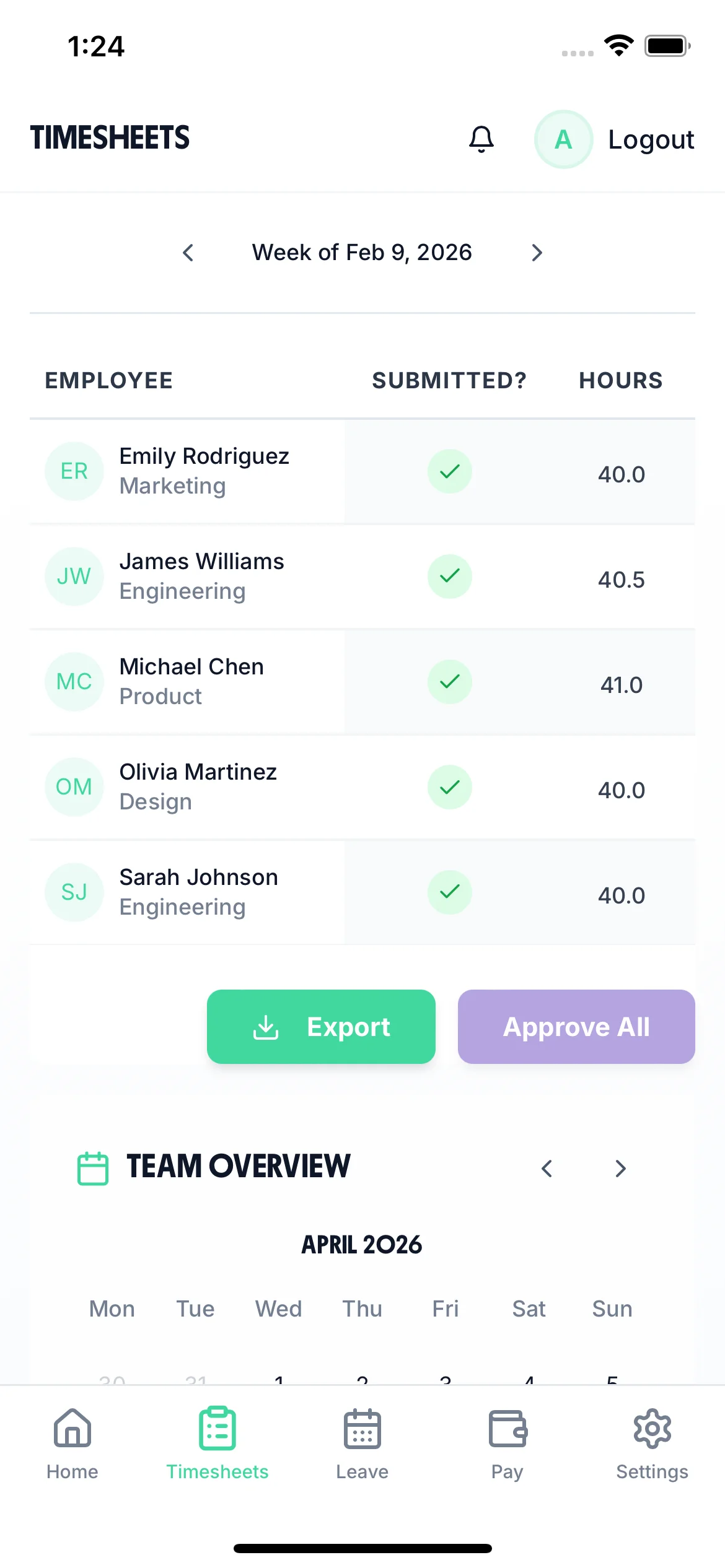
All submitted timesheets land in your dashboard. Approve or query in a single tap, with a timestamped audit trail that's far more defensible than a signed spreadsheet.
Set hourly rates, overtime thresholds, and TOIL rules once. TimeTally calculates the correct pay for every employee every week — no formulas, no manual adjustments, no mistakes.
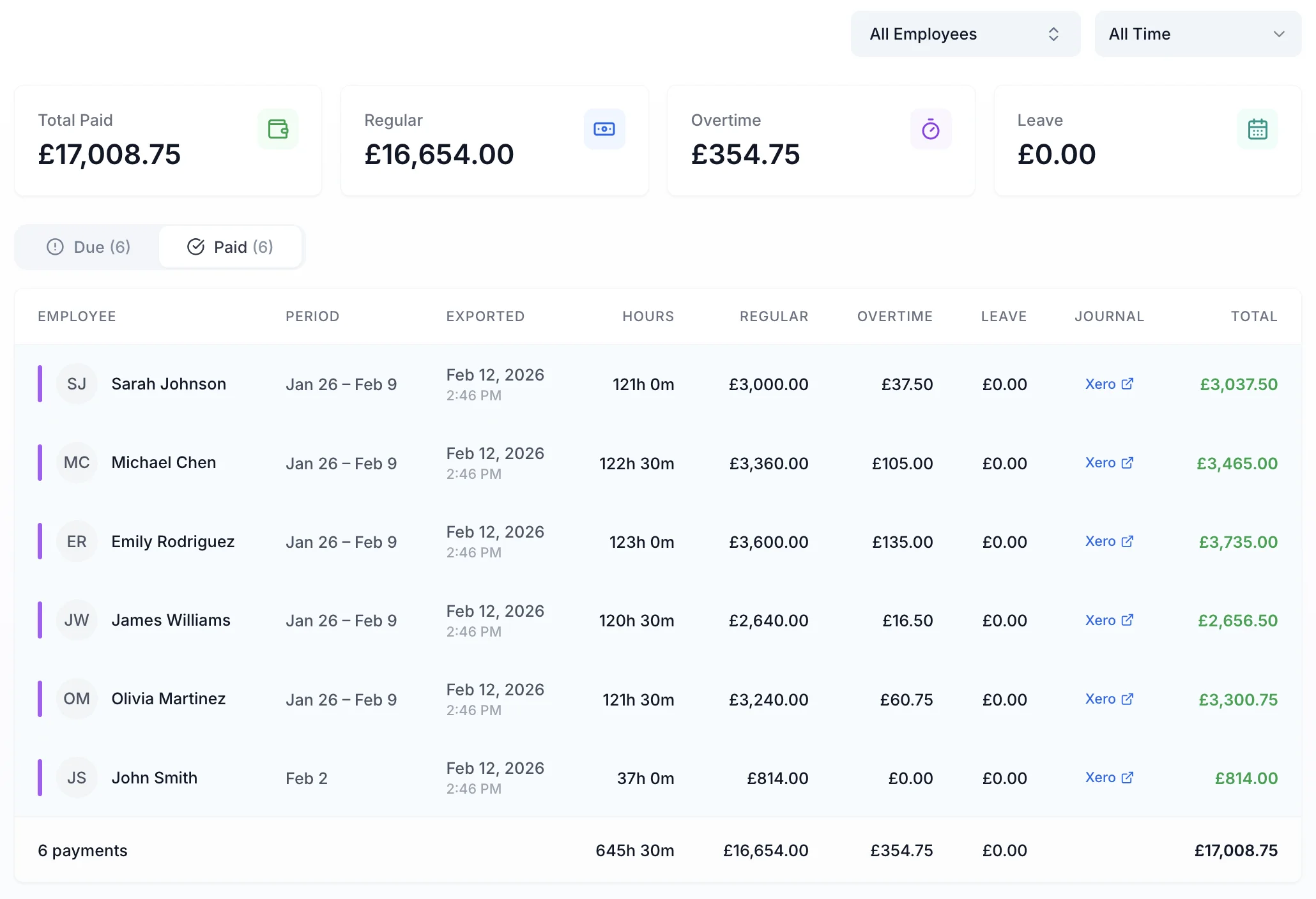
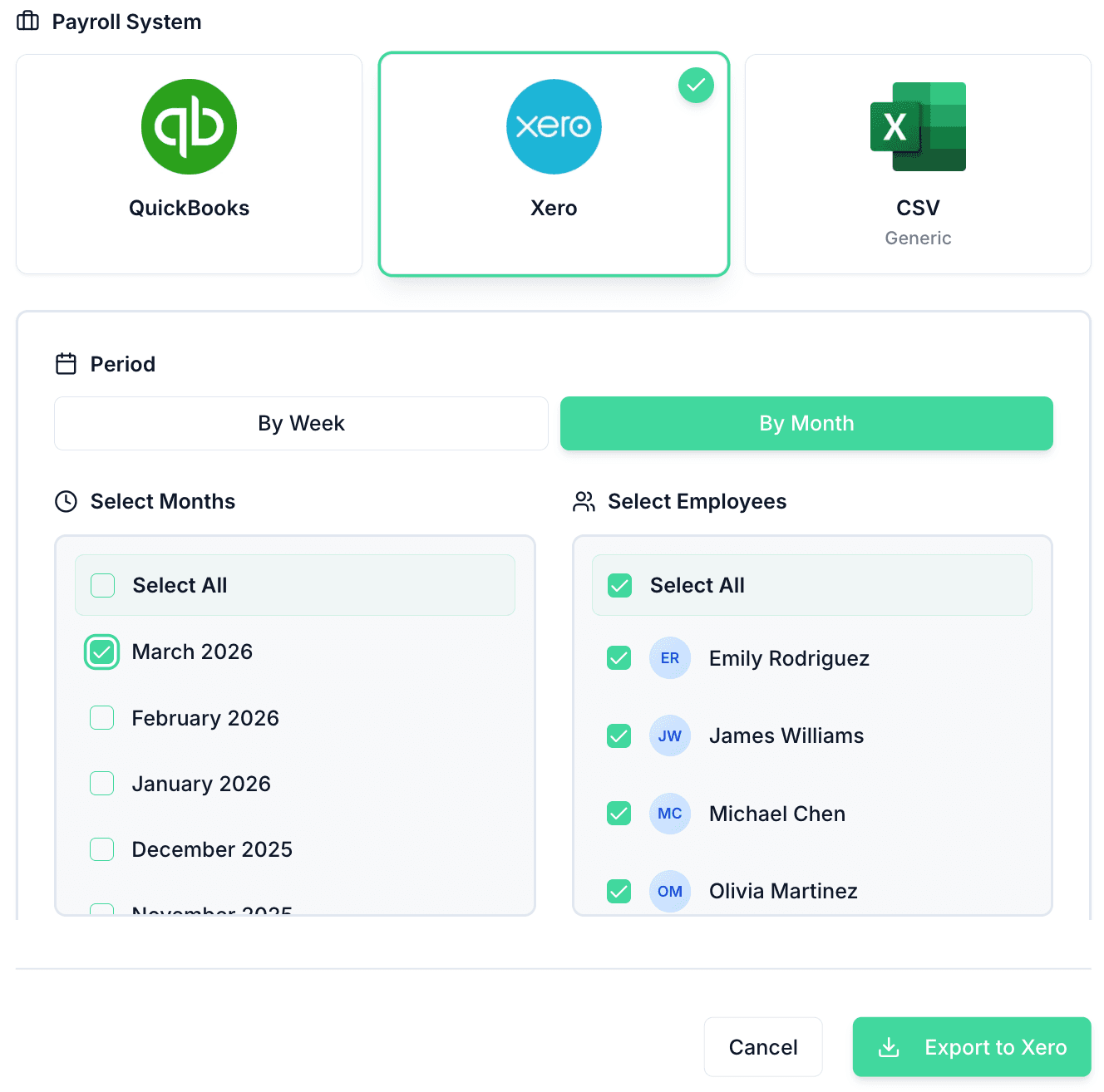
Once timesheets are approved, export hours and pay data directly to Xero, QuickBooks, or CSV. No copy-pasting, no Monday morning data entry, no errors.
“TimeTally has been excellent for our business. The app is simple to use, reliable, and makes managing staff records straightforward. The system has saved us a significant amount of administration time. Highly recommended for any business looking for an easy-to-use workforce management solution.”
 Jordan Ingoe, CLI Manchester
Under the Working Time Regulations 1998 and HMRC's National Minimum Wage enforcement rules, UK employers must keep records of hours worked. A compliant timesheet needs: employee name and ID, dates worked, start and end times, break durations, total hours worked (daily and weekly), overtime hours, and manager approval. HMRC requires these records to be kept for at least 3 years — 6 years is recommended for employment tribunal protection.
Yes, Excel templates are acceptable for HMRC record-keeping provided they contain all required fields and are stored securely for the required period. However, Excel spreadsheets have no audit trail — records can be edited without trace. Digital timesheet software like TimeTally creates tamper-evident logs that are far more defensible if HMRC or an employment tribunal asks questions.
HMRC requires timesheet records to be kept for a minimum of 3 years for National Minimum Wage purposes. However, if an employee might bring an employment tribunal claim (for unfair dismissal, discrimination, or unpaid wages), those records can go back up to 6 years. Most employment solicitors recommend keeping all payroll and timesheet records for 6 years as standard.
There is no statutory requirement for employees to physically sign timesheets, but having a record of approval significantly strengthens your position in a dispute. A manager countersignature (or digital approval) confirms that the hours were reviewed and agreed. Digital timesheet software can capture this approval automatically, with a timestamped audit trail.
A rota (or schedule) plans who should work and when — it is a forward-looking tool. A timesheet records what actually happened — the hours employees actually worked. Both serve different purposes: the rota manages coverage, and the timesheet feeds payroll and legal records. Most businesses need both, especially if actual hours frequently differ from planned shifts.
A free template works for very small businesses with just a few employees and straightforward hours. As your team grows, spreadsheets create problems: no reminders for late submissions, no approval workflow, manual payroll entry, no holiday integration, and no audit trail. Most businesses with 5 or more employees find dedicated timesheet software saves more time than it costs.
You can absolutely use this template while evaluating digital options — it gives you everything you need legally. If you want to move to automated timesheets, TimeTally replaces the template entirely: employees log hours via app, managers approve digitally, and data exports straight to Xero, QuickBooks, or CSV. Start a free trial at any point and import your existing employee list.
Still have a question? See all FAQs
More guides to help you manage employee hours in the UK