Instantly calculate statutory holiday entitlement and holiday pay for zero-hours workers. Enter hours worked and get the exact figures — using the UK 12.07% statutory rate.
Tap a card to read the detail.
14-day free trial · No credit card needed
This calculator gives you the numbers. TimeTally tracks holiday accrual, leave requests, and approvals automatically — so you never need to calculate it manually again. From £3/employee/month.
Every approved holiday, bank holiday, and leave request sits on one calendar. Spot clashes before they become a problem — no more cross-referencing spreadsheets.
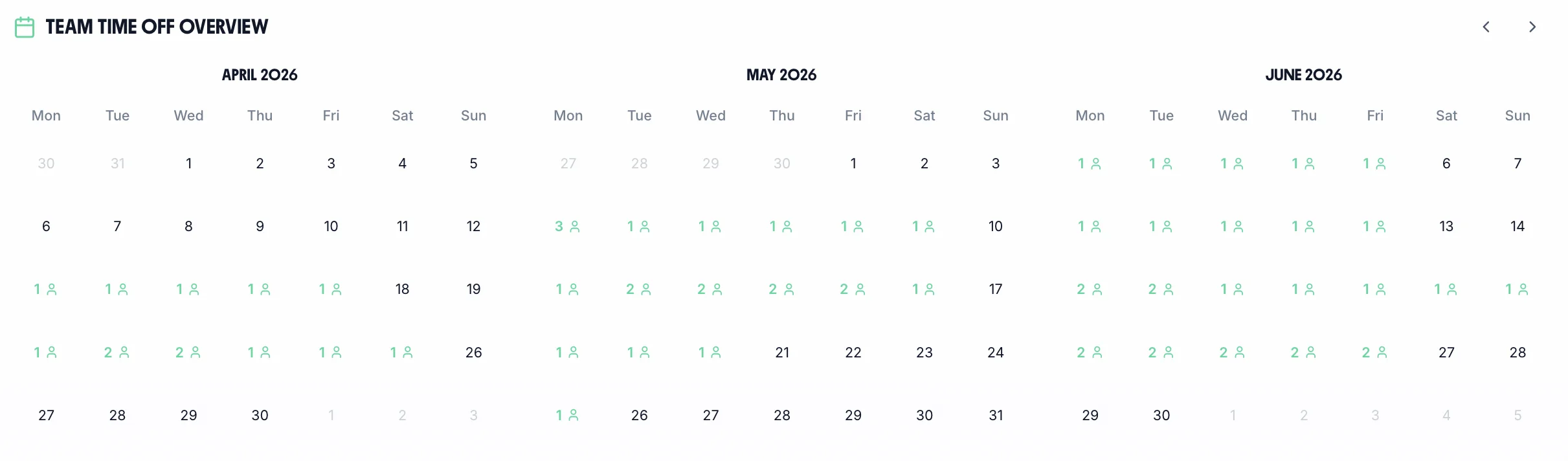
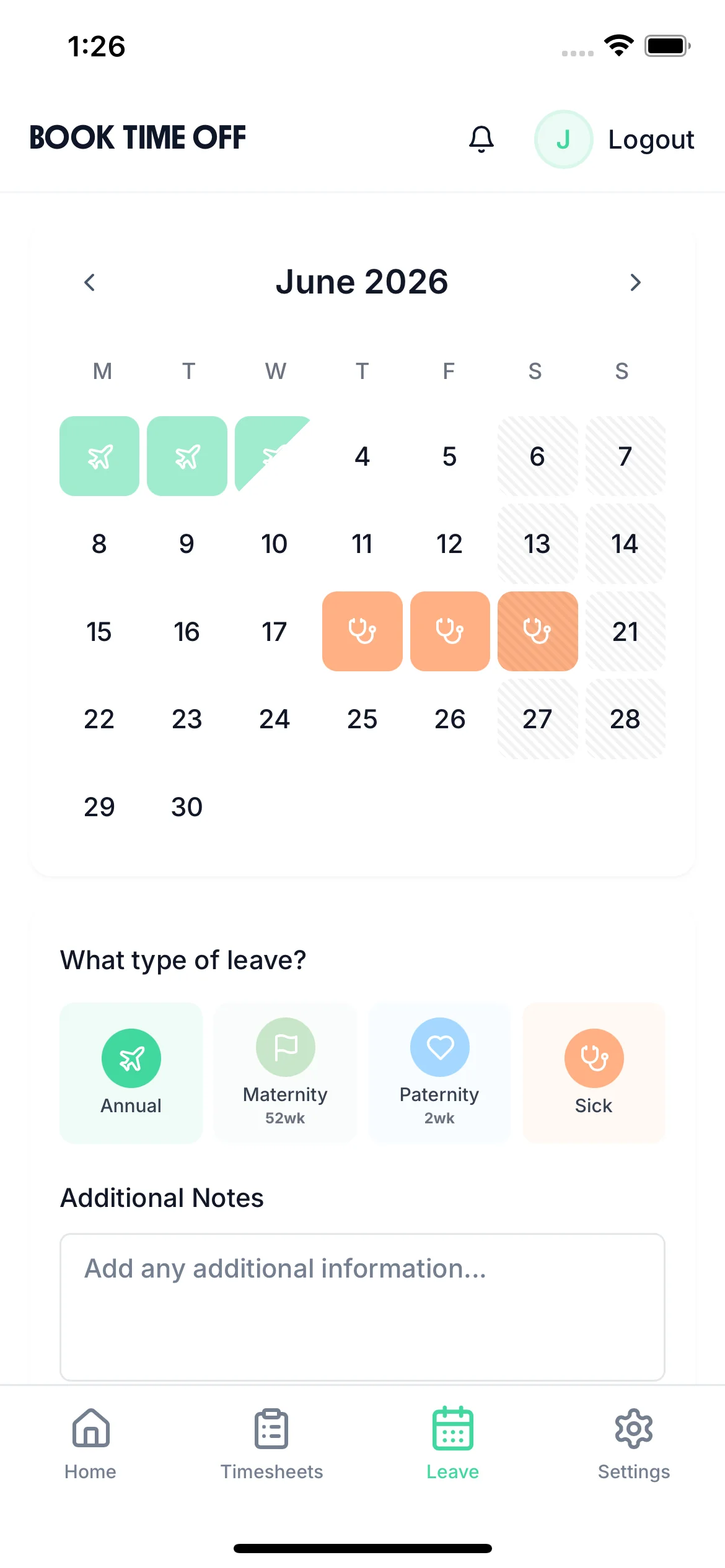
Staff submit leave requests via the iOS app. Entitlement balances update automatically. No emails, no forms, no back-and-forth.
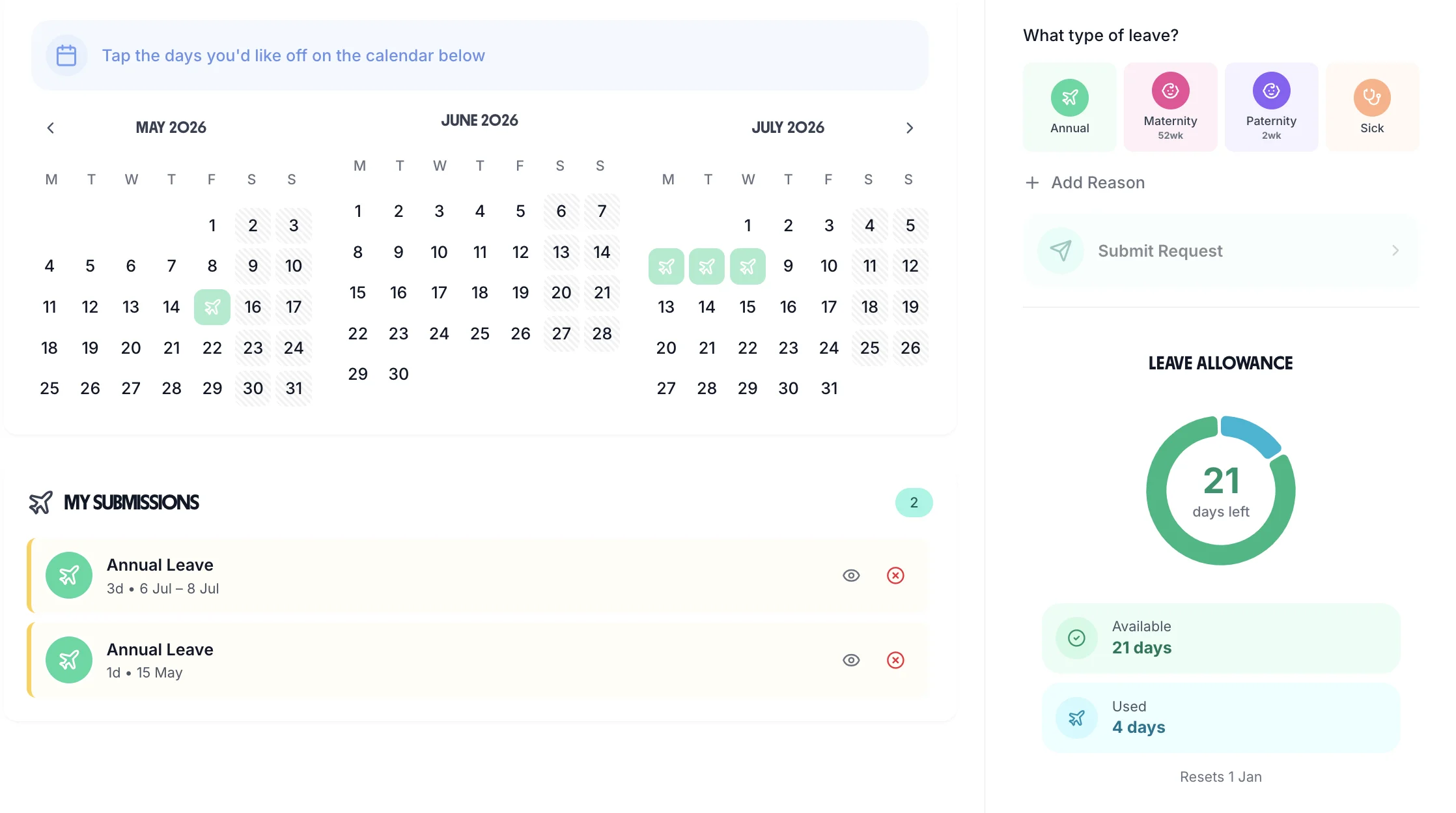
All leave requests land in your dashboard. Approve or query with a single tap. Every decision is timestamped — no more disputes about who approved what.
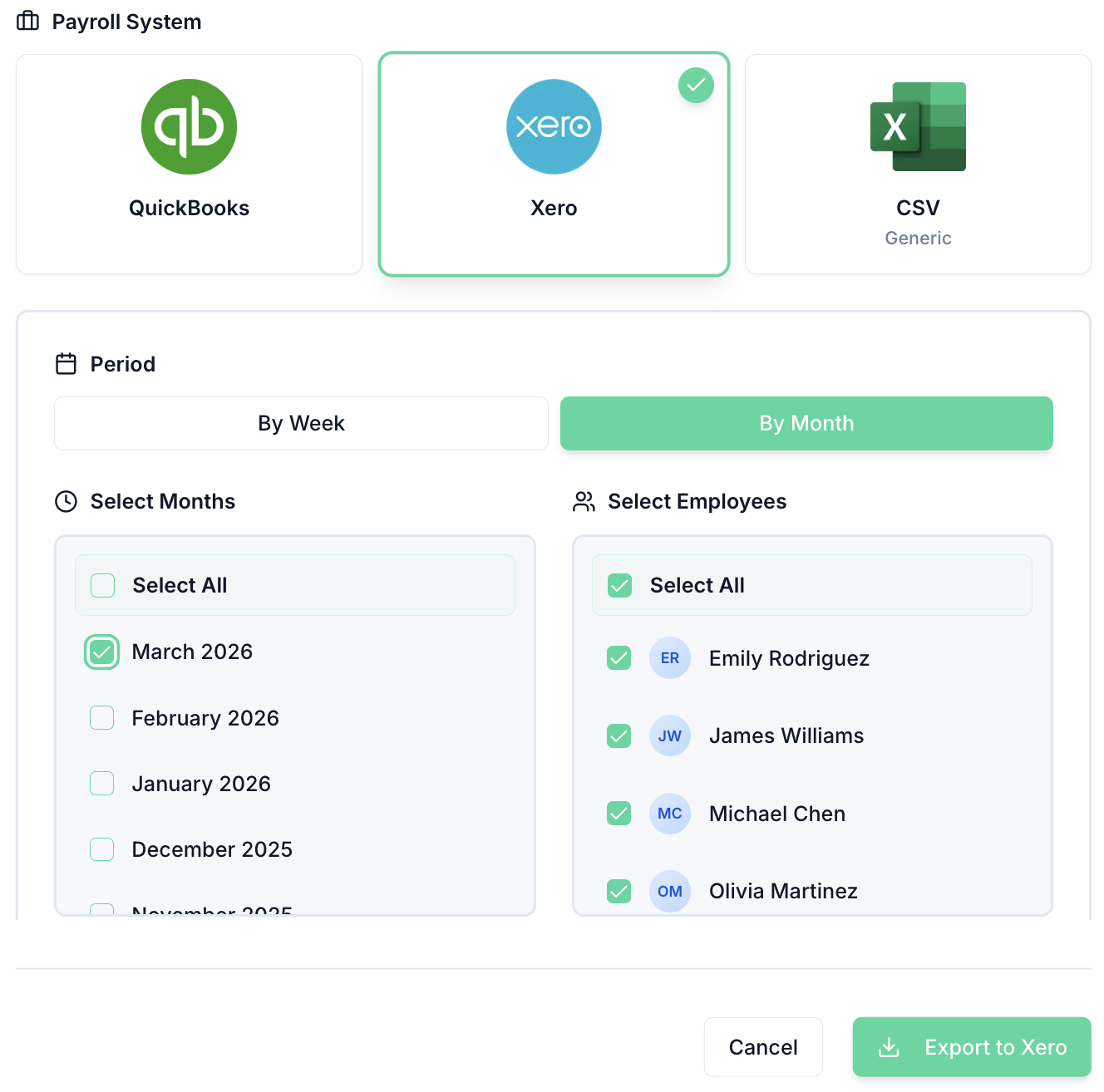
Approved leave is included in your payroll export automatically. Direct integration with Xero and QuickBooks — no manual adjustments, no missed deductions.
TimeTally automatically calculates, tracks, and manages holiday entitlement for your entire team. Explore all features or see how it works.
Automatic calculations
Holiday entitlement calculated automatically based on each employee's working pattern, with statutory minimums built in.
One-tap approvals
Managers approve or reject requests from any device, with a team calendar showing who's off and when
Statutory calculations included
Statutory calculations, bank holiday management, and pro-rata entitlement handled for you.
After the Harpur Trust v Brazel ruling, the 12.07% method has limitations. Here's what the law now requires.
The 12.07% accrual rate is derived by dividing the statutory minimum of 5.6 weeks' holiday by the remaining 46.4 working weeks in the year (5.6 ÷ 46.4 = 12.07%). For every hour a zero-hours worker works, they accrue 12.07% of that time as paid leave. While the government no longer endorses rolled-up holiday pay as a primary method, the 12.07% figure remains the correct accrual rate for calculating holiday entitlement for workers without fixed hours — and can be used to pay leave as it accrues when workers are unlikely to take defined periods off.
The Working Time Regulations were amended in 2023 to formally permit rolled-up holiday pay for irregular-hours workers and part-year workers. Rolled-up holiday pay means the 12.07% holiday entitlement is included in the worker's hourly rate, rather than paid separately when leave is taken. To be lawful, the pay must be calculated correctly, clearly identified on payslips, and not used to reduce effective hourly pay below the NMW. Workers must still be permitted to take time off — they simply receive their holiday pay in advance rather than at the point of taking leave.
Holiday pay for zero-hours workers must reflect 'normal remuneration' — not just the contracted or basic hourly rate. Where a worker regularly receives additional payments (shift premiums, productivity bonuses, or regular overtime), these must be factored into holiday pay calculations. The relevant reference period is the last 52 weeks in which the worker received pay (ignoring weeks with no pay). Using only the base rate without accounting for variable supplements can result in underpayments, which are recoverable as unlawful deductions from wages.
Zero-hours workers are entitled to bank holidays in proportion to their hours worked — they are not automatically entitled to 8 bank holidays simply because they exist. A worker who works every day will be entitled to bank holiday time proportionate to their accrued entitlement. If the employer closes on bank holidays and expects the worker to take those days from their holiday entitlement, this must be reflected in the contract. Bank holidays cannot be excluded from total holiday entitlement without providing an equivalent number of alternative days.
The Supreme Court's ruling in Harpur Trust v Brazel (2022) changed the holiday pay landscape for part-year workers (those with a permanent contract but who only work for part of the year, such as term-time-only staff). The Court held that the 12.07% method cannot be used for these workers — they are entitled to 5.6 weeks' leave calculated using a 52-week reference period that ignores weeks with no pay. This means term-time workers may receive proportionally more holiday than part-time workers — a counter-intuitive but legally correct outcome.
Following the Harpur Trust ruling, the government amended the Working Time Regulations 2023 to create a specific regime for 'irregular-hours workers' and 'part-year workers'. From April 2024, these workers' holiday entitlement is calculated on an accrual basis at 12.07% of hours worked in each pay period, rather than using the 52-week average method. The new rules apply to leave years starting on or after 1 April 2024 and restore the 12.07% method for genuinely irregular workers, while Harpur Trust continues to apply to those with fixed part-year contracts.
Zero-hours workers' accrued holiday entitlement is subject to the same carryover rules as other workers. Statutory leave (the 4-week EU entitlement) can be carried over where a worker was unable to take it due to sickness or family leave, and in certain circumstances where the employer failed to facilitate it. Additional statutory leave (the 1.6 weeks) can be subject to a use-it-or-lose-it policy if the worker had a genuine opportunity to take it. Rolled-up holiday pay arrangements should be reviewed to ensure accrued leave is still trackable and carryover rules are properly applied.
Accurate time records are essential for zero-hours holiday entitlement compliance. Because entitlement is based on hours worked, employers must retain records of all hours worked per pay period, the holiday accrual calculated on those hours, any holiday pay paid (whether rolled-up or separately), and any leave taken. Without these records, verifying compliance or defending a tribunal claim is effectively impossible. HMRC and the Employment Tribunal can draw adverse inferences from absent or incomplete records — the burden shifts to the employer to disprove underpayment.
Swipe to see more →
“TimeTally has been excellent for our business. The app is simple to use, reliable, and makes managing holidays, absences, and staff records straightforward. The system has saved us a significant amount of administration time and gives both managers and employees clear visibility of leave balances and requests. Highly recommended for any business looking for an easy-to-use workforce management solution.”
 Jordan Ingoe, CLI Manchester
Common questions about holiday entitlement and pay for zero hours contract workers.
Calculate annual leave for any working pattern
Part-time and mid-year holiday entitlement
Calculate UK leave entitlement
Manage team holiday requests and approvals
Calculate SSP for zero hours workers
Check NMW compliance for hourly workers
Set leave to accrue from hours as timesheets are approved and zero-hours staff always see an up-to-date balance.