Calculate UK maternity leave dates and SMP

Free Calculator

Calculate maternity dates and SMP instantly

Expected or actual birth date

Used to check SMP eligibility

Must be at least £125/wk for SMP

OR
TimeTallyTimeTally Software

Track maternity leave and holiday accrual automatically

Employees request leave via the app. Holiday accrual tracks itself during maternity. You approve in one tap — no spreadsheets, no manual calculations.

5.0 on the App Store
  • Full team holiday calendar in one view
  • Leave requests approved in one tap
  • Entitlement balances updated automatically
  • Payroll export to Xero, QuickBooks or CSV
TimeTally iOS app

Stop calculating manually — track maternity leave automatically

This calculator gives you the numbers. TimeTally tracks leave, accrual, and approvals automatically — so you never need to calculate it manually again. From £2/employee/month.

See all team leave at a glance

Every approved leave request — maternity, annual leave, sick leave — sits on one calendar. Spot cover gaps and plan workloads before they become a problem.
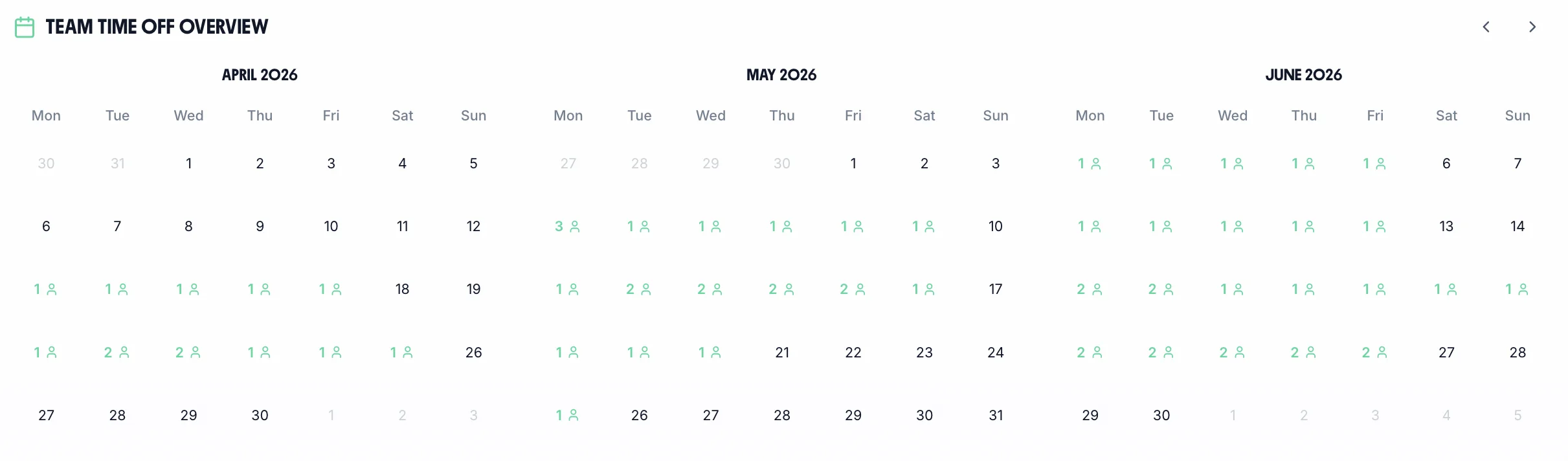
Full team calendar
Colour-coded
Clash detection
Bank holidays
TimeTally team leave calendar showing maternity and annual leave in one view

Employees book leave from their phone

Staff submit leave requests via the iOS app. Entitlement balances update automatically. No emails, no forms, no back-and-forth.
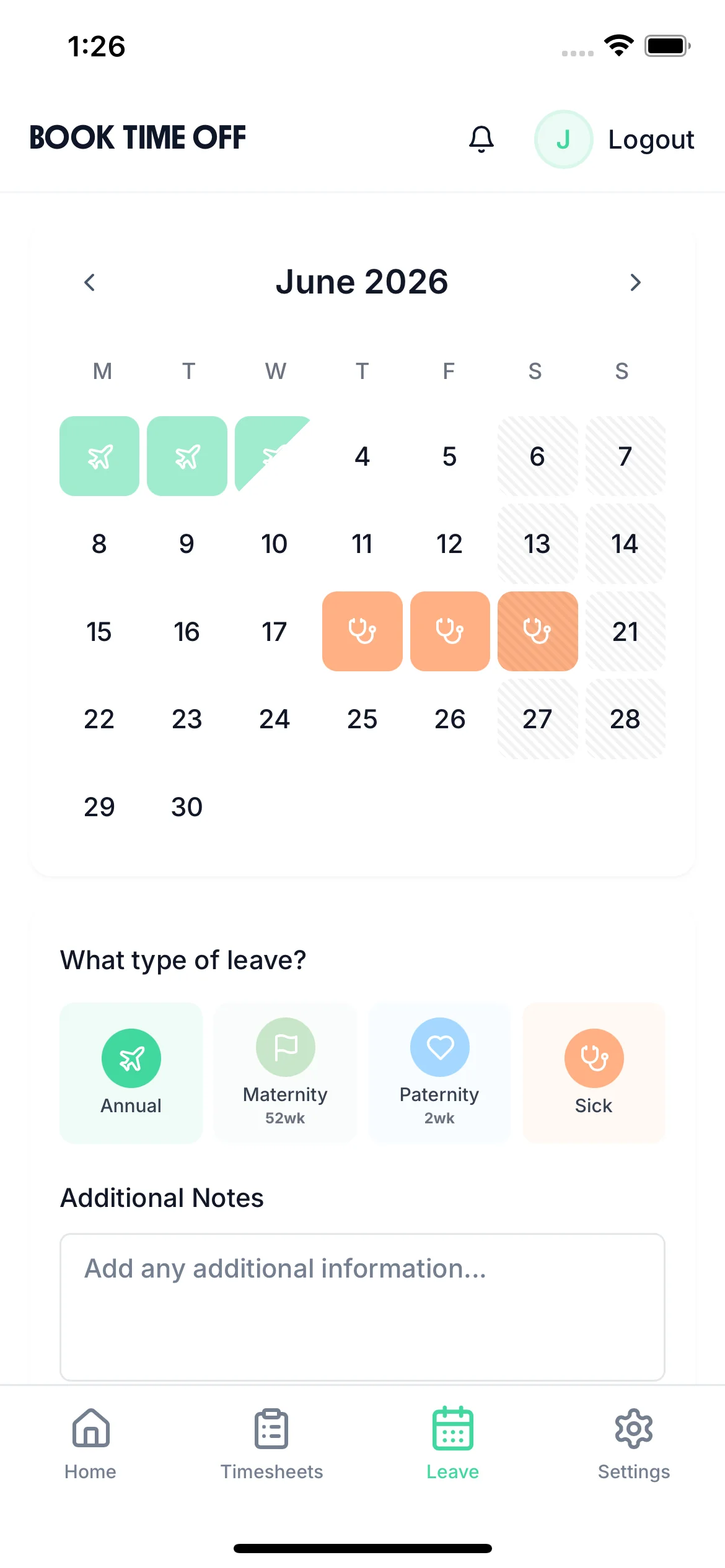
  • Leave request submitted in seconds
  • Entitlement balance updated automatically
  • Employee sees remaining days in real time
  • Manager notified instantly
TimeTally iOS app showing employee booking maternity or annual leave

Approve or decline requests in one tap

All leave requests land in your dashboard. Approve or query with a single tap. Every decision is timestamped — no more disputes about who approved what.
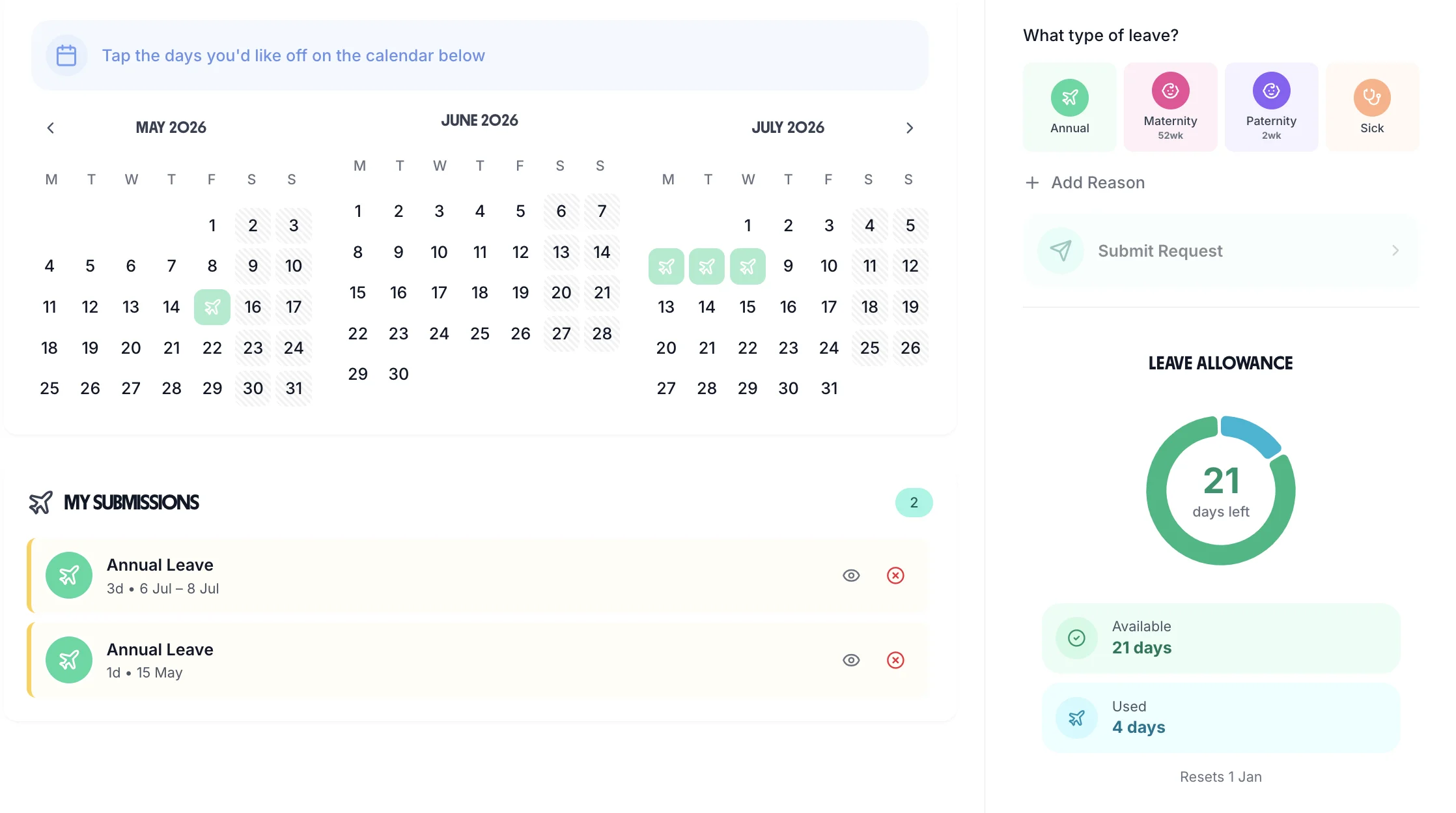
All requests in one place
One-tap approve
Audit trail
Auto-notify employee
TimeTally leave request approval dashboard

Leave data flows straight to payroll

Approved leave is included in your payroll export automatically. Direct integration with Xero and QuickBooks — no manual adjustments, no missed deductions.
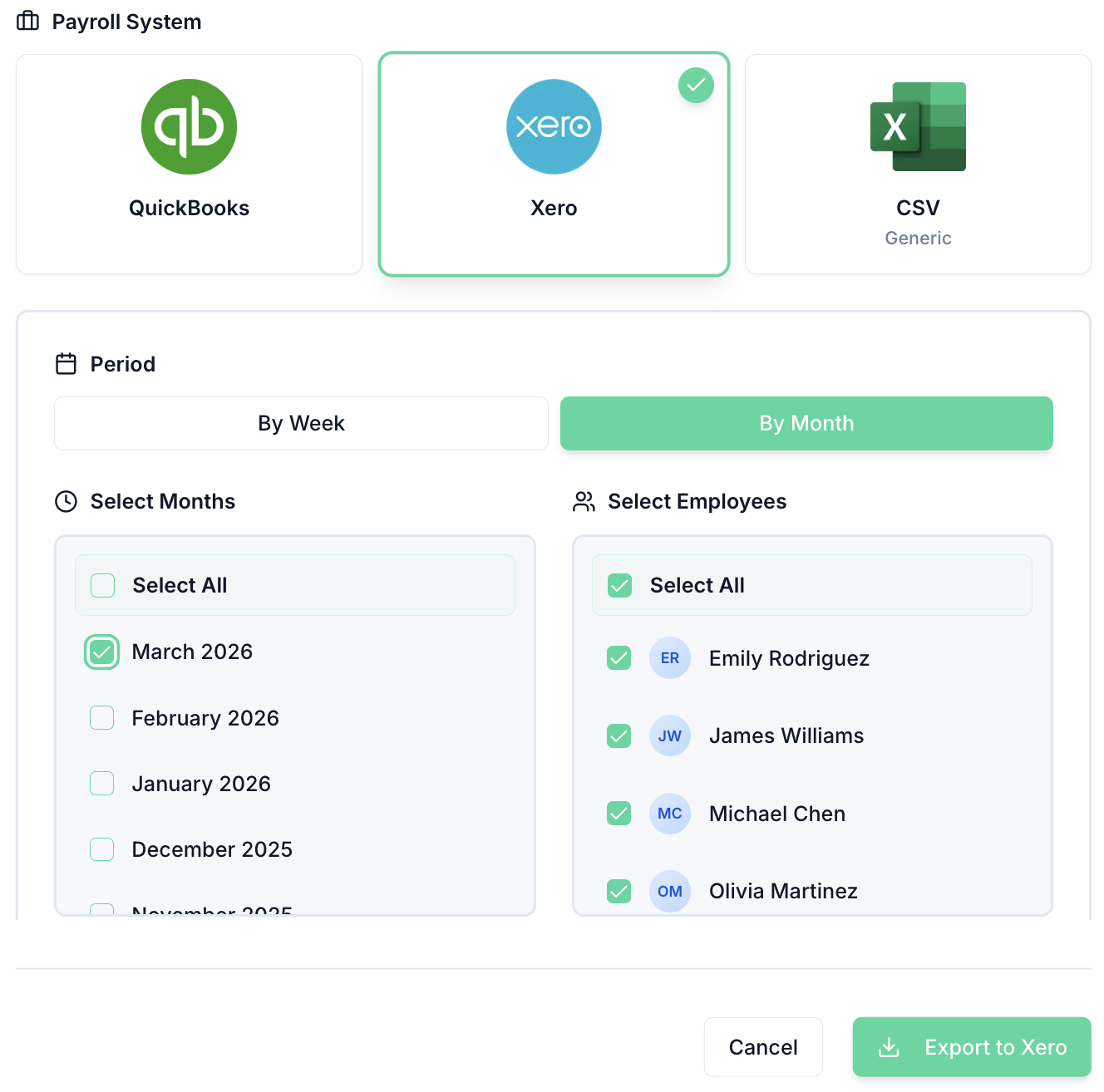
  • Direct Xero & QuickBooks integration
  • CSV export for any payroll software
  • Approved leave included automatically
  • Clean audit trail for every entry
TimeTally payroll export showing leave data sent to Xero and QuickBooks
Meet TimeTally

Stop doing this manually
for every employee

TimeTally automatically calculates, tracks, and manages leave for your entire team. Explore all features or see how it works.

Automatic calculations

Holiday entitlement calculated automatically based on each employee's working pattern, with statutory minimums built in.

One-tap approvals

Managers approve or reject requests from any device, with a team calendar showing who's off and when

Statutory calculations included

Statutory calculations, bank holiday management, and pro-rata entitlement handled for you.

See what we offer

No credit card required · Set up in minutes · Cancel anytime

Loved by UK small businesses

Real reviews from TimeTally customers

Setup was dead simple and the team just got on with it. Got everyone up and running in an afternoon with no help needed. Does everything we need for timesheets and holidays without the faff.
SM

S.M.

Has completely changed how I handle timesheets. Used to dread it every week — now it takes me minutes. Really easy to get around and my staff picked it up straight away.
JT

J.T.

Started using it just for rotas but quickly realised it does loads more. The timesheets and leave management are great, and it even handles TOIL and overtime which I wasn't expecting. Use it for everything now.
RK

R.K.

Download on the App Store

UK Maternity Leave FAQ

Common questions about maternity leave and Statutory Maternity Pay in the UK.

How much is Statutory Maternity Pay (SMP) in 2025/26?
SMP is paid for 39 weeks. The first 6 weeks are paid at 90% of your average weekly earnings (no cap). The remaining 33 weeks are paid at £184.03 per week or 90% of your average weekly earnings, whichever is lower. The final 13 weeks of the 52-week entitlement are unpaid unless your employer offers enhanced maternity pay.
What is the difference between Ordinary Maternity Leave and Additional Maternity Leave?
UK maternity leave is split into 26 weeks of Ordinary Maternity Leave (OML) and 26 weeks of Additional Maternity Leave (AML), totalling 52 weeks. During OML, all contractual rights (except pay) continue. During AML, most rights still apply but some terms may differ — for example, pension contributions may pause. All employed women are entitled to both OML and AML from day one of employment.
What are KIT (Keeping in Touch) days?
KIT days allow an employee on maternity leave to work up to 10 days for their employer without losing SMP for those days. KIT days must be agreed by both employer and employee — the employer cannot insist on them. Any work done on a KIT day counts as a full day regardless of hours worked. Payment for KIT days is agreed between the parties, though SMP continues to be paid.
How does paternity leave work alongside maternity leave?
Eligible fathers and partners are entitled to 1 or 2 weeks of Statutory Paternity Leave (SPL), taken in the first 56 days after birth. Statutory Paternity Pay is paid at the lower of £184.03/week or 90% of average weekly earnings. Paternity leave is separate from maternity leave and both parents can take their entitlement simultaneously if they wish.
Can I take adoption leave instead of maternity leave?
If you adopt a child, you may be entitled to Statutory Adoption Leave (52 weeks) and Statutory Adoption Pay, which mirrors SMP in structure and rates. Only one adopter in a couple can take adoption leave — the other may take paternity leave. The primary adopter must tell their employer within 7 days of being matched with a child.
What is Shared Parental Leave?
Shared Parental Leave (SPL) allows eligible parents to share up to 50 weeks of leave and up to 37 weeks of pay after the mother ends maternity leave early. Parents can take SPL at the same time or in turns, in blocks or concurrently. Statutory Shared Parental Pay (ShPP) is paid at the same rate as SMP's flat rate (£184.03/week or 90% of earnings).
What are qualifying earnings for SMP?
To qualify for SMP, your average weekly earnings must be at least £125 (the Lower Earnings Limit). Average earnings are calculated over the 8 weeks (if paid weekly) or 2 months (if paid monthly) leading up to the end of the qualifying week — which is the 15th week before your due date. One-off payments and bonuses are included in the calculation.
What are my rights when returning from maternity leave?
If you return within the first 26 weeks (OML), you have the right to return to the same job. If you return after 26 weeks (into AML), you have the right to return to the same job or, if that's not reasonably practicable, a suitable alternative on no less favourable terms. You cannot be disadvantaged or dismissed for taking maternity leave — this is automatically unfair dismissal.
What is enhanced maternity pay?
Enhanced maternity pay is any maternity pay above the statutory minimum that an employer chooses to offer. Common arrangements include full pay for the first 12 or 26 weeks, or 50% pay for a longer period. Enhanced maternity pay is a contractual benefit — check your employment contract or staff handbook. Employers can reclaim 92% of SMP (or 103% if eligible for Small Employers' Relief).
Does holiday entitlement accrue during maternity leave?
Yes. Annual leave continues to accrue throughout the full 52 weeks of maternity leave, including any additional maternity leave. An employee returning from a year's maternity leave may have up to 28 days of unused holiday to use. Employers should plan for this and discuss how accrued leave will be taken — it can often be added before or after the maternity period.

Everything you need to know about maternity leave

UK maternity leave law is more detailed than most managers realise. Here's what the rules actually say.

OML and AML: The Two Periods

Maternity leave is split into two parts: Ordinary Maternity Leave (OML) covers the first 26 weeks, and Additional Maternity Leave (AML) covers the following 26 weeks. All employees are entitled to the full 52 weeks from day one of employment.

Statutory Maternity Pay (SMP) Rates

SMP is paid for 39 weeks. The first 6 weeks are paid at 90% of average weekly earnings. The remaining 33 weeks are paid at the flat statutory rate (£184.03/week in 2024/25) or 90% of average weekly earnings, whichever is lower.

Qualifying for SMP

To qualify, an employee must have at least 26 weeks' continuous employment by the qualifying week, and earnings above the Lower Earnings Limit. SMP is paid by the employer and reclaimed from HMRC — most employers recover 92% or 103% (small employer relief).

Keeping-in-Touch (KIT) Days

Employees on maternity leave can work up to 10 KIT days without ending their maternity leave or losing SMP for those days. KIT days must be agreed by both parties — the employer cannot require them. Pay for KIT days is agreed separately.

Enhanced Maternity Pay Schemes

Many employers pay full or partial salary for some or all of maternity leave, above the statutory minimum. Enhanced schemes often include a return-to-work obligation — requiring repayment of enhanced pay if the employee does not return for a minimum period.

Annual Leave Accrual During Maternity

All annual leave — including any contractual leave above the 28-day statutory minimum — continues to accrue throughout the full 52 weeks of maternity leave. Employers must plan for accrued leave to be taken on return or added to the maternity period.

Return-to-Work Rights After Maternity

Returning within the first 26 weeks (OML) carries the right to return to exactly the same job. Returning after 26 weeks (into AML) carries the right to return to the same job or, if not reasonably practicable, a suitable alternative on no less favourable terms.

Redundancy During Maternity Leave

Employees on maternity leave have enhanced redundancy protection. If their role is at risk, they must be offered any suitable alternative vacancy before other at-risk employees. Failure to do so is automatically unfair dismissal under the Maternity and Parental Leave Regulations.

Swipe to see more →

Related tools