Free Shift Pattern Calculator

Calculate shift pattern hours and pay

Select a preset — 4-on-4-off, 3-on-3-off, 5-on-2-off and more — or enter a custom pattern to instantly calculate average weekly hours, annual hours, and gross pay.

5.0 · Used by 1,000+ UK businesses
Free to use
No sign-up required
UK shift patterns built in

Stop calculating manually — manage shift patterns in TimeTally

This calculator gives you the numbers. TimeTally lets you build rotas, assign shift patterns, and track hours automatically for your whole team. From £2/employee/month. Also see shift management and timesheet app.

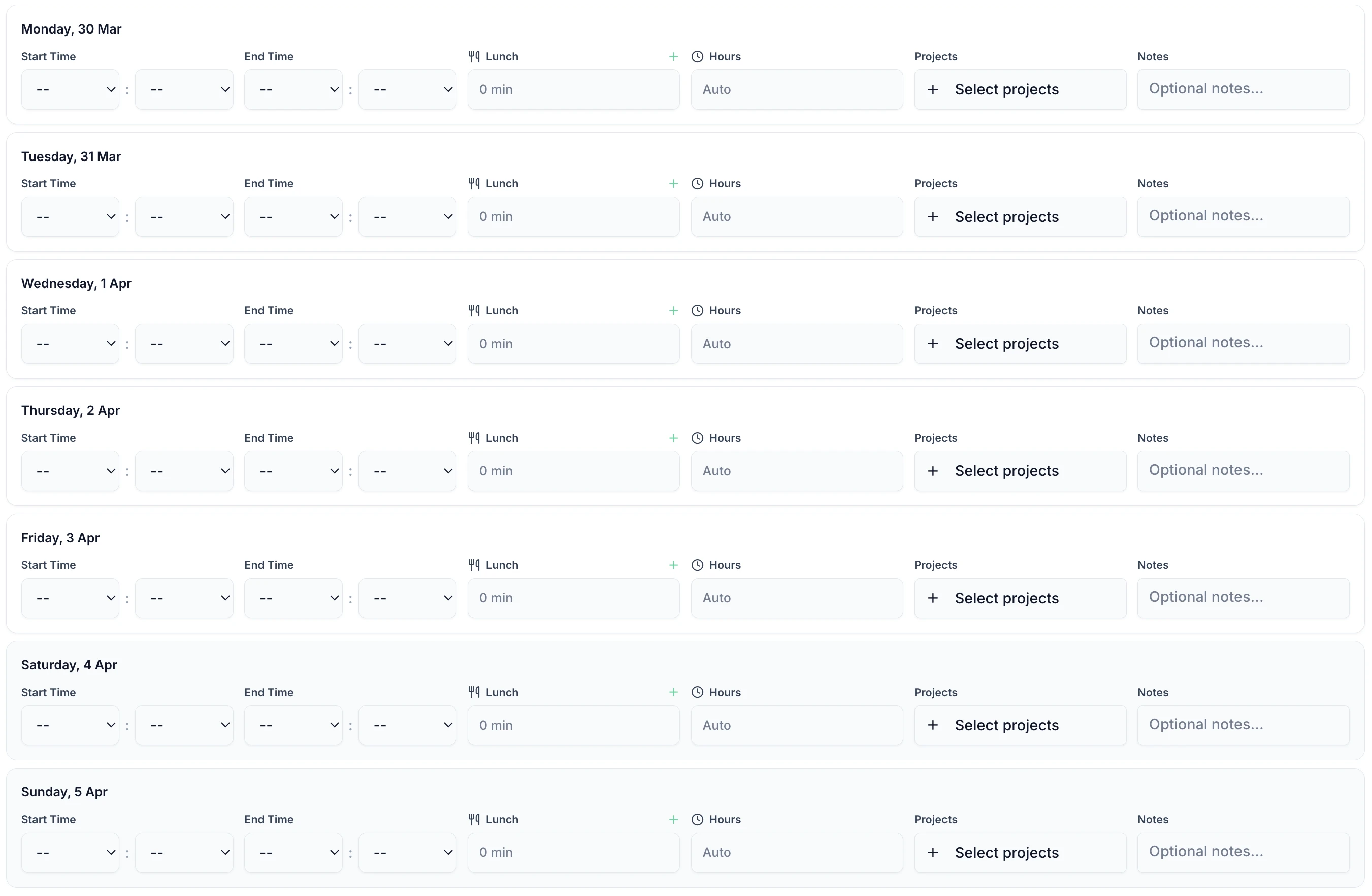
Build rotas and assign shift patterns

Create rotas in minutes and assign recurring shift patterns — 4-on-4-off, 3-on-3-off, or any custom cycle. Staff are notified automatically. No spreadsheets, no manual scheduling.
Recurring patterns
iOS & web
Instant publish
Staff notifications
TimeTally rota builder showing shift patterns assigned to employees

Staff see their shifts in the app

Employees open the iOS app and instantly see their upcoming shift pattern — on days, off days, start times, and any changes. No confusion, no missed shifts.
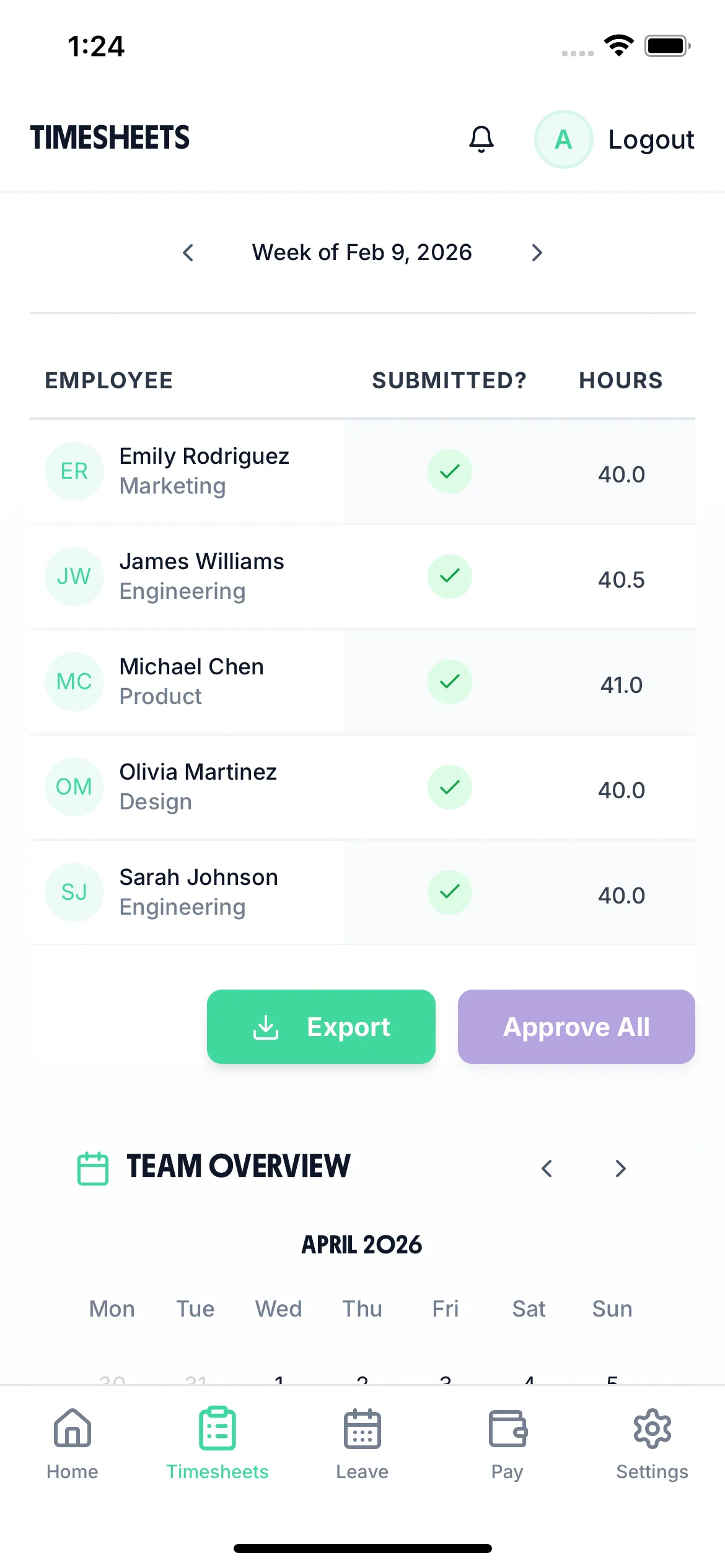
  • Full shift schedule visible at a glance
  • Push notifications for rota changes
  • On and off days clearly marked
  • Works on iOS and web browser
TimeTally iOS app showing employee shift schedule

Hours tracked automatically from shift patterns

Actual hours worked are captured against the shift pattern. Managers see instantly who is on shift, who has clocked in, and whether hours match the pattern — no manual reconciliation.
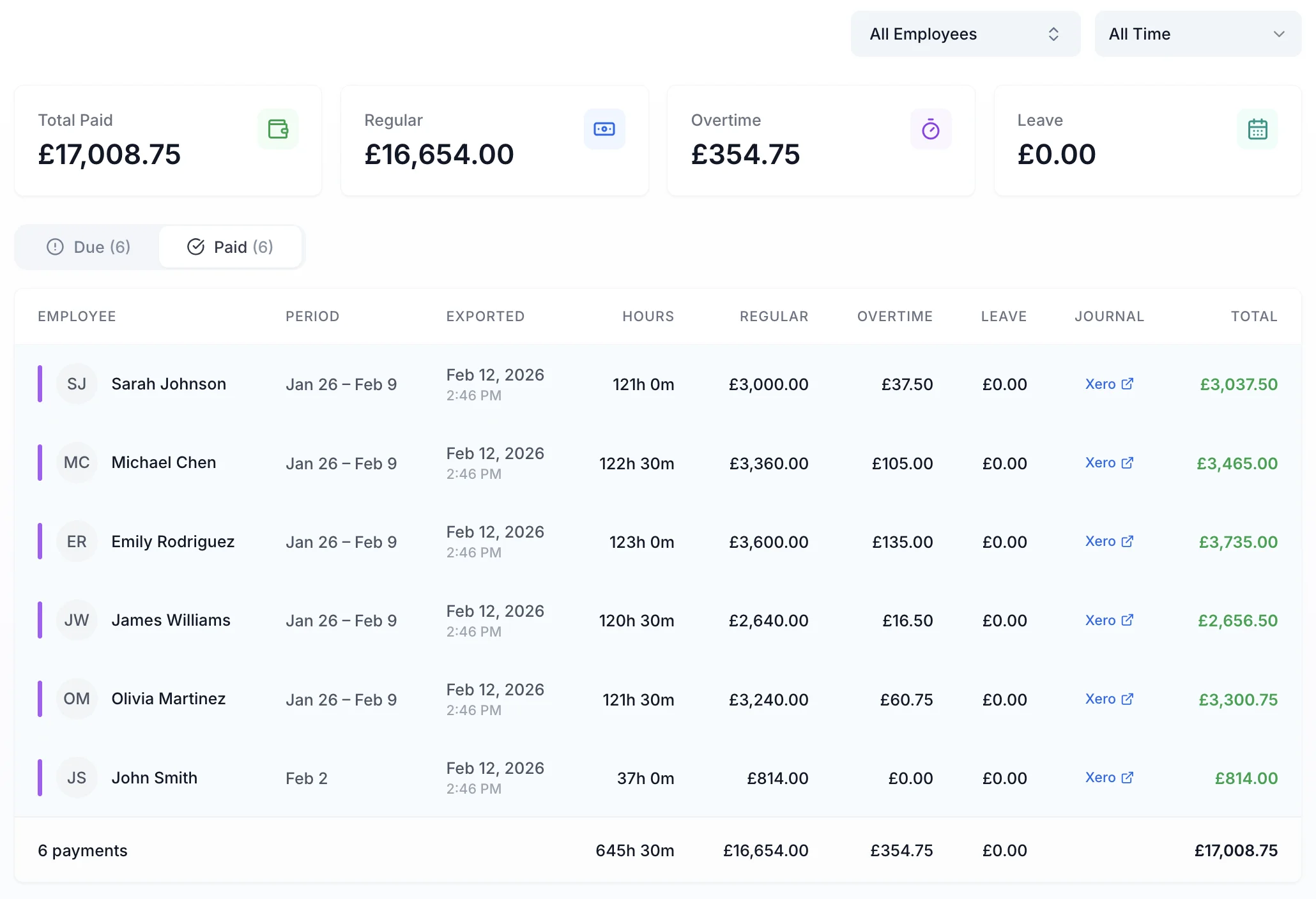
Auto time capture
Pattern vs actual
Clean audit trail
No manual entry
TimeTally showing hours tracked against shift patterns for all employees

Export to Xero and QuickBooks

Approved shift hours flow directly into your payroll export. Direct integration with Xero and QuickBooks — no manual data entry, no missed hours, no payroll errors.
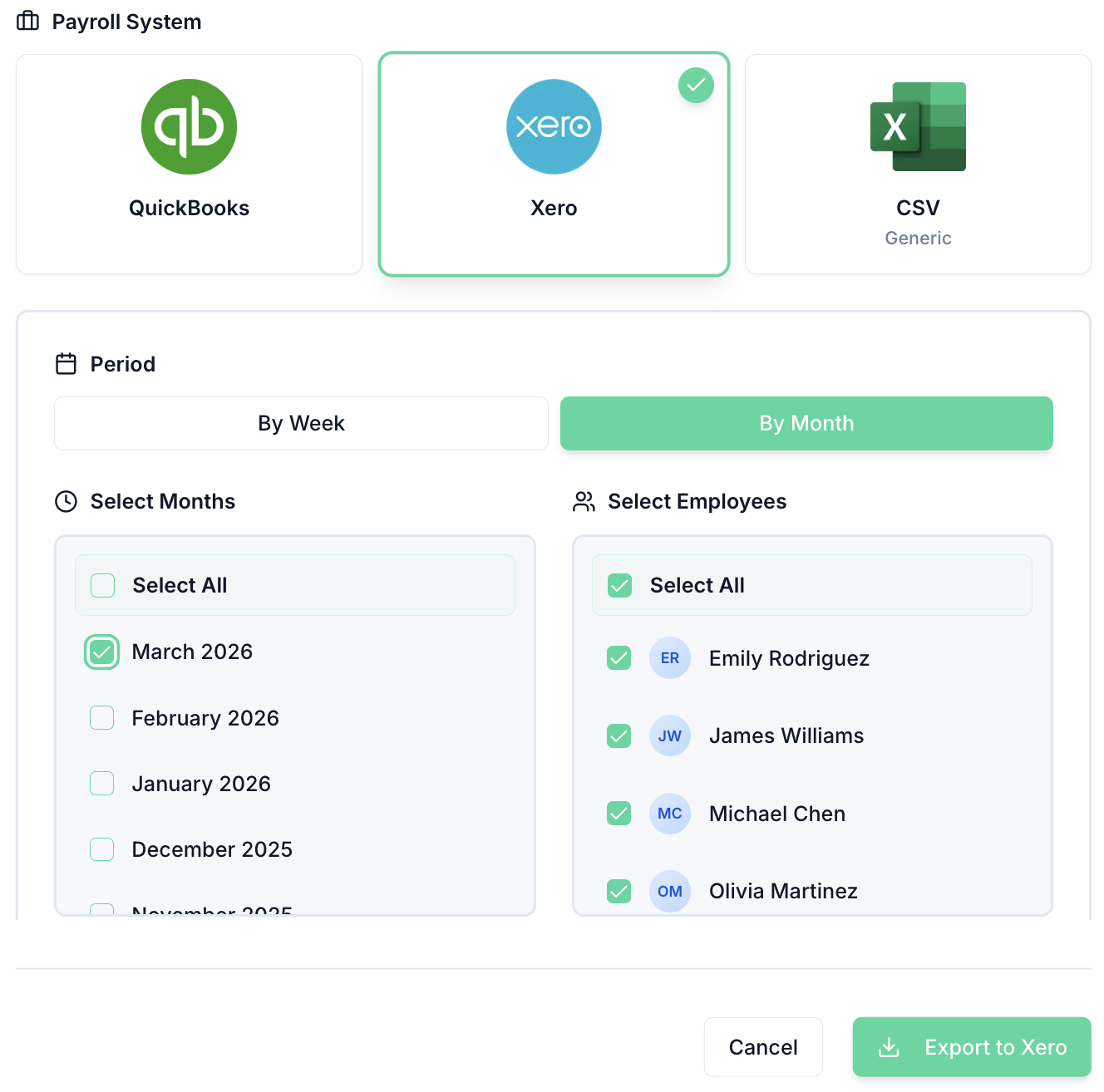
  • Direct Xero & QuickBooks integration
  • CSV export for any payroll software
  • Approved shift hours included automatically
  • Clean audit trail for every entry
TimeTally payroll export showing shift hours sent to Xero and QuickBooks
Meet TimeTally

Stop doing this manually
for every shift worker

TimeTally automatically builds rotas, tracks shift hours, and exports to payroll for your entire team. Explore all features or see how it works.

Rota & pattern builder

Build recurring shift patterns in minutes — 4-on-4-off, 3-on-3-off, and any custom cycle. Publish to all staff instantly from desktop or mobile.

Hours tracked automatically

Actual hours are captured against the shift pattern automatically. Managers see at a glance who is on shift and whether hours match — no manual reconciliation.

Payroll-ready exports

Approved shift hours feed directly into Xero, QuickBooks, or CSV exports — so your payroll run for shift workers is always accurate and on time.

See what we offer

No credit card required · Set up in minutes · Cancel anytime

Loved by UK small businesses

Real reviews from TimeTally customers

Setup was dead simple and the team just got on with it. Got everyone up and running in an afternoon with no help needed. Does everything we need for timesheets and holidays without the faff.
SM

S.M.

Has completely changed how I handle timesheets. Used to dread it every week — now it takes me minutes. Really easy to get around and my staff picked it up straight away.
JT

J.T.

Started using it just for rotas but quickly realised it does loads more. The timesheets and leave management are great, and it even handles TOIL and overtime which I wasn't expecting. Use it for everything now.
RK

R.K.

Download on the App Store

Shift Patterns: Frequently Asked Questions

Everything you need to know about UK shift patterns and hours. For related topics, try our overtime pay calculator or working hours calculator.

How many hours a week is 4-on-4-off?
A 4-on-4-off pattern with 12-hour shifts averages 42 hours per week. The maths: in an 8-day cycle (4 on, 4 off) you work 4 out of every 8 days, which is 4/8 × 7 = 3.5 days per week. At 12 hours per shift that is 3.5 × 12 = 42 hours per week on average.
How many hours a year is 4-on-4-off?
A 4-on-4-off 12-hour shift pattern produces 2,184 hours per year (42 hours/week × 52 weeks). Workers on this pattern typically work around 182–183 shifts per year. Note that this is an average — actual hours in any given week will be either 48 hours (4 shifts) or 36 hours (3 shifts) depending on where the cycle falls.
What is a 3-on-3-off shift pattern?
A 3-on-3-off pattern is a 6-day rotating cycle where employees work 3 consecutive shifts followed by 3 consecutive days off. On 12-hour shifts this produces exactly the same average as 4-on-4-off: 3/6 × 7 = 3.5 days per week × 12 hours = 42 hours per week and 2,184 hours per year. The difference is that the cycle is shorter (6 days rather than 8), so the days worked rotate through the week faster.
Do 12-hour shift workers need a 48-hour opt-out?
Yes, in most cases. Under the Working Time Regulations 1998, workers cannot average more than 48 hours per week over a 17-week reference period unless they have signed a written opt-out agreement. Most 12-hour shift patterns (4-on-4-off, 3-on-3-off, 2-on-2-off) average 42 hours per week — which is under 48 hours — so a formal opt-out is not technically required if the average is verified. However, employers should audit the reference period carefully as bank holiday adjustments and overtime can push the average above 48 hours.
What is a rotating shift pattern?
A rotating shift pattern is one where employees cycle through different shift times — typically days, afternoons, and nights — on a recurring schedule. This distributes unsocial hours fairly across the team rather than permanently assigning some workers to nights. Common examples include continental shifts (a 4-week cycle of days, afternoons, and nights) and 3-shift rotation systems used in manufacturing and healthcare.
How do I calculate annual pay for shift workers?
Multiply the average weekly hours by the hourly rate to get weekly gross pay, then multiply by 52 for annual gross pay. For example, a 4-on-4-off worker on 12-hour shifts at £15/hour earns: 42h/week × £15 = £630/week × 52 = £32,760/year gross (before tax and National Insurance). Use the calculator above to check any pattern and rate instantly.
How is holiday entitlement calculated for shift workers?
Shift workers on irregular patterns accrue holiday in hours rather than days. Under the Working Time Regulations, workers are entitled to 5.6 weeks of paid holiday per year. For a 4-on-4-off worker averaging 42 hours per week, this is 5.6 × 42 = 235.2 hours of holiday per year. Holiday pay must reflect the average pay over the last 52 weeks, including any regular shift premiums or overtime.
What is a continental shift pattern?
A continental shift pattern is a 4-week rotating schedule typically used in manufacturing and process industries. It covers 24/7 operations by rotating teams through morning shifts, afternoon shifts, and night shifts with rest days in between. A common version runs a 28-day cycle with four teams covering three 8-hour shifts. The pattern balances unsocial hours fairly across all workers.
How does 4-on-4-off affect overtime calculations?
On a 4-on-4-off pattern, the contracted average is typically 42 hours per week. Any hours worked above the contracted hours — whether due to an extended shift, additional callouts, or covering absent colleagues — may attract overtime pay, depending on the employment contract. Because the pattern produces alternating weeks of 48 hours and 36 hours, overtime thresholds should be assessed over the full cycle rather than week by week. Check the contract to confirm whether overtime is calculated daily, weekly, or per cycle.
What is a compressed working week?
A compressed working week is when an employee works their contracted hours across fewer days than the standard five. Common examples include four 10-hour days (4-on-3-off at 8 hours gives 32 hours/week, but a compressed week might be 4 × 10 = 40 hours over 4 days). Unlike a rotating shift pattern, a compressed week typically has consistent start and finish times. Under UK law, employees can make a flexible working request for a compressed week after 26 weeks of employment.

Related tools