Free Piece Rate Pay Calculator

Calculate piece rate pay instantly

Add tasks, quantities, and rates per unit. Total pay is calculated instantly. Optionally add hours worked to check National Minimum Wage compliance.

5.0 · Used by 1,000+ UK businesses
Free to use
No sign-up required
NMW check included

Track piece-work pay automatically with TimeTally — see piece-rate project tracking →

Track piece-work pay automatically

This calculator gives you the numbers. TimeTally tracks piece-rate project work, calculates pay per unit automatically, and exports straight to payroll. Works alongside zero-hours staff and hourly employees in the same system. Includes a full timesheet app — from £2/employee/month.

Log work by the unit, not the hour

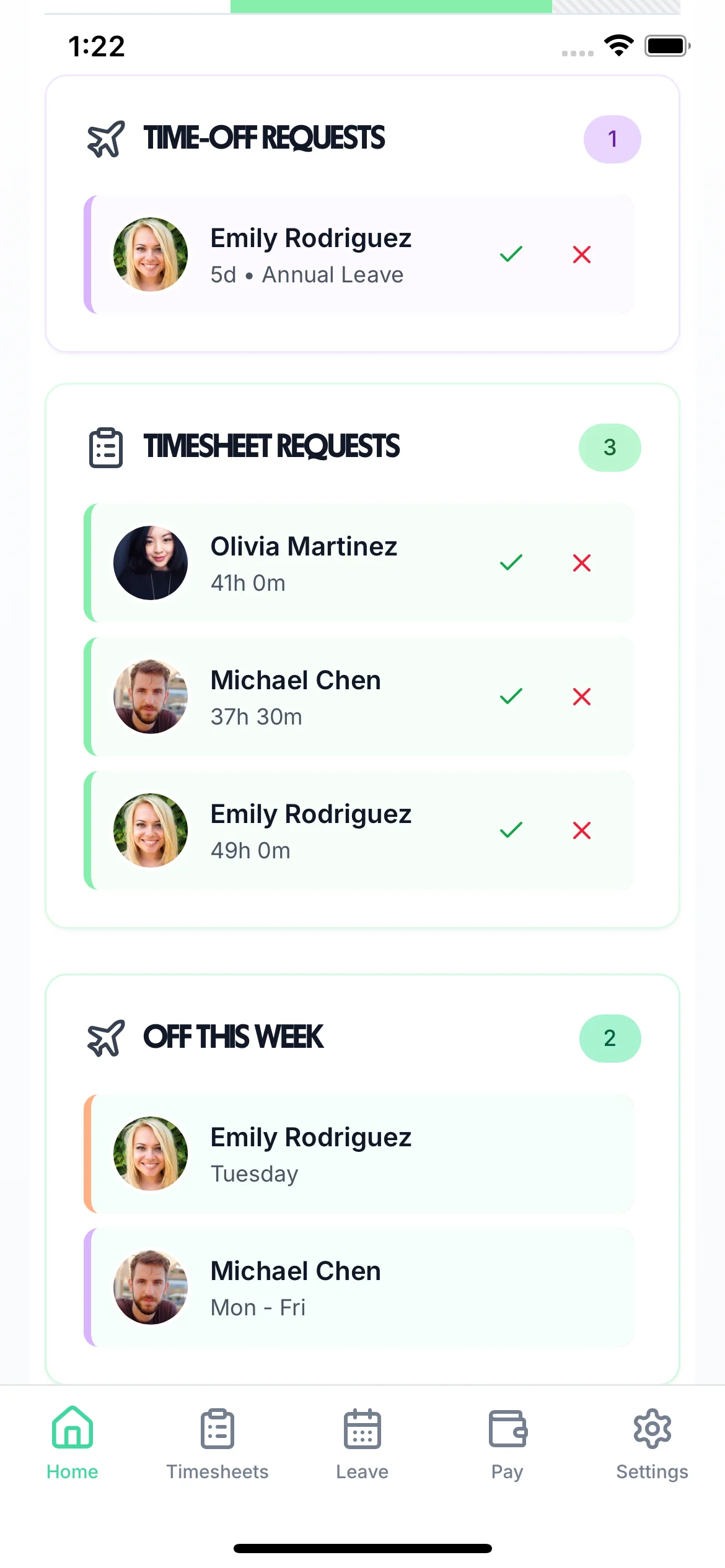
Staff log the number of units, deliveries, or jobs completed per session. TimeTally applies the rate per unit set on each project and calculates pay automatically — no manual sums, no spreadsheets.
Units per session
iOS & web
Rate per unit
Instant pay total
TimeTally piece-work unit logging showing completed units and pay totals

Managers approve piece-work records

Every unit log goes through a manager approval flow. Approve or query piece-work records with a single tap. Full audit trail — every decision timestamped and stored.

  • All pending piece-work records in one place
  • Approve or query with one tap
  • Timestamped approval audit trail
  • Employee notified automatically
Pending piece-work

Sarah B.

Packing (small) · 120 units

£60.00

pending

Tom K.

Delivery — zone A · 14 deliveries

£84.00

approved

Emma P.

Labelling · 200 units

£30.00

pending

Pay calculated per unit automatically

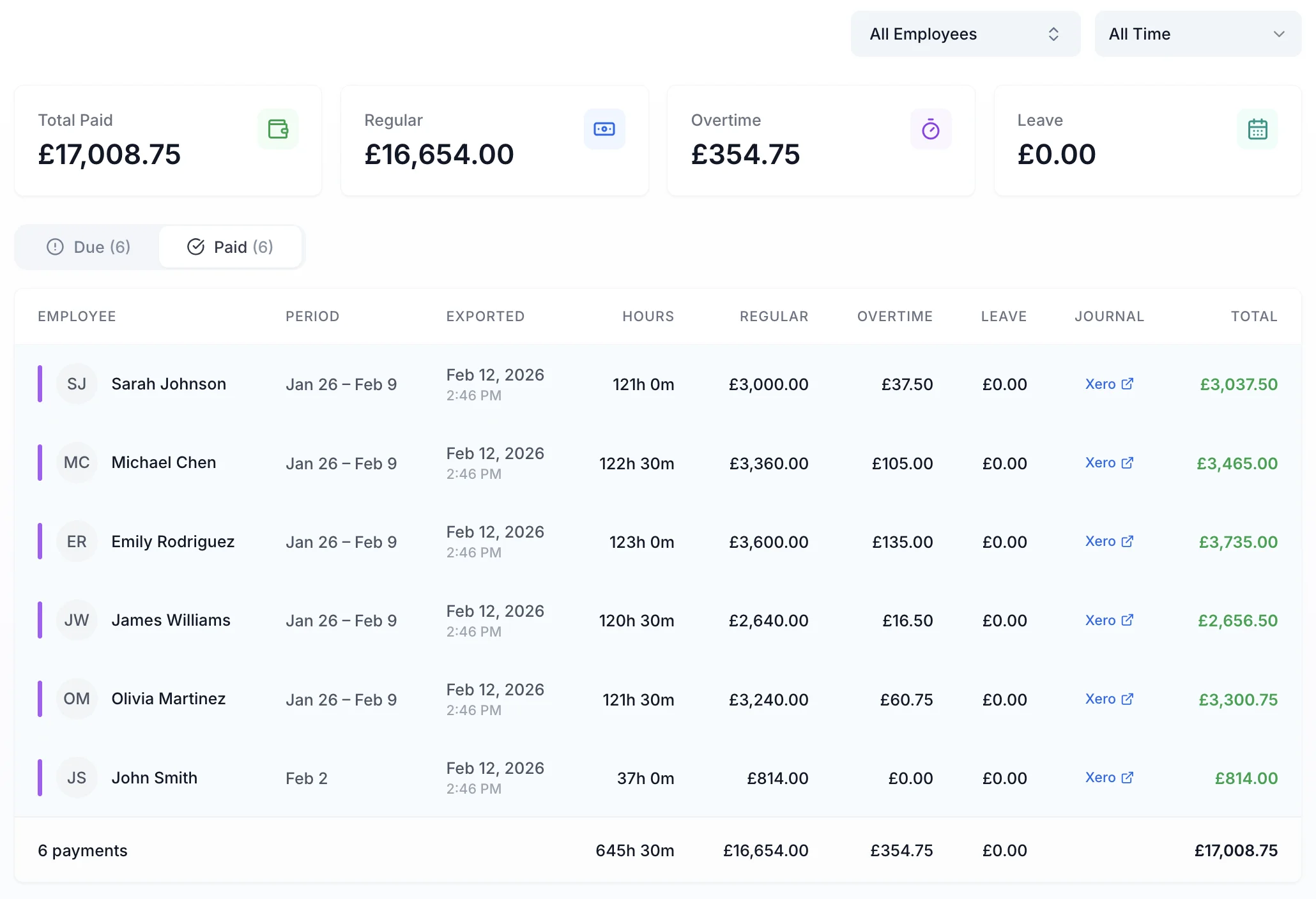
Pay is calculated directly from approved unit records. Quantity × rate applied automatically — no manual calculations, no errors. NMW compliance tracked against hours worked.
Qty × rate auto-calculated
NMW compliance tracked
Clean audit trail
No manual entry
TimeTally pay page showing piece-rate pay calculated from approved unit records

Export to payroll

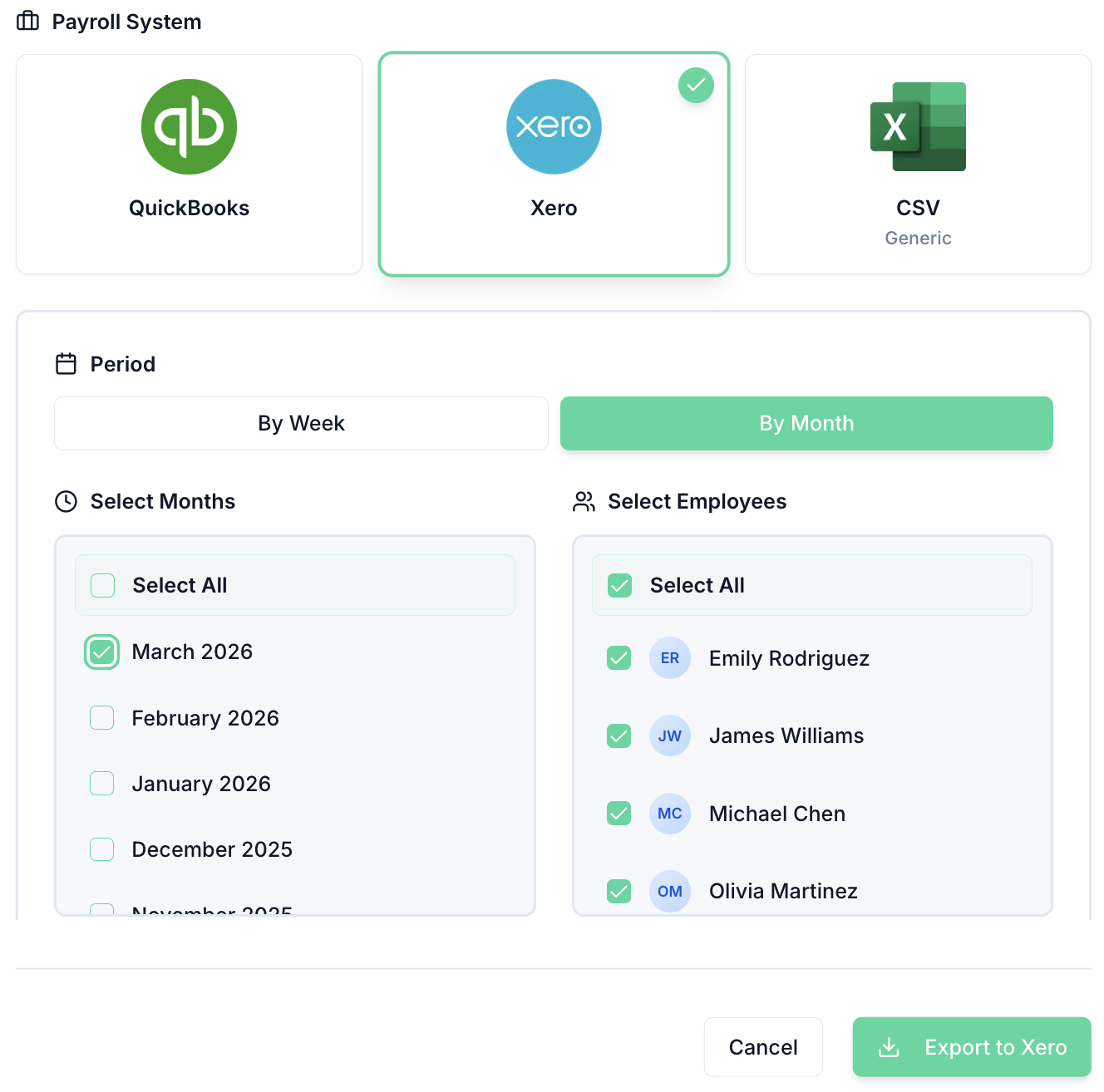
Approved piece-work pay exports directly to Xero, QuickBooks, or CSV. No manual re-entry — just accurate gross wages flowing straight to your payroll run.
  • Direct Xero & QuickBooks integration
  • CSV export for any payroll software
  • Approved piece-work pay included automatically
  • Clean audit trail for every entry
TimeTally payroll export showing piece-rate pay sent to Xero and QuickBooks
Meet TimeTally

Stop calculating piece-work manually
for every employee

TimeTally tracks unit completions, applies rates, approves records, and exports to payroll automatically. Explore all features or see how it works.

Pay calculated automatically

Piece-rate pay computed from approved unit records — quantity × rate, calculated automatically. No spreadsheets, no manual adjustments.

One-tap approvals

Managers approve or reject piece-work submissions from any device, with a full timestamped audit trail stored automatically.

Payroll-ready exports

Approved piece-work pay flows directly into Xero, QuickBooks, or CSV exports — so your payroll run is always accurate and on time.

See what we offer

No credit card required · Set up in minutes · Cancel anytime

Loved by UK small businesses

Real reviews from TimeTally customers

Setup was dead simple and the team just got on with it. Got everyone up and running in an afternoon with no help needed. Does everything we need for timesheets and holidays without the faff.
SM

S.M.

Has completely changed how I handle timesheets. Used to dread it every week — now it takes me minutes. Really easy to get around and my staff picked it up straight away.
JT

J.T.

Started using it just for rotas but quickly realised it does loads more. The timesheets and leave management are great, and it even handles TOIL and overtime which I wasn't expecting. Use it for everything now.
RK

R.K.

Download on the App Store

Piece Rate Pay: Frequently Asked Questions

Everything you need to know about piece rate pay in the UK. For related topics, try our minimum wage calculator or hourly rate calculator.

What is piece rate pay in the UK?
Piece rate pay (also called piece-work pay) is a system where workers are paid per unit of output rather than per hour. A worker might be paid £1.50 per delivery, £0.50 per item packed, or £25 per job completed. The total pay for a session is the sum of (quantity × rate per unit) across all tasks completed.
Is piece rate pay legal in the UK?
Yes. Piece rate pay is legal in the UK. However, the total pay earned divided by total hours worked must always equal or exceed the National Minimum Wage. This is known as the output-based method. If a piece-rate worker does not earn enough per unit to meet NMW over the hours worked, the employer must make up the shortfall.
What is the National Minimum Wage for piece workers?
The National Minimum Wage for workers aged 21 and over is £12.21 per hour in 2026. For piece workers, this means total pay ÷ total hours worked must be at least £12.21. The NMW rate is different for workers aged 18–20 (£10.00/hr) and those under 18 or in apprenticeships. HMRC enforces NMW compliance and can impose back pay and penalties.
How do you calculate piece rate pay?
Piece rate pay is calculated as: Total pay = sum of (quantity completed × rate per unit) for each task. For example, if a worker packs 100 small boxes at £0.50 each and 20 large boxes at £1.20 each, total pay = (100 × £0.50) + (20 × £1.20) = £50 + £24 = £74. This calculator allows you to add multiple tasks and calculates the total automatically.
What is the output method for calculating piece rate NMW?
The output method is how HMRC assesses NMW compliance for piece workers. It requires that a piece-rate worker's total pay divided by total hours worked equals at least the NMW. There is an alternative: the 'rated output work' approach, where HMRC sets a 'fair rate' per piece based on the average time a worker would take to produce a piece, multiplied by 120% of NMW. Employers must pay whichever is higher.
Can piece rate workers earn less than minimum wage?
No. Even if a worker is paid per unit, their total pay for the pay reference period must not fall below National Minimum Wage when divided by total hours worked. If total piece-rate earnings divided by hours worked is below £12.21/hr (for workers aged 21+ in 2026), the employer must top up the pay to meet NMW. Failing to do so is unlawful and HMRC can recover arrears and fine the employer.
How does piece rate pay work with holiday entitlement?
Piece-rate workers are entitled to 5.6 weeks' paid holiday per year, the same as other workers. Holiday pay for piece-rate workers is calculated as the average pay over the previous 52 weeks of work. Because pay varies week to week, you must take the average of actual earnings — not just a flat rate. HMRC guidance requires you to exclude weeks where no pay was received.
What records must employers keep for piece rate workers?
Employers must keep records sufficient to show NMW compliance for piece-rate workers. This includes: number of units completed per pay period, rate per unit, total pay per period, and total hours worked per period. Records must be kept for at least 3 years. Workers have the right to request access to their pay records. TimeTally's approval audit trail provides a complete record automatically.
How is piece rate pay taxed in the UK?
Piece rate pay is treated as ordinary employment income for tax purposes. Income tax (via PAYE) and National Insurance Contributions are deducted by the employer in the same way as hourly pay. The gross piece-rate earnings are subject to the same income tax bands and NI thresholds as any other wage. Employers must include piece-rate pay in payroll submissions to HMRC.
What is the difference between piece rate and zero-hours contracts?
These are two different things that sometimes overlap. A zero-hours contract is an employment contract with no guaranteed minimum hours — the employer offers work when available and the worker can accept or decline. Piece rate pay is a payment method — paying per unit rather than per hour. A worker can be on a zero-hours contract and also be paid piece rate, or they could be salaried and paid piece rate for specific tasks. Many casual and flexible workers in sectors such as agriculture, warehousing, and delivery are paid on a piece-rate basis.

Related tools