5 days × 5.6 weeks = 28.0 days
 TimeTally Software
Employees request leave via the app. Entitlement tracks itself. You approve in one tap — no calculators, no spreadsheets.
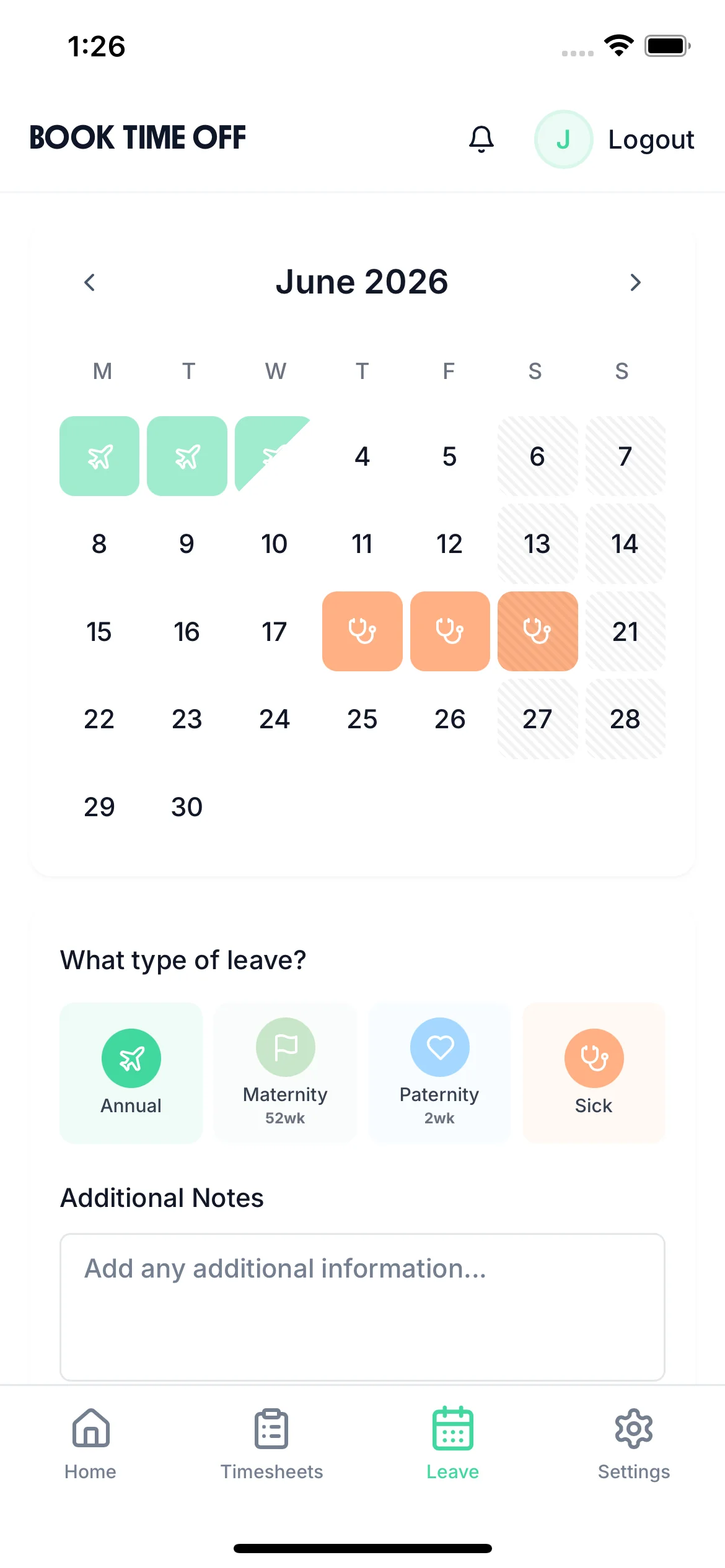
This calculator gives you the numbers. TimeTally tracks holiday entitlement, leave requests, and approvals automatically — so you never need to calculate it manually again. From £2/employee/month.
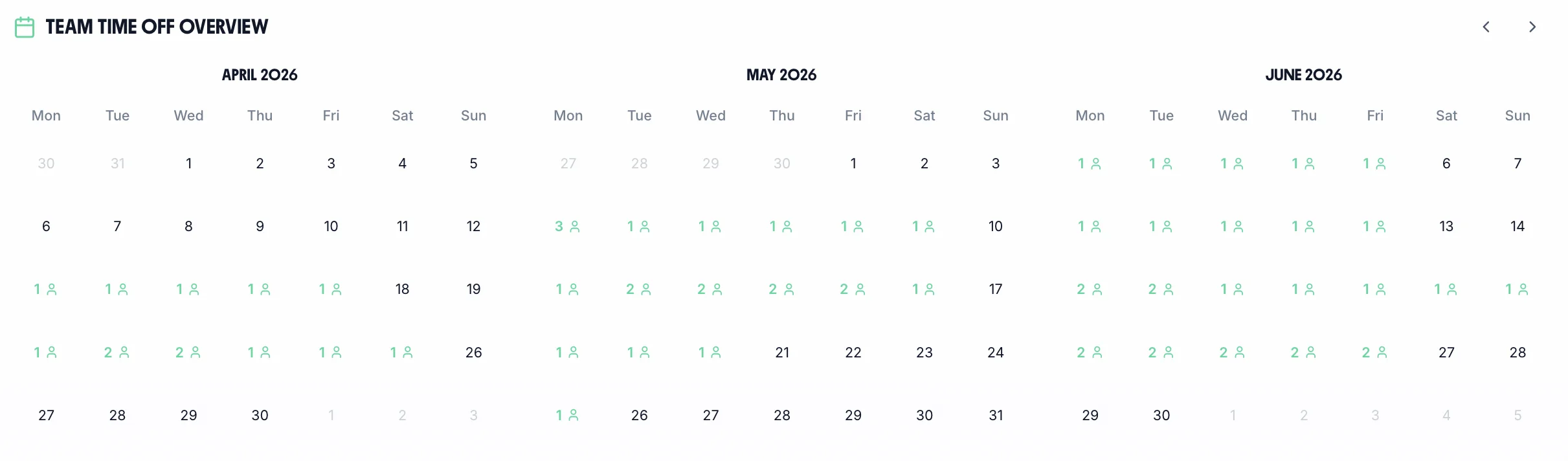
Every approved holiday, bank holiday, and leave request sits on one calendar. Spot clashes before they become a problem — no more cross-referencing spreadsheets.
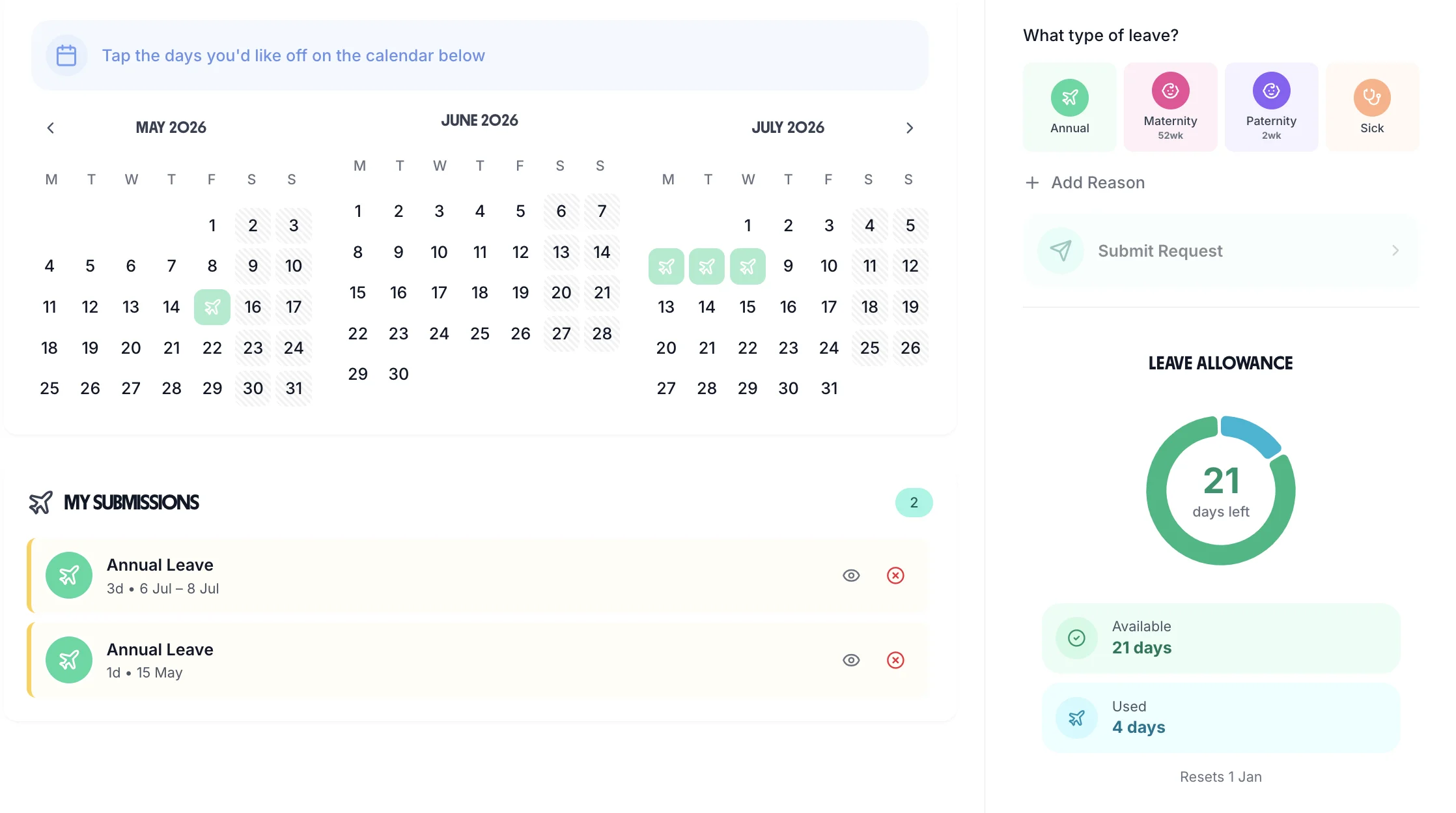
Staff submit leave requests via the iOS app. Entitlement balances update automatically. No emails, no forms, no back-and-forth.
All leave requests land in your dashboard. Approve or query with a single tap. Every decision is timestamped — no more "I never got that request" disputes.
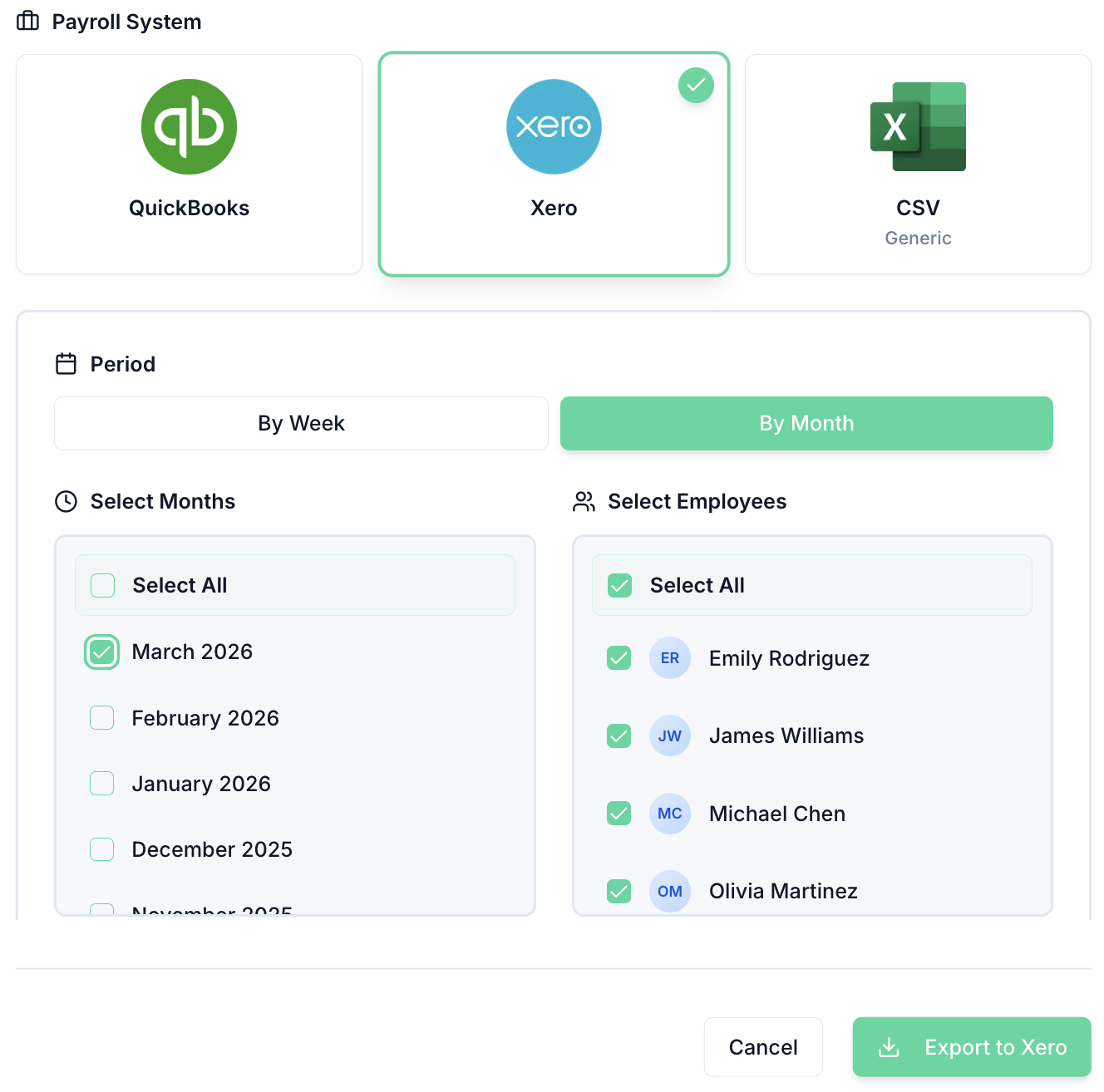
Approved leave is included in your payroll export automatically. Direct integration with Xero and QuickBooks — no manual adjustments, no missed deductions.
TimeTally automatically calculates, tracks, and manages holiday entitlement for your entire team. Explore all features or see how it works.
Automatic calculations
Holiday entitlement calculated automatically based on each employee's working pattern, with statutory minimums built in. Works alongside our timesheet approval software for seamless leave management.
One-tap approvals
Managers approve or reject holiday requests from any device, with a team calendar showing who's off and when
Statutory calculations included
Statutory holiday calculations, bank holiday management, and pro-rata entitlement handled for you — so you spend less time on spreadsheets
Real reviews from TimeTally customers
“Setup was dead simple and the team just got on with it. Got everyone up and running in an afternoon with no help needed. Does everything we need for timesheets and holidays without the faff.”
S.M.
“Has completely changed how I handle timesheets. Used to dread it every week — now it takes me minutes. Really easy to get around and my staff picked it up straight away.”
J.T.
“Started using it just for rotas but quickly realised it does loads more. The timesheets and leave management are great, and it even handles TOIL and overtime which I wasn't expecting. Use it for everything now.”
R.K.

Statutory minimum holiday entitlement for common working patterns (based on 8-hour days)
| Days / Week | Type | Holiday (Days) | Holiday (Hours) | Note |
|---|---|---|---|---|
| 1 | Part-time | 5.6 | 44.8 | — |
| 2 | Part-time | 11.2 | 89.6 | — |
| 3 | Part-time | 16.8 | 134.4 | — |
| 4 | Part-time | 22.4 | 179.2 | — |
| 5 | Full-time | 28 | 224 | — |
| 6 | Extended | 28 | 224 | Capped at 28 |
These 8 days may be included within your 28-day statutory entitlement. Use our break time compliance calculator to check rest requirements on bank holiday shifts.
Everything you need to know about calculating holiday in the UK. For related pay topics, try our overtime pay calculator or hourly rate calculator.
Calculate SSP entitlement for employees
Track and calculate weekly working hours
Calculate 1.5x and 2x overtime rates
Work out holiday pay including overtime
Manage team holiday requests and approvals
Template and guidance for your sick leave policy