Track on-call periods, log callout hours, and convert active on-call time to TOIL. Give employees visibility of their on-call entitlements and managers an accurate record of all on-call activity.
“We used to chase managers for on-call records every month. Now callout hours go straight in and TOIL balances update the same day.”
Dan W., Operations Manager
Employees log the time they were called out during on-call periods through the TimeTally app. Managers approve callout hours and designate them as TOIL at the applicable rate — creating a clear, permanent record of every on-call callout and the TOIL earned. Overtime hours outside of on-call are tracked in the same system.
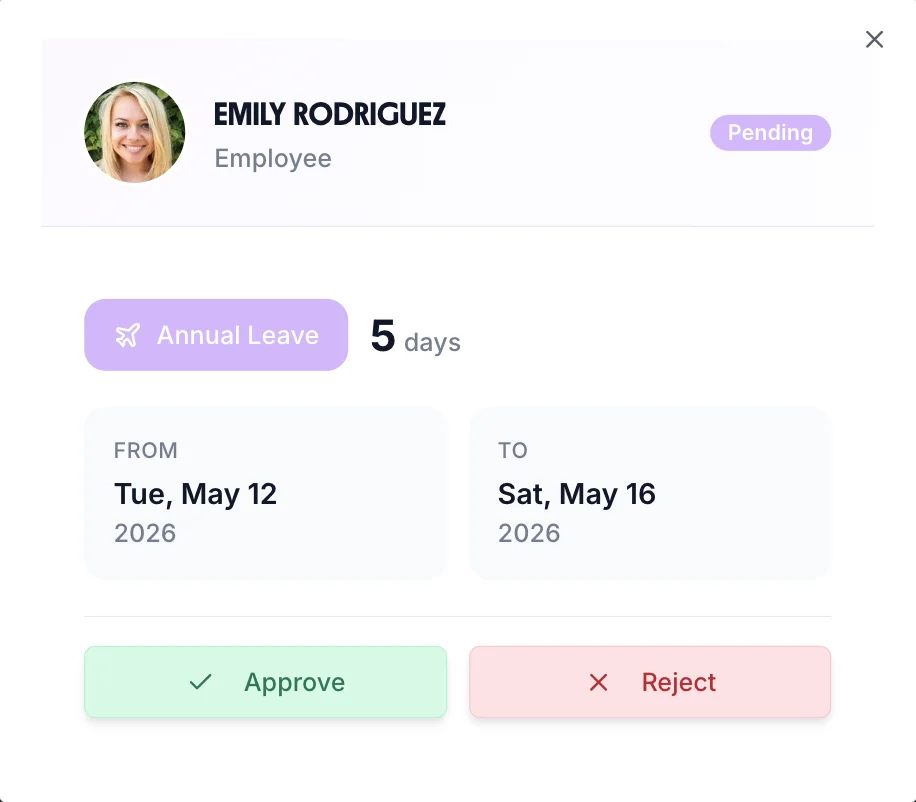
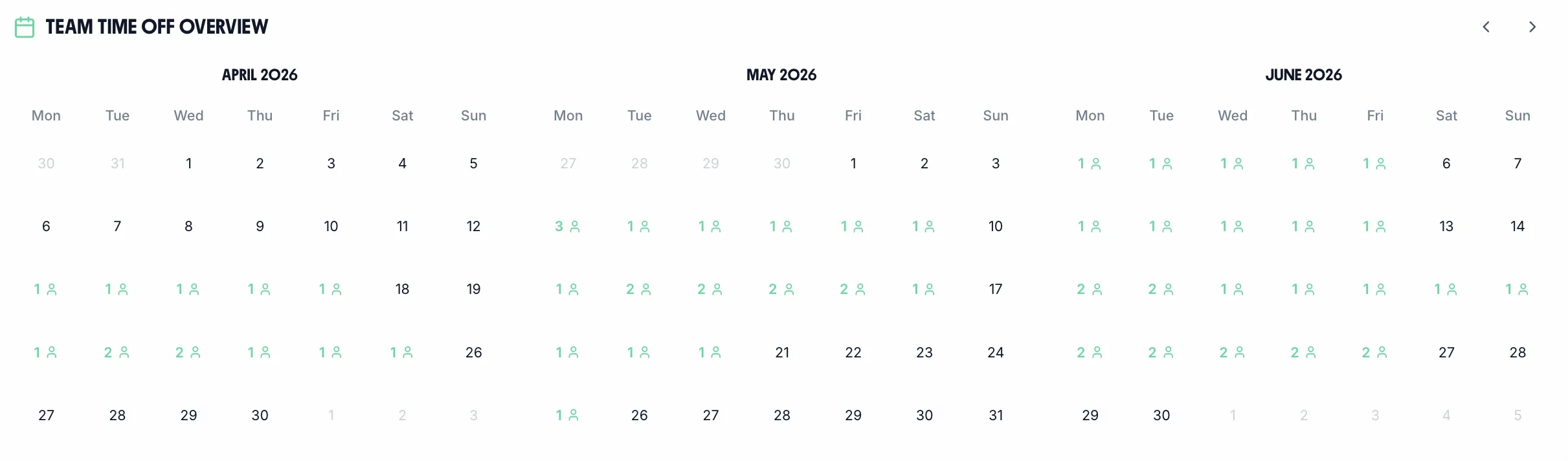
On-call TOIL bookings appear alongside annual leave, sick leave, and regular TOIL. Managers see complete team availability before approving any absence request.
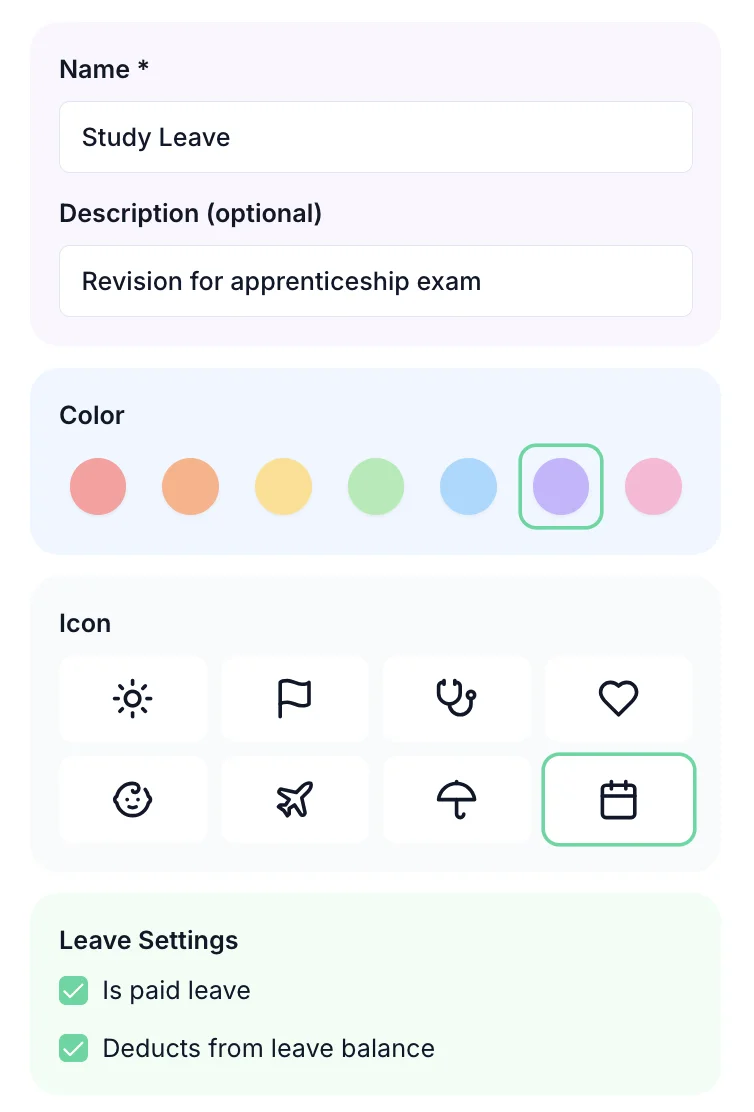
Set different accrual rates for different callout scenarios — day callouts, night callouts, and bank holiday callouts. Define balance caps and expiry periods to keep on-call TOIL manageable.
Works alongside healthcare TOIL management, security TOIL management, and any other sector where on-call working is common.
Tip: Create separate TOIL types for ‘On-Call Callout (Active Work)’ and ‘On-Call Standby’ if your policy compensates both — each with different rates and colours for clear reporting.
Real-time TOIL balances
Employees see their on-call TOIL balance update the moment a manager approves a callout.
Full audit trail
Every callout approval is logged with who approved it, when, and at what TOIL rate.
WTR compliance exports
Export on-call records for Working Time Regulations compliance monitoring and payroll.
One price. Every feature. No surprises.
UK on-call law is more nuanced than most employers realise. Here's what the rules actually say.
An employee on call at home or elsewhere may not be classed as working during that time. An employee on standby where their physical presence at the workplace is required typically does count as working time under the Working Time Regulations.
Landmark ECJ rulings established that time spent on call at the employer's premises counts as working time — even if the worker is asleep. These decisions transformed how the NHS and the wider care sector calculates hours for Working Time compliance.
The UK Supreme Court ruled in Mencap v Tomlinson-Blake (2021) that time spent asleep during a sleep-in shift does not count as working time for National Minimum Wage purposes, unless the worker is actually awake and required to work.
On-call time that qualifies as working time counts toward the 48-hour weekly average limit under the Working Time Regulations. Employers must monitor cumulative hours — including on-call — to ensure they are not breaching the limit.
Even where on-call time counts as working time, compensatory rest is permitted if the required 11-hour daily rest break is interrupted by a callout. The compensatory rest must be provided as soon as reasonably practicable afterwards.
Many employers pay a flat availability allowance for being on call, plus an hourly rate only when actually called out. Employers must check that the total pay arrangement does not fall below the National Minimum Wage when calculated across all hours on call.
Sector-specific rules apply in healthcare and residential care settings. Sleeping time in care homes is treated differently following the Mencap ruling. Any employer in these sectors should take specialist advice to ensure Working Time and NMW compliance.
Log availability periods, actual callouts, and callout duration separately. Accurate records are essential for Working Time Regulations compliance, National Minimum Wage compliance, TOIL calculations, and defending any employment tribunal claims.
Swipe to see more →
Still have a question? See all FAQs →
A real person replies within 24 hours. No ticket queues, no bots.
A UK company, ICO regulated. Your data encrypted and never sold.