A complete absence management policy for UK employers — covering sickness absence, notification procedures, return-to-work interviews, Bradford Factor triggers, and long-term illness. Editable Word format.
 TimeTally Software
A policy tells you what to do. TimeTally helps you do it — tracking all absence types, showing team calendars, and giving managers the data they need to have informed conversations.
Tap a card to read the detail.
14-day free trial · No credit card needed
A complete, customisable policy covering every aspect of absence management — from first-day absence notification to long-term illness support.
How and when employees must notify you of absence, who to contact, and acceptable notification methods
Self-certification (up to 7 days), fit note requirements, and trigger points for absence review meetings
Return-to-work interview process, reasonable adjustments, and phased return options
How the Bradford Factor is calculated and applied as a trigger for formal absence review — with customisable trigger thresholds
Managing employees on long-term sick leave — medical evidence, Occupational Health referrals, and the fair dismissal process
Statutory Sick Pay, discrimination considerations, and the interaction with disability rights under the Equality Act 2010
Unplanned absence is one of the hardest costs for a small team to absorb. A clear policy helps you manage it while treating employees fairly.
Without a written policy, managers handle absence differently across teams — creating legal risk and employee resentment. A policy ensures everyone is treated the same.
A clear trigger system (like Bradford Factor thresholds) means you have supportive conversations earlier — often preventing absence from escalating to a dismissal situation.
Unfair dismissal claims linked to sickness absence are among the most common ET claims. A policy that follows ACAS guidance significantly reduces your exposure.
Good absence policies aren't just disciplinary tools — they also set out the support you offer: flexible return, Occupational Health, Employee Assistance Programmes.
The template gives you the rules. TimeTally enforces them automatically — recording every absence, calculating Bradford Factor scores, and giving managers the visibility to act early. From £3/employee/month.
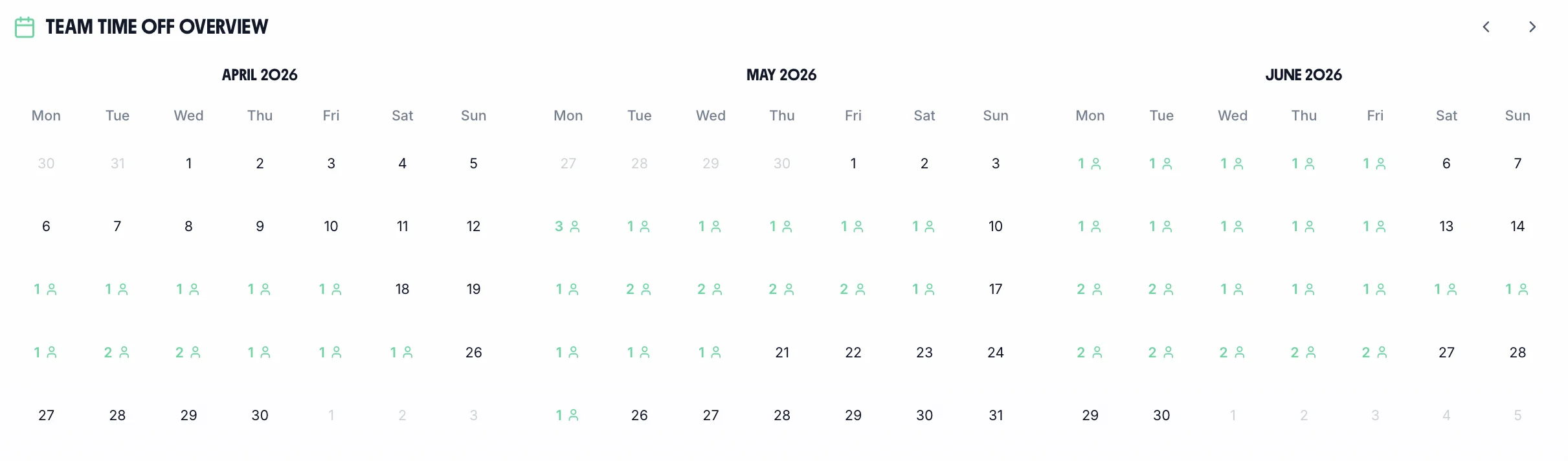
Every type of absence — sick days, annual leave, unauthorised absence — appears in one calendar. Managers can see who is off, spot patterns, and make informed decisions without chasing spreadsheets or asking HR.
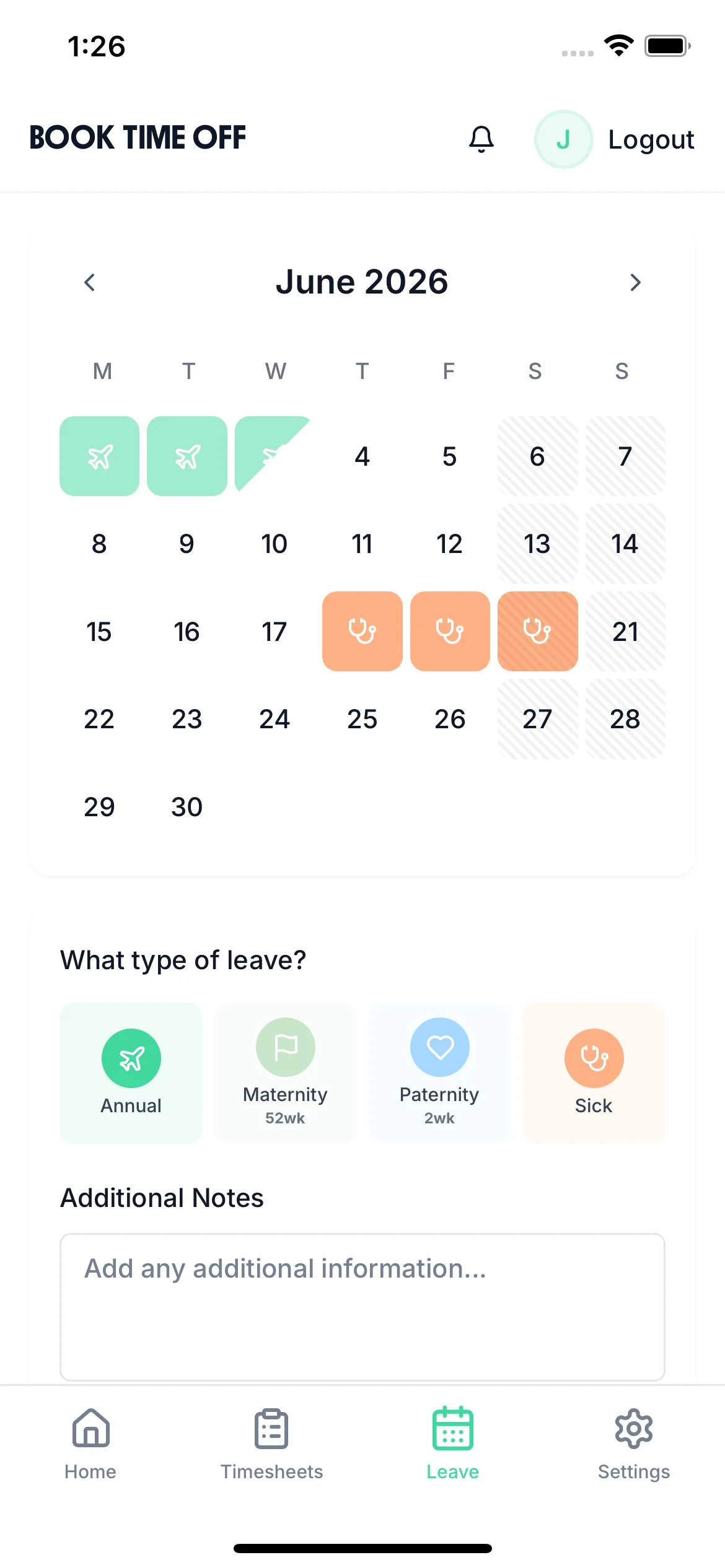
No more paper forms or email chains. Employees submit leave requests directly from their phone. Managers approve or decline in one tap, and the calendar updates instantly for the whole team.
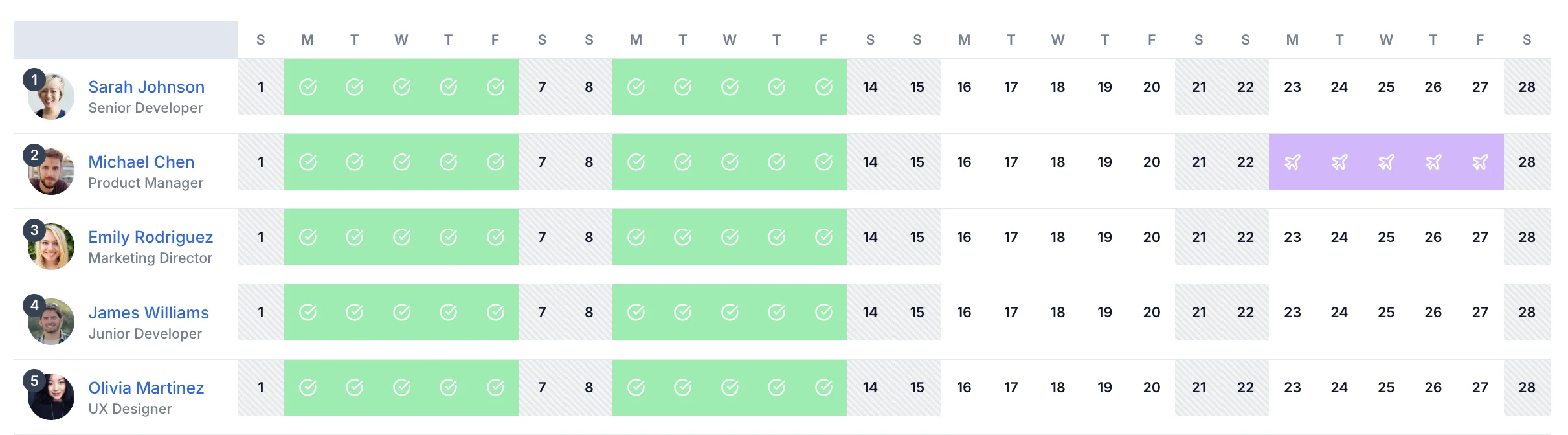
See holiday requests alongside scheduled shifts so you always know if a leave approval will leave you short-staffed. Approve with confidence, knowing your coverage before you commit.
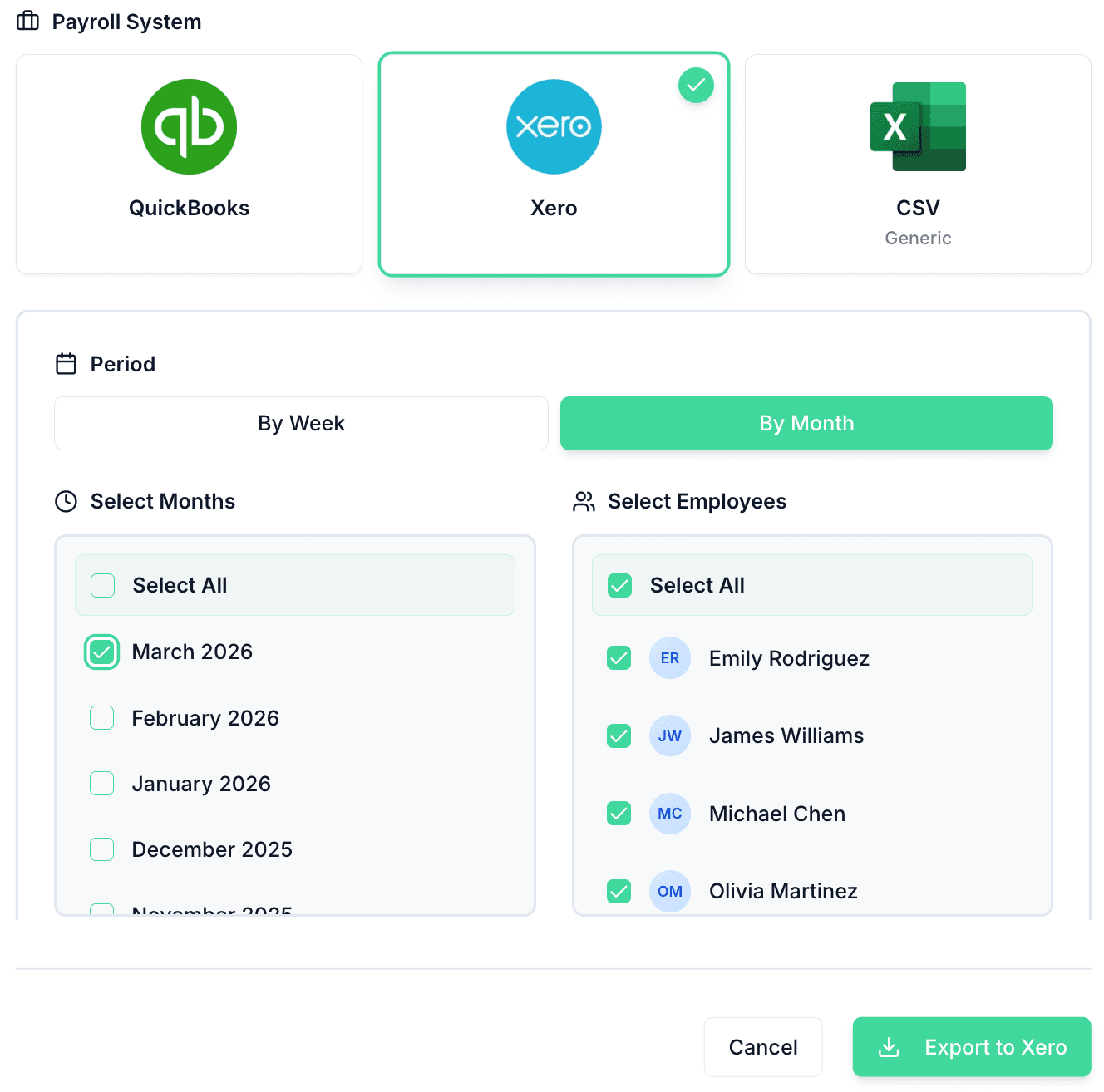
Sick days and unpaid absence are automatically reflected in pay calculations. Export directly to Xero, QuickBooks, or CSV — no manual adjustments, no copy-pasting hours.
A policy tells you what to do. TimeTally helps you do it — tracking all absence types, showing team calendars, and giving managers the data they need to have informed conversations.
Track sick leave, unauthorised absence, and custom types alongside annual leave in one calendar
Managers see all absences across the team in a single view — useful for spotting patterns
Export absence data by employee, period, or type — ready for Bradford Factor analysis or payroll
£3/employee/month · All features included · No credit card required
“TimeTally has been excellent for our business. The app is simple to use, reliable, and makes managing holidays, absences, and staff records straightforward. The system has saved us a significant amount of administration time and gives both managers and employees clear visibility of leave balances and requests. Highly recommended for any business looking for an easy-to-use workforce management solution.”
 Jordan Ingoe, CLI Manchester
An absence management policy sets out how your business handles employee absences — both unplanned (sickness, personal emergencies) and planned (annual leave, parental leave). It explains employee notification procedures, the return-to-work process, when absence triggers formal review, and how you support employees with frequent or long-term absence.
There is no specific legal requirement to have a written absence management policy. However, the Employment Rights Act 1996 requires employers to provide employees with written particulars of sickness absence procedures. ACAS also recommends having a written policy as best practice — it protects employers from unfair dismissal claims and ensures consistent treatment of all employees.
The Bradford Factor is a formula that weights frequent short-term absences more heavily than a single long-term absence (B = S² × D, where S is the number of spells and D is total days). It is widely used in UK businesses as a trigger point for absence review meetings. However, it should be used as an indicator to prompt a conversation — not as an automatic disciplinary trigger — and must be applied consistently to avoid discrimination claims.
There is no statutory minimum. However, dismissing an employee without following a fair procedure will almost certainly result in an unfair dismissal finding. ACAS guidance recommends obtaining medical evidence, making reasonable adjustments, exploring alternative roles, and giving the employee a genuine opportunity to improve attendance before considering dismissal. The Employment Rights Act 2025 strengthens procedural requirements in this area.
Employees can self-certify the first 7 days of illness (calendar days, including weekends and bank holidays). After 7 days, you can ask for a fit note, which a doctor, registered nurse, pharmacist, occupational therapist or physiotherapist can issue. The fit note may say the employee is not fit for work, or may say they may be fit for work with adjustments. You are not legally required to accept a fit note's recommendations, but failure to consider them without good reason could be used against you in an Employment Tribunal.
A return-to-work interview should cover: the reason for absence, whether the employee is well enough to return, whether any adjustments are needed to their role or workload, whether the absence was work-related, and any support the employer can offer. The interview should be informal but documented. Acas notes there is no legal requirement to hold one, but recommends a conversation as soon as possible after a worker returns.
Still have a question? See all FAQs