
How to Calculate Holiday Pay in the UK: The 52-Week Rule Explained

To calculate holiday pay in the UK, work out a normal week's pay and pay that for each week of leave. For someone on fixed hours and fixed pay, it's simply their usual weekly pay. For anyone whose hours or pay vary, it's the average over the last 52 weeks they were paid. And for the first four weeks of leave each year, that average has to include regular overtime, commission and shift premiums.
The rule exists so nobody loses money by taking holiday. Most mistakes come from paying basic pay to people whose normal pay is more than basic. This guide covers the methods, the 52-week average step by step, and exactly what to include. It's about the rate; for how many days someone gets, see how to calculate holiday entitlement.
The short answer
- Fixed hours and pay: a week's holiday pay is their normal weekly pay.
- Hours or pay that vary: average pay over the last 52 paid weeks, skipping unpaid weeks.
- First 4 weeks of leave: include regular overtime, commission and premiums.
- Remaining 1.6 weeks: basic pay is allowed, unless the contract says more.
- A day's holiday pay = a week's pay ÷ the days they normally work in a week.
Step 1: Work Out Which Method Applies
The method depends on how the person's hours and pay are set. It comes from the "week's pay" rules in the Employment Rights Act 1996, which the Working Time Regulations borrow:
| Worker | A week's holiday pay is |
|---|---|
| Fixed hours, fixed pay (most salaried staff) | Their normal weekly pay |
| Fixed hours, pay varies (piece rates, output bonuses) | Normal weekly hours × their average hourly rate over 52 paid weeks |
| Set hours that vary week to week (shift and rota workers) | Average weekly hours × average hourly rate, both over 52 paid weeks |
| No normal hours (zero-hours, casual) | Average weekly pay over 52 paid weeks |
Irregular-hours and part-year workers can also be paid rolled-up holiday pay (12.07% added to each pay packet) for leave years starting on or after 1 April 2024. Our guide to holiday pay for zero-hours workers covers that option.
Step 2: Use the 52-Week Reference Period
Since April 2020, variable pay is averaged over 52 weeks (it used to be 12). To build the average:
- Start from the last complete week before the holiday begins (the pay week, if they're paid weekly).
- Count back 52 weeks in which they were paid. Skip any week with no pay at all.
- Don't look back more than 104 weeks. If that doesn't give you 52 paid weeks, use the paid weeks you found.
- If they've been with you for less than 52 weeks, use the weeks they've worked.
- Add up the pay (and, for shift workers, the hours) and divide by the number of weeks.
Worked example: a shift worker
Sam works rota shifts that change week to week. In the last 52 paid weeks, Sam worked 1,976 hours and was paid £27,170, including regular overtime and weekend premiums.
- Average weekly hours: 1,976 ÷ 52 = 38 hours
- Average hourly rate: £27,170 ÷ 1,976 = £13.75
- A week's holiday pay: 38 × £13.75 = £522.50
- A day's holiday pay (Sam works 5 days a week): £522.50 ÷ 5 = £104.50
Paid at Sam's basic rate of £12.71 instead, the same week would be £482.98. That £39.52 gap, every week of holiday, is the commonest holiday pay underpayment in the UK.
Step 3: Decide What Has to Be Included
For leave years starting on or after 1 April 2024, the law splits the 5.6 weeks in two:
| Payment | First 4 weeks | Remaining 1.6 weeks |
|---|---|---|
| Basic pay | Included | Included |
| Regular overtime, guaranteed or voluntary | Included | Only if the contract says so |
| Commission | Included | Depends on the contract and how it's earned |
| Shift, night and weekend premiums linked to the job | Included | Included if they're part of normal pay for normal hours |
| Pay for seniority, length of service or qualifications | Included | Only if the contract says so |
| Expenses (mileage, travel costs) | Not included | Not included |
"Regular" is the test that matters for overtime. One extra shift at Christmas doesn't change someone's normal pay; overtime they've worked most weeks for months does, even if they could have said no. If you're unsure, include it: underpaying holiday is an unlawful deduction from wages, while overpaying costs you a few pounds.
Many employers pay all 5.6 weeks the same way to keep payroll simple. That's allowed, and it avoids having to track which weeks of leave are which.
“The app is simple to use, reliable, and makes managing staff records straightforward. The system has saved us a significant amount of administration time.”
 Jordan Ingoe, CLI Manchester
Five Holiday Pay Mistakes to Avoid
- Paying basic pay to people with regular overtime or commission for the first 4 weeks of leave.
- Still using 12 weeks. The reference period has been 52 weeks since April 2020.
- Counting weeks with no pay in the average, which drags it down. Skip them.
- Holiday pay below minimum wage. Holiday pay can't work out at less than the minimum wage for the hours it covers.
- Getting part-timers' bank holidays wrong. See bank holiday entitlement for how to treat days they don't work.
Holiday owed when someone leaves follows the same rate, with its own formula for the days: see holiday pay when an employee leaves. And if night premiums are part of normal pay, our guide to night shift pay covers them.
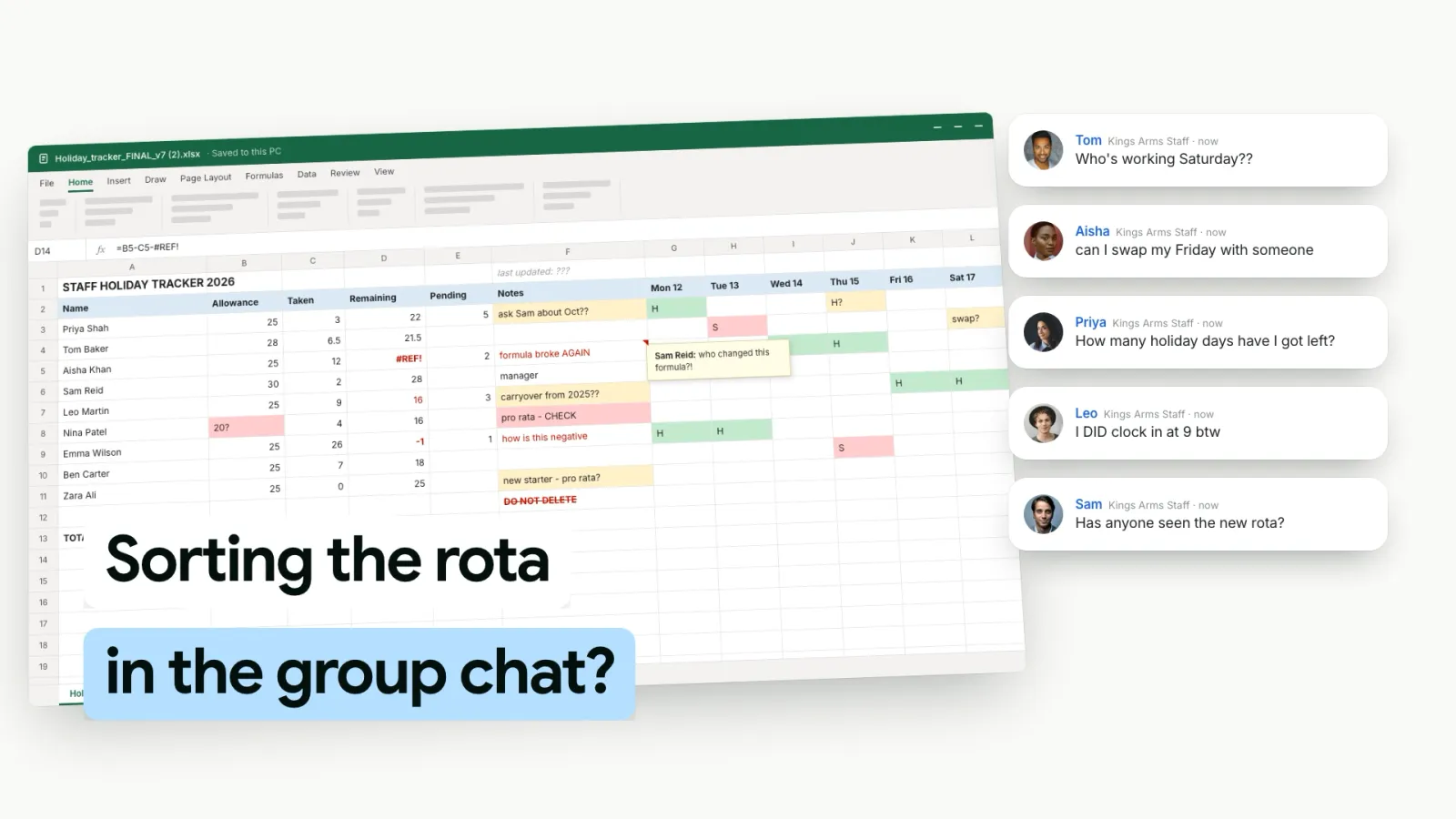
How TimeTally Helps
The 52-week average is only as good as the records behind it. If hours and overtime live in paper timesheets and texts, building a year of history for every holiday is a job in itself. With TimeTally:
- Every hour on record. Staff clock in on their phone or fill in a timesheet; you approve it, and the hours, breaks and overtime are kept for every pay period.
- Overtime worked out at the rates you set, so you can see which staff have regular overtime that belongs in their holiday pay.
- Leave alongside the hours. Holiday booked in the app sits in the same pay period as the hours worked.
- Straight to payroll. Export to Xero, QuickBooks or a CSV.
One honest limit: TimeTally prices a day of leave at the person's hourly rate for their usual hours. It doesn't work out the 52-week average or add overtime and commission to holiday pay for you. For staff with regular extras, use the hours and overtime history you can export to work out the top-up. It costs £3 per employee per month; see timesheet payroll software for more.
 TimeTally
A Year of Hours and Overtime, Already Recorded
Staff clock in on their phone, you approve the hours, and payroll gets the hours, overtime and leave from one place.
Free for 14 days • No credit card required
Key Takeaways
- Holiday pay is a normal week's pay for each week of leave
- Fixed hours and pay: their usual weekly pay; anything that varies: the average over 52 paid weeks
- Skip unpaid weeks and look back no more than 104 weeks
- The first 4 weeks must include regular overtime, commission and job-linked premiums
- The remaining 1.6 weeks can be paid at basic pay unless the contract says otherwise
- A day's holiday pay is a week's pay divided by their normal working days
Frequently Asked Questions
How is holiday pay calculated in the UK?
Holiday pay is a normal week's pay for each week of leave. For someone on fixed hours and pay, that's their usual weekly pay. If hours or pay vary, it's the average over the last 52 weeks in which they were paid. For the first 4 weeks of leave, regular overtime and commission must be included.
Is overtime included in holiday pay?
Yes, if it's regular. For the 4 weeks of leave that come from EU law, overtime that is paid regularly enough to be part of normal pay must be included, whether it's guaranteed or voluntary. Occasional one-off overtime doesn't have to be. The remaining 1.6 weeks can be paid at basic pay unless the contract says otherwise.
What is the 52-week holiday pay rule?
For workers whose hours or pay vary, a week's holiday pay is the average weekly pay over the last 52 weeks in which they were paid. Weeks with no pay are skipped, looking back up to 104 weeks. If they've worked for less than 52 weeks, you use the weeks they have.
How is holiday pay calculated for shift workers?
Shift workers with set but varying hours get their average weekly hours multiplied by their average hourly rate, both taken over the last 52 paid weeks. Regular shift premiums and overtime count towards the average for the first 4 weeks of leave.
Is commission included in holiday pay?
Yes, for the first 4 weeks of each year's leave. Commission linked to the work someone does is part of their normal pay, so leaving it out means they'd lose money by taking holiday. For the other 1.6 weeks, it depends on the contract and how the commission is earned.
How much is holiday pay per day?
Divide a week's holiday pay by the number of days the person normally works in a week. If a week's pay is £522.50 and they work five days, a day of holiday is £104.50.