Free Average Weekly Hours Calculator

Free Average Weekly Hours Calculator UK

Check whether your employees are compliant with the 48-hour Working Time Regulations limit. Enter hours for up to a 17-week reference period and get an instant result.

Free to use
No sign-up required
UK WTR rules built in
5.0 · Used by 1,000+ UK businesses

Stop calculating hours manually — track time automatically

This calculator gives you the compliance check. TimeTally tracks employee working hours automatically — so you always know who's approaching the 48-hour limit. From £2/employee/month.

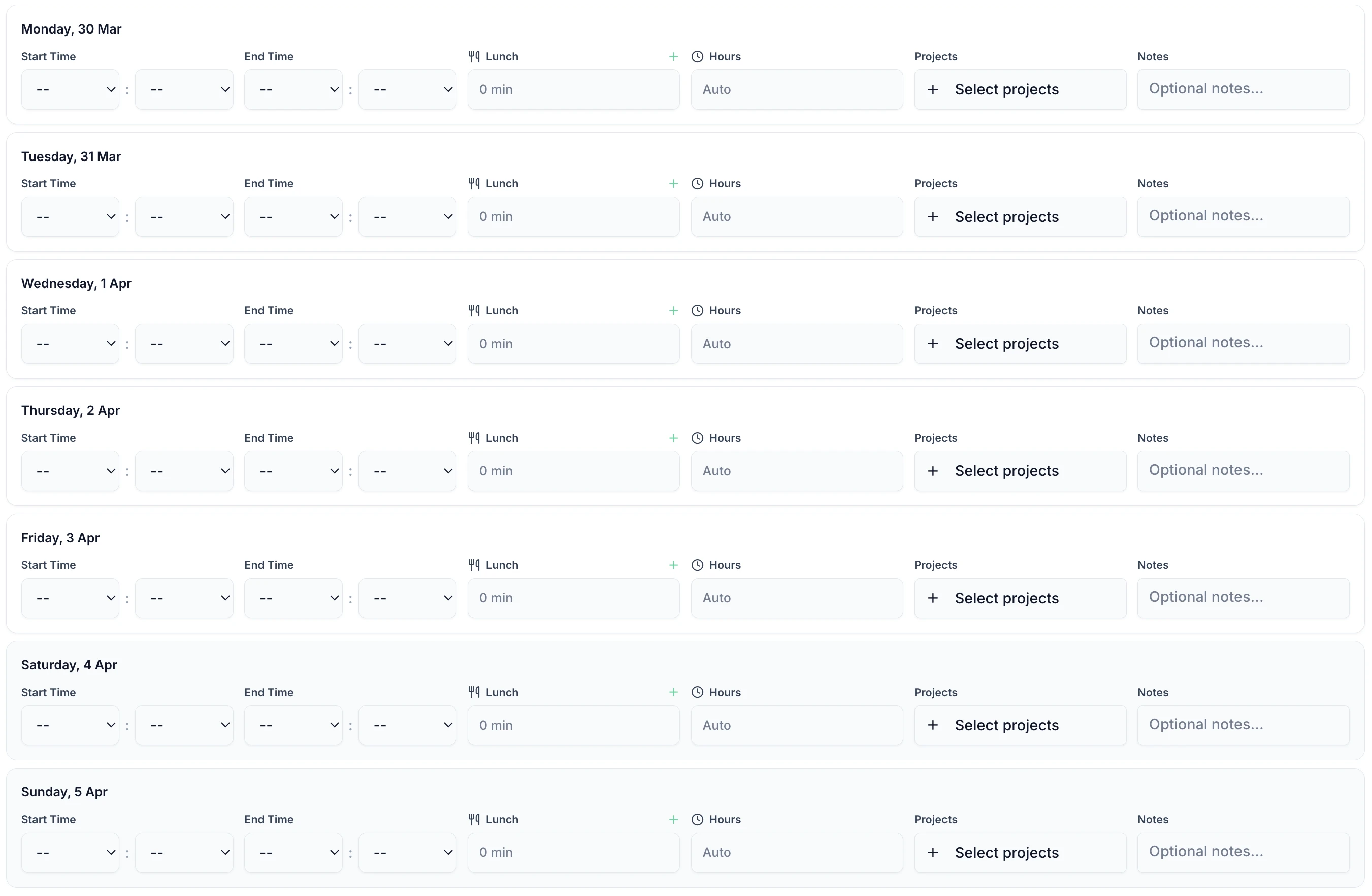
Every hour logged automatically

Employees clock in and out from their phone. TimeTally records every minute worked — giving you the data you need to run the 17-week reference period calculation automatically.
Mobile clock-in
GPS verified
Real-time totals
17-week average
TimeTally timesheet entry showing employee hours logged

See all employee hours in one view

The timesheets dashboard shows every employee's weekly hours at a glance. Spot anyone approaching the 48-hour limit before it becomes a compliance issue.
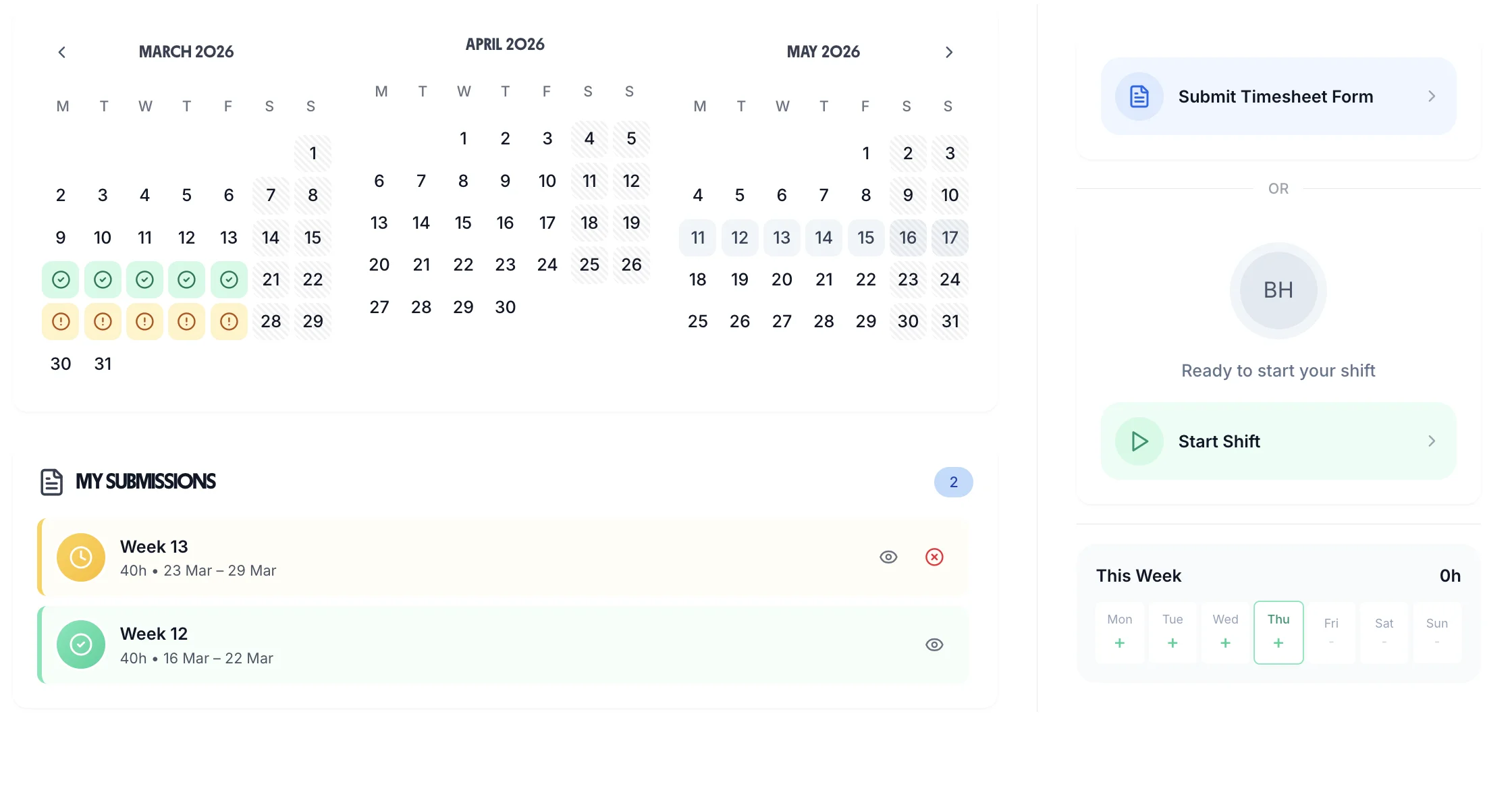
  • All employee timesheets in one place
  • Weekly and monthly hour totals
  • Overtime flagged automatically
  • Export for audit or compliance review
TimeTally desktop timesheets page showing all employee hours

Approve timesheets from anywhere

Every submitted timesheet lands in your manager dashboard. Approve or query with one tap — no need to be at a desk. Every decision is timestamped and auditable.
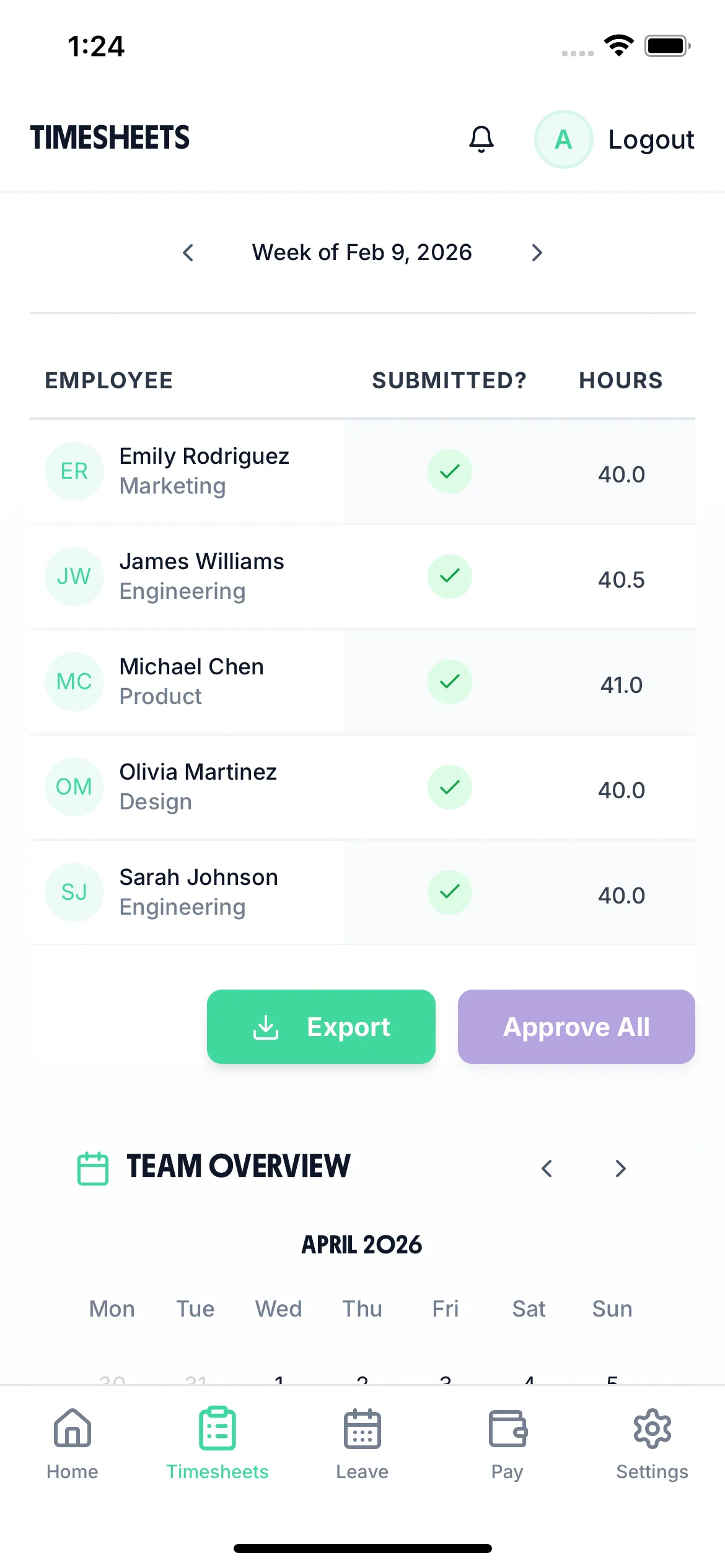
  • Mobile approvals from any device
  • One-tap approve or query
  • Timestamped audit trail
  • Instant notifications on submission
TimeTally mobile employer timesheet approval page

Real-time workforce dashboard

The employer dashboard gives you a live view of who's clocked in, total hours this week, and any timesheet anomalies — all in one place.
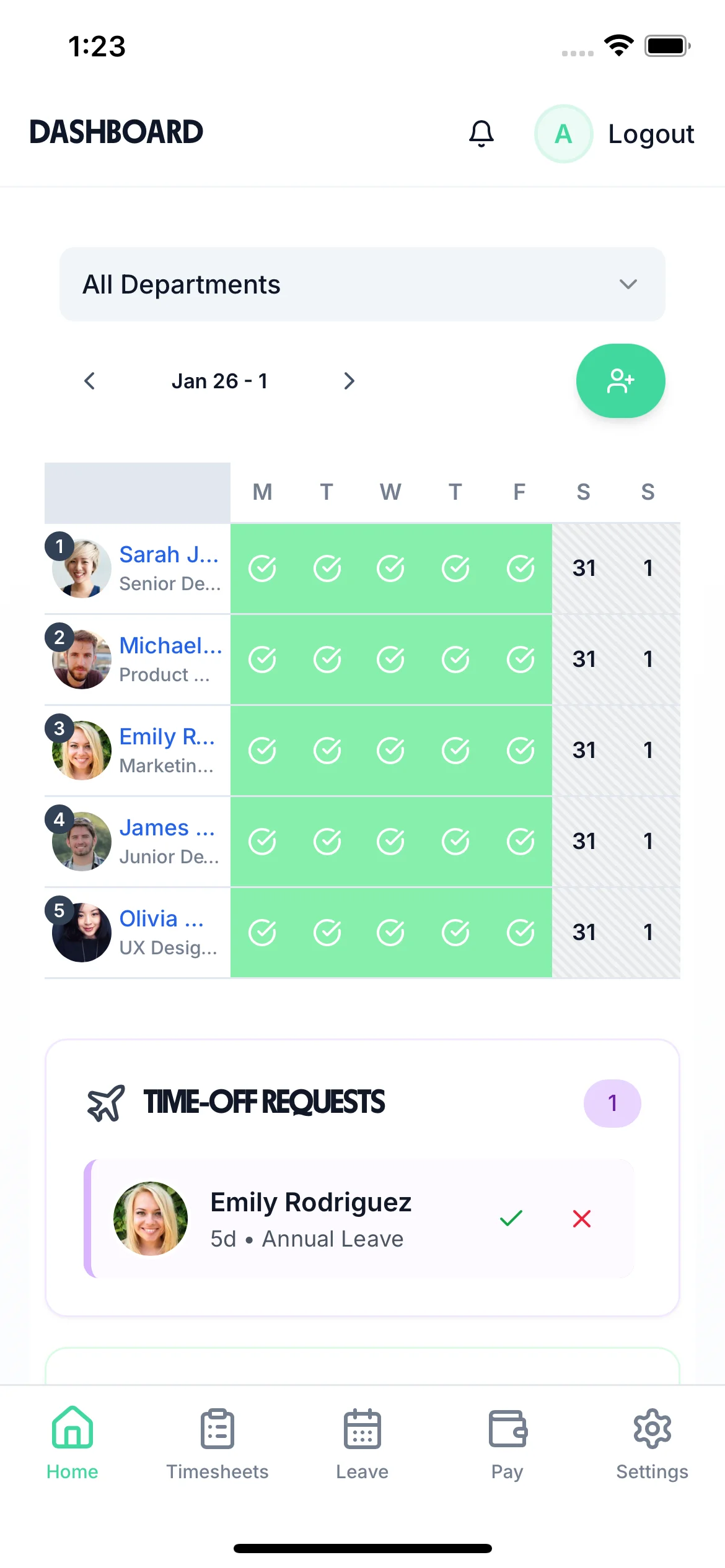
  • Live clocked-in status for all staff
  • Weekly hour totals per employee
  • Pending and approved timesheet counts
  • Pay run summaries ready to export
TimeTally mobile employer dashboard showing workforce overview
Meet TimeTally

Stop doing this manually
for every employee

TimeTally automatically tracks working hours for every employee, making WTR compliance monitoring effortless. Explore all features or see how it works.

Automatic hour tracking

Employees clock in from their phone. Working hours are recorded automatically — no paper timesheets, no manual data entry.

WTR compliance monitoring

See every employee's average weekly hours across the 17-week reference period. Get alerted before anyone breaches the 48-hour limit.

Full audit trail

Every clock-in, clock-out, and approved timesheet is stored with a timestamp. Defend any compliance query with a complete record.

See what we offer

No credit card required · Set up in minutes · Cancel anytime

TimeTally has been excellent for our business. The app is simple to use, reliable, and makes managing staff records straightforward. The system has saved us a significant amount of administration time. Highly recommended for any business looking for an easy-to-use workforce management solution.

CLI Manchester

Jordan Ingoe, CLI Manchester

Average Weekly Hours FAQ

Everything you need to know about the Working Time Regulations 48-hour limit.

What is the 48-hour average working week rule in the UK?
Under the Working Time Regulations 1998, workers cannot be required to work more than an average of 48 hours per week. The average is calculated over a 17-week reference period, so occasional weeks over 48 hours don't automatically breach the rules. Workers can opt out of the 48-hour limit by signing a voluntary opt-out agreement.
How is the 17-week reference period calculated?
Add up the total hours worked over 17 consecutive weeks, then divide by 17. For example, if a worker worked 816 total hours over 17 weeks, their average is 48 hours per week — exactly at the limit. If any weeks include annual leave or sick leave, those weeks may be excluded and replaced by earlier weeks in the calculation.
What counts as working time under the WTR?
Working time includes: time at the employer's disposal and carrying out activities or duties, time spent on call at the workplace, and time spent travelling as part of the job (but not commuting). It does not include lunch breaks where the worker is free to do as they please, annual leave, sick leave, or travel from home to work.
Can workers opt out of the 48-hour limit?
Yes. Workers can sign an individual opt-out agreement to work more than 48 hours per week on average. This must be voluntary — employers cannot force workers to opt out. Workers who opt out can cancel the opt-out with 7 days' notice (or longer if agreed, up to 3 months). Young workers (under 18) cannot opt out.
What happens if an employee regularly exceeds 48 hours?
If a worker regularly averages more than 48 hours per week without a valid opt-out, the employer may be in breach of the Working Time Regulations and could face enforcement action from the Health and Safety Executive (HSE). Employees who suffer a detriment for refusing to work more than 48 hours may bring a tribunal claim.
How does TimeTally help with WTR compliance?
TimeTally records the exact hours each employee works each week via clock-in and clock-out. Managers can view running averages across the reference period and be alerted when any employee is approaching the 48-hour limit. This makes it easy to take action before a breach occurs.

Related tools