
In force since 6 April 2026

Holiday Records: What UK Employers Must Keep From April 2026

Since 6 April 2026, every employer in Great Britain must keep holiday records that show each worker got their paid annual leave, and keep them for six years. The rule covers all workers, including zero-hours, casual and part-year staff. Here is what to record, how long for, and what happens if you don't.

Last checked: 21 October 2026General information, not legal advice

In short

How long must employers keep holiday records?

Six years from the date each record is made. Regulation 16B of the Working Time Regulations 1998 requires employers to keep records adequate to show that workers received their statutory annual leave, were paid correctly for it, and were paid for untaken leave when they left. You can keep them in any reasonable format. Failing to keep them is a criminal offence.

In force
6 April 2026
Keep for
6 years
Covers
All workers
Where
England, Scotland, Wales
Format
Your choice

The 6-year holiday records rule: what the law says

Section 35 of the Employment Rights Act 2025 added regulation 16B to the Working Time Regulations 1998. It is short, and worth reading in full.

The duty

An employer must keep records “adequate to show whether the employer has complied” with the annual leave rules, and “retain such records for six years from the date on which they were made”. Read it on legislation.gov.uk.

What the records must show

That each worker got 4 weeks' leave (regulation 13(1)) and the extra 1.6 weeks (13A(1)), or their accrued leave if they work irregular hours or part of the year (15B(2)); that they were paid a week's pay for it (16(1)); and that leavers were paid in lieu of untaken leave (14(2), 14(6) and 15E(2)).

How you keep them

The records “may be created, maintained and kept in such manner and format as the employer reasonably thinks fit”. Paper, a spreadsheet or software are all allowed, as long as the records can show you got it right.

Records from before April 2026

The duty started on 6 April 2026 and runs forward from there, so you don't need to recreate older records. Keep the ones you have: workers can still claim about earlier underpayments, and those records are your evidence.

Checklist

What counts as an adequate holiday record

The law doesn't list fields. It asks whether your annual leave records could show you met each rule. For every worker, that means keeping these eight things.

01

Entitlement, and how you worked it out

Each worker's yearly allowance and the sum behind it: 5.6 weeks for a full-time worker (capped at 28 days), a pro-rata share for part-timers and anyone who started or left mid-year, and any extra contractual days. For irregular-hours and part-year workers, the hours worked in each pay period and the leave earned at 12.07% of them (regulation 15B). The pro-rata holiday calculator shows the working for a part-timer.

02

The leave year

The dates each worker's leave year starts and ends, and their start and leaving dates where those fall inside it. Without the leave year, nobody can tell which year a day of leave or a carried-over day belongs to.

03

Leave booked and taken

Every period of leave: the dates, the type of leave, how many days or hours it used, and whether it was approved. Keep who approved it and when, and any request you refused with the reason. Refusals matter because a worker who was not allowed to take leave may be able to carry it over.

04

Bank holidays

Whether bank holidays are part of the allowance or on top of it, and which ones each worker took as leave. For part-timers, record how their share was worked out; the bank holiday entitlement guide covers the rules.

05

Carryover, and why

Days carried into the next leave year, the reason (sickness, maternity or other family leave, or not being given the chance to take them), and the date they expire. Statutory leave carried over because of sickness generally has to be used within 18 months of the end of the year it was earned in. See annual leave carryover rules.

06

Holiday pay, and how it was calculated

The rate paid for each period of leave and how it was reached. A week's pay for the first 4 weeks must include regular overtime, commission and payments for seniority or qualifications, averaged over the last 52 paid weeks. If you use rolled-up holiday pay for irregular-hours or part-year workers, keep the 12.07% paid each period. Our guide on how to calculate holiday pay has worked examples.

07

Payments on leaving

For each leaver: their leaving date, the leave earned to that day, the leave taken, and the payment in lieu of anything untaken, including leave carried over from earlier years. These are the payments regulations 14(2), 14(6) and 15E(2) require. More in holiday pay when an employee leaves.

08

Reminders to take leave

Not named in the rule, but worth keeping: when you reminded staff to book their leave and told them unused days would be lost. If a worker later says they were never given the chance to take their holiday, this is your answer. The leave year-end checklist builds it into the last weeks of the year.

Who the holiday records rule covers, and what happens if you don't keep them

Every worker, not just employees

The rule follows the right to paid annual leave, so it covers anyone entitled to it: full-time and part-time employees, zero-hours and casual workers, and irregular-hours and part-year workers. If your staff work variable hours, see variable-hours holiday entitlement and the zero-hours holiday calculator.

What is new

Before April 2026 the Working Time Regulations required records of working hours (kept for two years) but had no specific duty to keep holiday records. Holiday pay records now have their own rule and a six-year period, longer than for hours. For hours records, read tracking employee hours legally.

A criminal offence

Failing to keep the records is an offence under regulation 29. An employer convicted can be fined, and in England and Wales there is no upper limit on the fine.

The Fair Work Agency

The Fair Work Agency was set up on 7 April 2026 (Acas) and is due to start enforcing statutory holiday pay in 2027. It will be able to inspect records, investigate, and issue notices of underpayment that make the employer pay arrears plus a penalty. The government has proposed it look back up to six years, matching the records rule, with penalties of up to £20,000 per worker.

Northern Ireland has its own working time regulations, so this page covers England, Scotland and Wales. For the rest of the Act, see our Employment Rights Act changes guide.

Common gaps in holiday record keeping

Most employers already track leave somehow. These are the places where the record usually falls short.

The leave spreadsheet is cleared and reused every year, so last year's figures are gone

Keep one record per worker per leave year and never overwrite it

Leave was agreed in a chat or by text, with no record of who said yes

Record who approved each request and when, and refusals with the reason

Holiday pay is worked out in someone's head or a payroll note nobody else can follow

Keep the rate and the working behind it, including overtime and commission

Leavers' payouts are paid but the working isn't kept

Record the leaving date, the leave earned and taken, and the amount paid in lieu

Zero-hours staff have no leave balance at all

Record hours worked each pay period and the 12.07% leave earned on them

Carried-over days have no reason or expiry date attached

Note why each carried day was carried and when it runs out

Keeping holiday records: what to do now

Six steps that cover the rule for a small or medium business. Most take an afternoon.

1. List everyone entitled to paid leave, including casual, zero-hours and seasonal staff.

2. Write down each person's leave year, yearly allowance and how it was worked out.

3. Move leave requests and approvals out of chats and emails into one record.

4. Agree with payroll where holiday pay calculations and leaver payments are kept.

5. Stop overwriting last year's figures. Keep each leave year as its own record.

6. Set a six-year retention period in your data policy, and put it in your annual leave policy.

Holiday record keeping: spreadsheet or software?

The law doesn't mind which you use. What matters is whether the record still holds up in five years.

When a spreadsheet is enough

A handful of staff on fixed hours, one person who books all the leave, and the discipline to save a new copy each leave year and keep it. If that is you, a spreadsheet meets the rule and costs nothing.

Where spreadsheets go wrong

Formulas are overwritten, approvals live somewhere else, and variable-hours accrual means typing in hours every pay period. Nothing shows who changed a figure or when, which is the first thing anyone checking a holiday pay claim asks.

What a holiday recording system adds

Requests, approvals and balances land in the record as they happen, each leave year is kept separately, and changes are logged. Staff book leave on their own phones, so nothing is agreed off the record. See our staff holiday tracker.

What software won't do for you

It can only keep what goes into it. You still decide entitlements and approve leave, and holiday pay itself is worked out in payroll. Check how long any provider keeps your data, and export it before you ever leave.

“The app is simple to use, reliable, and makes managing holidays, absences, and staff records straightforward. The system has saved us a significant amount of administration time.”

CLI ManchesterJordan Ingoe, CLI Manchester

What TimeTally keeps for your holiday records

TimeTally is UK rota, timesheet and leave software. When staff book leave and managers approve it in the app, the record is kept as they go.

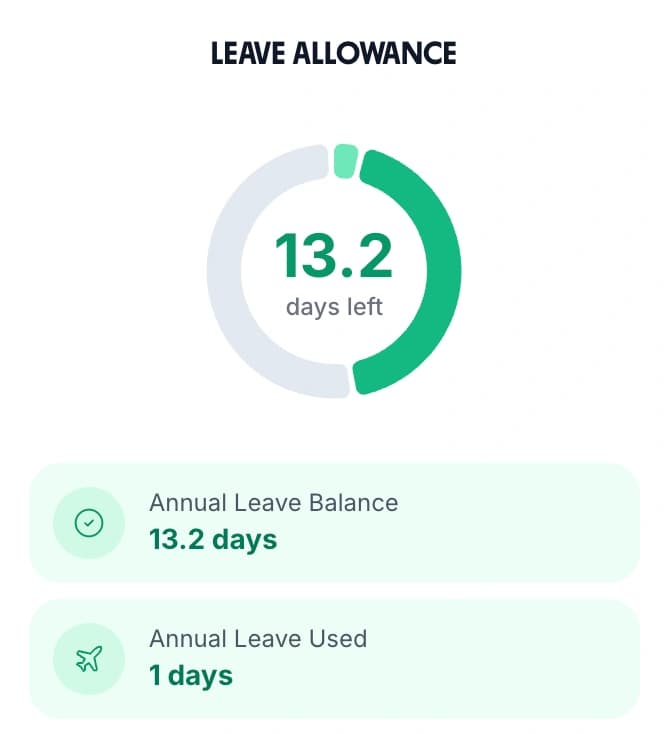
  • Every leave request

    Dates, leave type, days or hours, when it was requested, who approved it and when, and the reason for any refusal.
  • A balance for each leave year

    Allowance, leave used, days carried over and when they expire, kept year by year. Carryover follows your rules, and family leave carryover is protected up to the statutory 5.6 weeks.
  • Accrual from hours worked

    For irregular-hours staff, leave builds up at 12.07% (or your own rate) when a timesheet is approved, with the hours behind each amount saved.
  • A history of every change

    Admins can open a History of each employee's leave: what changed, what it did to the balance, and who made the change.
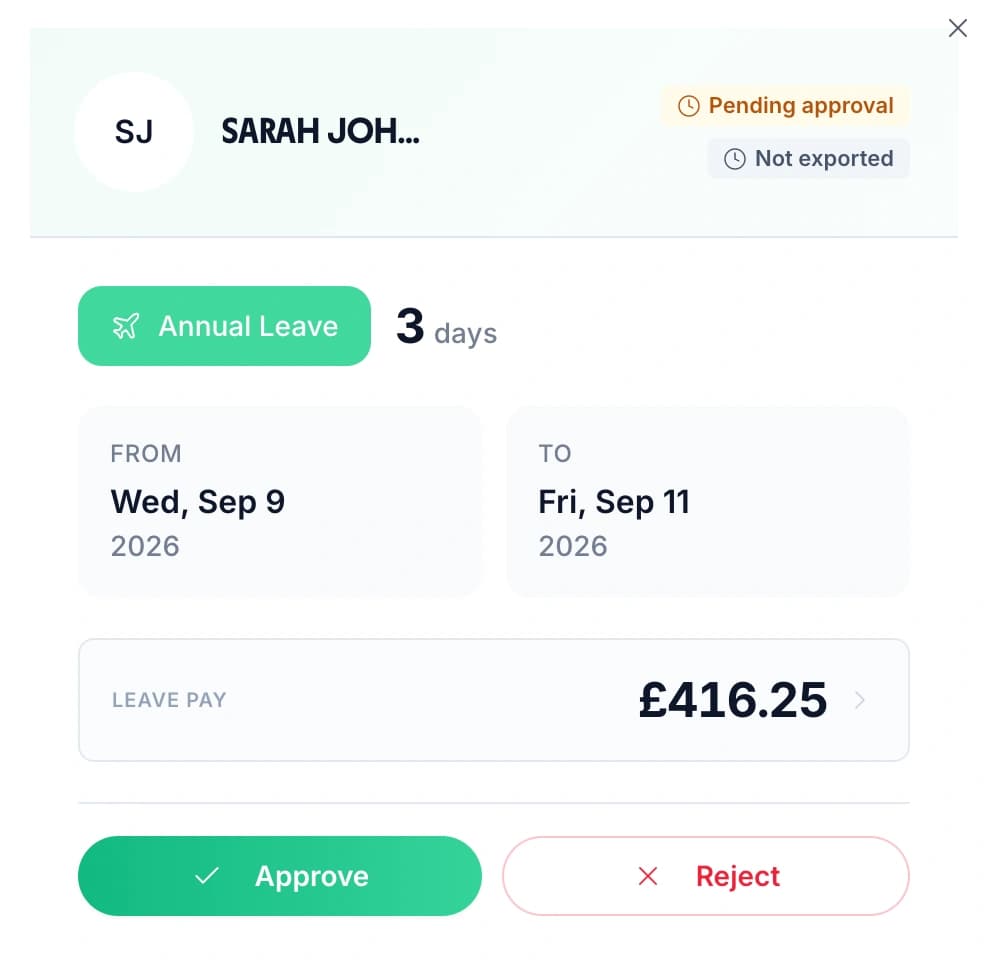
A manager's view of a three-day annual leave request in TimeTally, with the dates, the leave pay and Approve and Reject buttons

Leavers, bank holidays and exports

The parts of the record that are easiest to lose in a spreadsheet are the ones TimeTally works out for you.

  • Pro-rata for starters, part-timers and leavers

    Add a leaving date and the year is pro-rated to their last day, with the leave to pay in their final pay, or the days taken beyond it.
  • UK bank holidays

    Synced for England, Wales, Scotland or Northern Ireland, and booked only on the days each person works.
  • Exports you can keep

    Download leave requests and balances as CSV, or every company record (leave, timesheets, rotas and staff) as one Excel file to keep for six years.
  • Leave in your payroll export

    Leave in each pay period goes into the pay export for Xero, QuickBooks or CSV, so payroll has what it needs to calculate holiday pay.
An employee's leave allowance card in TimeTally showing 13.2 days left, the annual leave balance and the days already used

What TimeTally doesn't do, and how long it keeps your records

TimeTally doesn't run payroll or work out the 52-week average holiday pay rate: it keeps the hours worked and the leave taken, and exports them to the payroll that does. Your records are kept for as long as your account is open; nothing is deleted because of its age. If you cancel, data is kept for 90 days and may then be deleted, so download the full export first. Archive leavers rather than deleting them: deleting an employee removes their leave requests, while archived staff keep their records and stop counting towards your bill. More in our GDPR and privacy pages.

Sources

Checked on 21 October 2026. This page is general information, not legal advice. For a specific situation, speak to Acas or an employment lawyer.

Holiday records: frequently asked questions

How long must employers keep holiday records?

Six years from the date each record was made. The duty is in regulation 16B of the Working Time Regulations 1998, added by section 35 of the Employment Rights Act 2025, and it has applied in Great Britain since 6 April 2026.

What holiday records must an employer keep?

Records adequate to show that each worker got their statutory annual leave (4 weeks plus the extra 1.6 weeks, or 12.07% of hours worked for irregular-hours and part-year workers), was paid a correct week's pay for it, and was paid in lieu of untaken leave on leaving. In practice that means each worker's entitlement and how it was worked out, the leave year, the leave they booked and took, any carryover, their holiday pay and any payment on leaving.

Is it a criminal offence not to keep holiday records?

Yes. Regulation 29 of the Working Time Regulations makes failing to comply with regulation 16B(1) an offence. On conviction the employer can be fined; in England and Wales there is no upper limit on the fine.

Do I need to keep records from before April 2026?

The duty started on 6 April 2026 and does not ask you to recreate older records. Keep what you already have, though: workers can still bring holiday pay claims about earlier periods, and older records are your evidence.

Does it apply to zero-hours and casual workers?

Yes. The rule covers every worker who is entitled to statutory annual leave, not only employees. That includes zero-hours, casual, irregular-hours and part-year workers, whose leave builds up at 12.07% of the hours they work.

Can holiday records be kept in a spreadsheet?

Yes. The law lets you keep the records in whatever manner and format you reasonably think fit, so a spreadsheet is allowed. The risk is practical: spreadsheets are often overwritten each leave year, and they rarely show who approved leave or how holiday pay was worked out.

Who enforces holiday pay?

Workers can claim at an employment tribunal now. The Fair Work Agency, set up on 7 April 2026, is due to start enforcing statutory holiday pay in 2027, with powers to inspect records, investigate and issue notices of underpayment with penalties. Failing to keep holiday records is a separate criminal offence.

Does the rule apply in Northern Ireland?

No. Regulation 16B is part of the Working Time Regulations 1998, which cover England, Wales and Scotland. Northern Ireland has its own working time regulations, so employers there should check the Northern Ireland rules.

Still have a question? See all FAQs

Keep holiday records as you go.

Rota, timesheets and holiday in one app, with staff booking leave on their own phones. £3 per employee per month.

No credit card required • Free 14-day trial • Cancel anytime